Pokie Machines to Play in Australia: Legal Guide
 Available in AU
Australian rules prohibit operators from supplying real-money online pokies to residents, while game features and RTP offer no guarantee of a session result.
Table of Contents
- Online Pokies in Australia: A Market With a Legal Fault Line
- What a Pokie Machine Offers on the Casino Floor
- Free Play, With One Important Caveat
- Pokies in Perth: What Crown’s Floor Can and Cannot Tell
- Game Features, Free Spins and the Price of a Shortcut
- Why a Pokie Spin Cannot Be Predicted
- Real-Money Play, Deposits and the Limits of Recourse
- Pokie Apps and the Shared Jackpot Network
- When a New Pokie Title Comes With a New RTP Setting
- RTP Is a Long-Run Figure, Not a Session Promise
- Casino Games
Online Pokies in Australia: A Market With a Legal Fault Line
The phrase “online pokie” sounds like a familiar machine moved onto a screen. Legally, that change of setting matters. In Australia, real-money online pokie games cannot be lawfully offered to people living in the country. The Interactive Gambling Act 2001 places the offence on the operator that provides the service, not on the resident who plays.
That distinction is easy to lose in the language of warnings. A site may be offshore, its games may be accessible through a browser, and its operator may describe itself as licensed elsewhere. None of that creates an Australian licence to provide real-money online pokies here. No such licence exists. For Australian residents, the legal boundary is not a question of whether an online machine looks or behaves like a land-based one; it concerns the provision of the gambling service itself.
The law treats online casino-style games, including pokie machine games, as prohibited interactive gambling services when they are supplied to customers in Australia. Under the Act, an operator commits an offence by offering real-money play to people living here. The player’s position is different: an Australian resident does not commit an offence under this law simply by playing real-money pokies online with an offshore operator. The asymmetry is deliberate in the legal structure, even if it can be obscured by the warning banners and stern notices that surround the market.
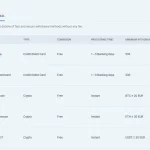
Choosing a pokie machine is only part of the decision: the casino’s licensing and practical payment details can also help you decide where to play. Use these operator notes as a starting point and check the terms that matter to you before signing up.
1. Rollero Casino
License: Curacao Gaming Control Board OGL/2023/176/0095 (Hollycorn N.V.) Rollero Casino lists a Curacao Gaming Control Board licence, OGL/2023/176/0095, held by Hollycorn N.V.
2. 7Bit Casino
License: Curacao, operated by Dama N.V. 7Bit Casino is operated by Dama N.V. and lists a Curacao licence.
3. JustCasino
License: Curacao Gaming Control Board JustCasino lists a licence from the Curacao Gaming Control Board.
4. Bizzo Casino
License: Curacao Gaming Control Board (TechSolutions Group N.V.) Bizzo Casino lists a Curacao Gaming Control Board licence, with TechSolutions Group N.V. identified.
5. SkyCrown
License: Tobique Gaming Commission · Payout speed: crypto ~10-15 minutes, fiat 1-5 days · Min. deposit: A$30 SkyCrown lists a Tobique Gaming Commission licence and a minimum deposit of A$30. Its stated payout times are around 10–15 minutes for crypto and 1–5 days for fiat.
6. Uptown Pokies
License: Curacao (operating since 2017) · Min. deposit: A$20 Uptown Pokies lists a Curacao licence, has been operating since 2017, and has a minimum deposit of A$20.
7. DragonSlots Casino
License: Curacao Gaming Authority (Jumpman Gaming Ltd) DragonSlots Casino lists a Curacao Gaming Authority licence, with Jumpman Gaming Ltd named.
8. Kingmaker
Payout speed: crypto ~90 minutes, fiat 1-5 days · Min. deposit: A$30 Kingmaker states crypto payouts take around 90 minutes and fiat payouts 1–5 days. Its minimum deposit is A$30.
9. House of Pokies
License: international iGaming licence – jurisdiction not named in the source · Payout speed: PayID 1-24 hours · Min. deposit: A$30 (PayID from A$10) House of Pokies lists an international iGaming licence, though the jurisdiction is not named. PayID payouts are stated as 1–24 hours, with a A$30 minimum deposit or A$10 for PayID.
10. Wild Tokyo
License: Curacao · Payout speed: crypto 30-60 minutes, fiat 1-5 days · Min. deposit: A$10 Wild Tokyo lists a Curacao licence and a minimum deposit of A$10. Its stated payout times are 30–60 minutes for crypto and 1–5 days for fiat.
The distinction does not turn an offshore service into an authorised Australian one. It means that the Act directs its prohibition at the person or business providing the service, rather than criminalising the resident who uses it. That is a narrow but important point. A statement that players are not prosecuted under this particular prohibition should not be mistaken for a claim that the service has local approval, or that every other risk attached to using it disappears.
Enforcement at the federal level
The Australian Communications and Media Authority, or ACMA, is responsible for enforcing the Interactive Gambling Act and monitoring compliance with federal interactive gambling laws. Its role gives the legal boundary a practical dimension: prohibited services are not simply left to declare themselves outside Australia’s reach.
ACMA can ask Australian internet service providers to block access to websites that provide prohibited interactive gambling services or advertise them in Australia. Blocking is an enforcement measure aimed at access to the site; it does not change who the Act makes responsible for offering the service. Nor does a website becoming unavailable mean that the underlying legal position has changed.
The scale of the agency’s actions is also part of the story. After enforcement activity began in November 2019, ACMA had blocked more than 1,455 illegal gambling and affiliate websites. The total includes affiliate sites, not only gambling operators, a reminder that the regulatory concern extends to the routes through which prohibited services are promoted as well as to the services themselves.
Video Slots in Australia: Features, Access and RTP
Another reported measure concerns illegal services that have left the Australian market since ACMA began enforcing the rules in 2017. Here the figures are not consistent: one account puts the number above 210, while another gives a figure above 190. Both accounts describe withdrawals following enforcement, but they do not agree on the total.
That record makes the Australian position more than a matter of wording in legislation. Federal rules prohibit operators from supplying real-money online pokies to residents, and the regulator has tools to restrict access to sites and advertising. The arrangement leaves a conspicuous divide between the party whose conduct the law criminalises and the person who may still encounter the service online.
The result is a market with a legal fault line running through its ordinary vocabulary. “Play online” can sound like an invitation to use a digital version of a familiar pastime; the legal frame says that an operator cannot lawfully make real-money pokie games available to Australians. The resident is not made an offender under the Interactive Gambling Act merely for playing, but that does not convert the operator’s offer into a lawful Australian service.
A screen can make a border look optional. The law does not.
Legal Prohibition
Under the Interactive Gambling Act 2001, it is an offence for operators to provide real-money online pokie services to people living in Australia.
What a Pokie Machine Offers on the Casino Floor
A pokie machine is less a single game format than a cabinet for many different arrangements of symbols, lines and prizes. The glass-fronted machine may look familiar from one title to the next, but the rules behind the display can differ. The paytable and paylines are not decorative details: together, they tell the player what combinations count and what those combinations pay.
The paytable sets out the prizes attached to winning symbol combinations. A symbol that looks prominent on the screen is not necessarily the most valuable one; the table, rather than its size or animation, gives the game’s terms. Reading it means looking for the combinations that qualify and the prize assigned to each. On a busy casino floor, that small act of attention can matter more than a machine’s bright colours. The spectacle is free; understanding the rules takes a moment.
Casino Dice Games in Australia: Legal Boundaries
Paylines define where a winning combination must appear. Some pokie titles use a fixed set of lines, while others have a variable number. That distinction changes the structure of the game: a player may be dealing with the same symbols but a different set of qualifying paths. A line can run across the reels in a pattern specified by the game, and the paytable explains which patterns and combinations receive a prize. The details belong to the particular title, not to the broad category of pokies.
That is why the “best” pokie machine is not a universal object waiting to be discovered. One title may have a paytable and line arrangement that feels straightforward; another may ask for more attention to its rules. Neither description establishes which will produce a better result. The useful comparison is more modest: whether the game’s rules are clear, whether its line structure makes sense, and whether the stakes fit the player’s own limit. Preference can be personal without being mistaken for prediction.
Best Low-Volatility Slots in Australia: How They Work
Minimum bets also vary between machines, so the amount required for a spin is part of the practical choice, not an afterthought. At Crown Perth, the lowest listed stakes differ by machine: some start at twenty cents per spin, while others begin at two dollars. That is a venue-specific illustration, not a universal price for playing a pokie. The cost of a machine itself is a separate matter; a casino-floor player is choosing a stake, not buying the cabinet.
A minimum stake does not describe the whole experience. The selected bet interacts with the game’s own paytable and line setup, so two machines with different rules may not be directly comparable simply because both are available on the same floor. The displayed information is there to make those distinctions legible. It turns a row of similar-looking cabinets into separate games with separate terms.
There is a quiet social history in that arrangement. Casinos make choices visible through lights and sound, while the actual contract of play sits in the rules: which lines count, which combinations pay, and what stake is required to take part. A machine can invite attention before its terms have been understood. The order matters.
For someone deciding whether to play a pokie machine, the first useful comparison is therefore not a ranking but a reading. Check the paytable, identify whether paylines are fixed or variable, and note the minimum stake shown for that machine. A title’s name or appearance cannot substitute for those details. Nor does a larger display make a game more suitable.
Choosing a Machine
- Check the paytable for winning combinations and prizes
- Identify if paylines are fixed or variable
- Note the minimum stake required for a spin
The floor offers variety, but variety is not a verdict. Each machine presents its own combination of rules and stakes; the sensible choice is the one whose terms are understood before play begins. That is less dramatic than a flashing cabinet. It is also the point.
Free Play, With One Important Caveat
A free-play version of a pokie can make an unfamiliar game easier to read. The reels turn, symbols appear, and the screen shows how the game responds without money being staked. That can help explain the layout and the theme: whether the imagery is built around an old book, a mythical setting or something more abstract. It is a tour of the presentation, not a rehearsal for a future win.
That distinction matters because practice can feel persuasive. A run of wins may seem to reveal a pattern; a quiet stretch may invite the thought that a better result is due. Neither impression makes a free session a forecast. Online pokie outcomes are generated by a random number generator, and each spin is independent of the one before it. Results in a demo do not indicate what real-money play would produce.
The software gives the appearance of continuity: reels move, sounds repeat, symbols land in familiar places. The underlying result is not a story that the machine is gradually telling. A demo session can show how the interface presents an outcome, but not what the next outcome will be. The screen is vivid. The evidence is not.
Live Blackjack in Australia: Online Casino Rules
Free play is most useful when treated as orientation. It can show where the rules are displayed, how the reels are arranged and what visual cues accompany a win or a feature. It can also clarify whether a theme is appealing enough to hold attention. Those are modest uses, but useful ones: recognising the game’s vocabulary is different from believing that the vocabulary offers a strategy.
That is where “pokie machine strategies” can become a misleading phrase. Familiarity with the controls may reduce confusion, but it cannot make independent spins predictable. No approach learned in a free session can change the random outcome of a later spin. A demo may make a game feel less opaque; it does not make it more controllable.
The same caution applies to claims about pokie machine software. Software determines how a game is presented and how its rules operate, but a free session alone cannot establish what results would look like with money at stake. Nor does it settle which version a particular operator might offer. A polished interface is still an interface, not a promise.
Searches for a free pokie machine can also blur two different objects. A digital demo is not the same thing as a physical pokie machine for sale. A machine advertised for sale belongs to a different question: ownership and equipment, rather than trying a game without a stake. The shared words do not make the experiences interchangeable.
Themes, likewise, are a matter of taste rather than evidence. A player may prefer bright symbols, familiar characters or restrained graphics; none of those choices predicts a result. Even the movement of the reels can seem to invite interpretation, as if a near miss were a message. It is only the way the game displays an independent outcome.
Attention: Results in a free-play demo session are generated by a random number generator and do not indicate what real-money play would produce.
In Australia, free play should not be confused with permission to offer real-money online pokies. The Interactive Gambling Act 2001 prohibits operators from providing those games to people in the country. A no-stake demo and a real-money service are not the same thing, and an offshore label does not change the legal position of the service.
If play later involves money in a lawful setting, a loss limit belongs in place before the session begins. That boundary is more practical than any lesson drawn from a demo. Free play can acquaint someone with a game’s look and controls. It cannot certify luck, train a winning method or turn a random process into a dependable one. A preview, not a promise.
Pokies in Perth: What Crown’s Floor Can and Cannot Tell
For anyone comparing a casino pokie machine in Perth, the local picture is unusually concentrated. Crown Perth is the city’s only legal land-based casino; Western Australia has no legal online casino market. The distinction matters: a large floor is not a menu of equivalent venues, and an online listing does not turn an offshore site into a local casino.
Crown Perth has more than 2,500 gaming machines. That scale offers a wide spread of titles and formats, but size alone does not reveal which machine has the best return, or whether any particular one will pay during a visit. The label “best Australian pokie machine” is therefore less useful than it sounds. A title’s reputation cannot substitute for information about the version on the floor.
Some information is visible. Western Australian law requires every legal pokie to show its rules, paylines and prize table. Those details can explain how a game awards prizes and what combinations matter. They do not, by themselves, identify the machine with the highest paying record, nor do they predict the result of an individual session.
Mines Casino Game in Australia: Rules and Access
RTP is another figure that can shape expectations, but Crown Perth does not provide a public list matching each machine to its own RTP. The available broad picture is that most machines on the floor fall within an 87% to 92% RTP range. That is a range across most of the floor, not a label attached to every individual cabinet. It cannot establish the precise pokie machine payout percentage for a particular game in a particular position.
That gap is not a small administrative wrinkle. A player looking for pokie machine payouts may find the rules and prize table, yet still be unable to compare every machine by its exact return figure. A pokie simulator or a game’s online presentation would not settle that local question either: the machine being played at Crown is the relevant version, and the venue does not publish a machine-by-machine RTP guide.
Nor does a higher listed RTP mean a session is likely to end in profit. RTP describes a long-run return across play, not a promise about the next visit. Individual results can differ sharply from that broad measure. The floor offers choices; it does not offer certainty.
The figures tell a story about the limits of transparency as much as the size of the venue. The rules of each game are displayed, while a complete comparison of machine-specific RTP is not. That leaves a visitor able to inspect how a pokie works, but not to rank every cabinet by its published return. For a market where Crown is the only legal local casino, the distinction is consequential.
RTP Range
Most machines on the Crown Perth floor fall within an 87% to 92% RTP range, though a machine-by-machine guide is not published.
A sensible boundary is to decide in advance what can be lost and stop there. The most attractive prize table, the loudest cabinet or the most persuasive reputation cannot convert chance into a dependable payout. On Crown’s floor, the available information is real but partial. Useful, not clairvoyant.
Game Features, Free Spins and the Price of a Shortcut
A bonus round changes the rhythm of a pokie. Instead of waiting for a feature to appear during ordinary play, a player may be offered a way to trigger it directly. Feature-buy games put a price on that impatience: the bonus is purchased rather than won through the usual sequence of spins.
The price is not a small adjustment to the stake. One specialist review describes feature-buy costs as often running from 50 to 100 times the base bet. That is a report about the games it examined, not a universal setting; the cost depends on the particular title and its configuration. The multiplication matters because the purchase is still a wager. Paying more to reach free spins does not make those spins more certain to return the cost.
The appeal is easy to understand. A bonus round is the part of a game designed to feel like an event: a change in pace, a fresh screen, a promise that something different might happen. Buying entry removes the wait, but not the uncertainty. The feature can produce a disappointing result, and its animation does not alter the basic fact that money has been put at risk.
3-Reel Slots in Australia: How Each Spin Works
Free spins can also create a misleading impression of being free in the ordinary sense. They are a feature within a game, not a guarantee of winnings. Where winnings are credited as bonus funds, they remain subject to the applicable wagering requirements and cashout limits. Those conditions can determine whether a displayed win becomes withdrawable money, and they belong to the offer’s terms rather than the spectacle of the round.
This distinction is particularly important when a game offers both a standard route into a feature and a paid shortcut. The standard route asks for continued play; the shortcut concentrates the cost at the start. Neither route changes the terms attached to bonus funds, and neither turns an uncertain feature into a dependable return. A dramatic round is still a game mechanic, not a financial plan.
The shortcut has a neat sales logic: pay now, skip the suspense. But suspense is not the only thing being skipped. The purchase can make a large stake disappear in a single decision, while the bonus itself remains subject to chance and conditions. In Australia, real-money online pokie games are prohibited when offered to people in the country, so feature-buy mechanics should not be mistaken for an invitation to use an offshore site.
A feature can be entertaining without being a bargain. That is the whole trick.
Why a Pokie Spin Cannot Be Predicted
A pokie can make chance feel like a story. Symbols arrive, lights flare, sounds mark a near miss or a win, and the mind begins arranging events into a pattern: a quiet stretch must be due to end; a feature that has not appeared may be close. The machine provides a sequence. It does not provide a plot.
Do
- Set a loss limit before the session begins
- Treat RTP as general context
- Understand each spin is independent
Don’t
- Chase patterns based on recent losses
- Assume a machine is “due” for a win
- Trust a demo session as a forecast
For online pokies, outcomes are generated by a random number generator. Each spin is independent of the one before it, and past results have no influence on what follows. A run of losses does not make a win more likely on the next spin. Nor does a recent win make another one less likely. The previous result belongs to the record of play, not to the machinery deciding the next outcome.
This is the awkward answer to the search for a best pokie to win. There is no way to identify a machine whose next spin can be read from its recent history. A machine that has paid nothing for a while has not built up a debt to the person playing it. A loud celebration on another machine is no signal either. Pokie sounds are part of the experience; they are not evidence about what will happen next.
Volatility describes the shape of possible results, not a forecast. Low-volatility games tend to return smaller amounts more frequently. High-volatility games pay less often, but may produce larger wins. Neither description tells when a win will arrive, or whether one will arrive during a particular session. A preference for steadier, smaller outcomes is different from having a reliable method.
That distinction matters when deciding how to play. The rules of a game can be read; the next result cannot. Tracking spins may help record what has happened, but it cannot turn those results into a prediction. Strategies based on waiting for a machine to “loosen up” mistake repetition for memory. The machine has no memory of a dry spell.
Five-Reel Slots in Australia: Bonuses and RTP
The same point applies to claims that one pokie is the best choice simply because it has recently produced a conspicuous win. A visible payout describes an outcome already settled, not a promise attached to the next play. Individual sessions can vary widely, even when the game itself has not changed.
A loss limit set before play gives the session a boundary that chance cannot supply. Without one, a player can keep chasing a pattern that exists only in hindsight. The machine will continue to produce outcomes; it will not explain them. No omen. Just another spin.
Real-Money Play, Deposits and the Limits of Recourse
A pokie machine demo and real-money play may look alike on screen, but they are not interchangeable. Demo results do not indicate what real-money outcomes will be. Once money is involved, the question is no longer simply which game to open; it is who controls the account, what conditions attach to funds, and where a complaint can go.
In Australia, the Interactive Gambling Act 2001 prohibits operators from providing real-money online pokie games to people in the country. An Australian resident is not committing an offence simply by playing with an offshore operator, but that does not make the service locally licensed or create local protections. There are no state-issued online casino licences in Victoria, and players lack local regulatory recourse there. Offshore status is not a safety net.
Recourse Limits
Offshore operators operate beyond Australia’s local licensing and complaint framework, making legal recourse difficult if winnings are withheld.
A specialist review of offshore operators reports deposits by Visa, Mastercard and bank transfer, as well as cryptocurrency options such as Bitcoin and Ethereum. These are reported payment methods, not an endorsement or a guarantee that a transaction will work. Credit card payments must not be accepted for online gambling services. The distinction between a payment option displayed on a site and a lawful, dependable route for an Australian player matters.
Withdrawals bring a different set of conditions. They may remain pending for 24–72 hours, and a casino may encourage the player to reverse a withdrawal during that period. Bonus funds can be harder to turn into withdrawable cash: wagering requirements may demand substantial betting before cashout, and terms may impose cashout limits. Free-spin winnings are bonus funds too, subject to wagering requirements and cashout limits. The headline offer is only one part of the bargain.
If an offshore operator withholds winnings, effective legal recourse may be difficult to obtain. The account and its records sit within a service operating beyond Australia’s local licensing and complaint framework. That leaves the player facing the operator’s own terms, payment processes and response to a dispute. A deposit can be easy to make; recovering money is another matter.
The practical question behind “real pokie machine” searches is therefore not just whether a game accepts a stake. It is whether the service can be held to account when a balance, withdrawal or bonus becomes contested. A demo involves no deposit and cannot answer that question. Real-money play can. Often, expensively.
7-Reel Slots in Australia: Features and RTP
Pokie Apps and the Shared Jackpot Network
An app can make a pokie look like a solitary object: a screen, a button and a jackpot figure glowing above the reels. On a casino floor, however, some jackpots are built through connection rather than isolation. Titles such as Lightning Link, Dragon Link and Cash Express can link multiple machines, or machines across casinos, so that play contributes to a shared progressive prize.
That network changes the scale of the prize, not the basic meaning of the game. A progressive jackpot grows as connected play feeds into it; it is not simply a large fixed prize printed on one machine. The word “shared” describes the system behind the display. The machines remain separate places to play, while the jackpot connects them.
This is one reason a search for a pokie app can lead to a different subject from the one expected. A game displayed in an app and a networked title on a casino floor are not interchangeable things. The app label says little about whether a title is connected to a progressive jackpot. The named networked games provide a clearer distinction: their jackpots are linked across machines or casinos.
The same caution applies to talk of a pokie machine API. The phrase may sound like a neat technical explanation for how games communicate, but it does not establish that a particular title uses a particular connection, or that a jackpot is shared. The visible prize is not a map of the machinery behind it.
Nor does the word “app” settle the legal question. In Australia, real-money online casino games are prohibited when offered to people in the country; a mobile format does not change that position. A land-based machine network and an online casino service belong to different settings, even when both use screens and software.
Networked Jackpot Examples
Titles such as Lightning Link, Dragon Link and Cash Express link multiple machines or casinos so that play contributes to a shared progressive prize.
The jackpot itself is a social construction as much as a technical one. Many separate plays are gathered into one prize, making the shared pool the spectacle. The machine seems to promise a solitary encounter; the network quietly makes it collective. That is the trick. A large number on a screen can make a whole system feel like a single lucky moment, though the prize exists because many machines have been joined together.
When a New Pokie Title Comes With a New RTP Setting
A new pokie can arrive with a familiar title and an unfamiliar return setting. The name on the screen is not, by itself, enough to establish which RTP applies: some game providers let operators select from a range of settings for the same game. Two versions can therefore share their title and appearance without sharing the same stated return.
That makes a list of pokie machine names a poor shortcut to a decision. A figure attached to a title in one review may describe a particular version, not every version offered elsewhere. The useful detail is the RTP for the specific game configuration being presented, rather than a number detached from its setting.
Gates of Olympus and Sweet Bonanza illustrate how precise such figures can look. A specialist review gives Gates of Olympus an RTP of 96.5% and Sweet Bonanza an RTP of 96.48%. Those are figures reported by that review, not a declaration that every operator offers either title at that setting. The decimal places lend the numbers an air of permanence. The configuration may not.
Live Baccarat Online in Australia: Legal Guide
This distinction matters especially when a new pokie machine is promoted by name and its advertised return is used to make the game sound more favourable. The title may be widely recognisable; the setting still needs checking. A value quoted for one version should not be carried across to another operator’s version without confirmation.
The same caution applies to newly released pokie machine games. Newness does not make a title’s RTP universal, and a familiar title does not make its setting portable. Where the game’s information identifies a particular RTP, that is more relevant than a general figure repeated in a review or promotional description. If the version being offered is unclear, the title alone cannot settle the question.
The point is not that named games have no useful identity. It is that the name and the setting answer different questions. A title helps identify the game; the setting identifies which return figure belongs to that version. Mixing those two facts turns a specific number into a broad claim it cannot support.
RTP Is a Long-Run Figure, Not a Session Promise
RTP, or return to player, describes the share of all money wagered on a pokie that is returned to players across a very large number of spins. It is a statistical measure of the game, not a timetable for when any particular player will get money back.
RTP in Australian Slots: What Percentages Mean
That distinction matters. A high RTP does not ensure a win, and a session can finish far above or below the figure. The calculation takes shape over an enormous volume of play; one person’s run is too small to make the long-run average visible. A pokie does not owe a player a balancing payment because earlier spins went badly.
RTP can still help compare games, provided the figure belongs to the specific version being played. A title may be offered with different RTP settings, so an advertised figure should not automatically be assumed to describe every version. Check the game information for the setting attached to that pokie.
As practical pokie machine tips go, this one is less thrilling than a winning streak and more useful: treat RTP as context, not a forecast. Set a loss limit before playing, and do not raise it in the hope that the game is due to return something. Demo results are not indicative of real-money outcomes; practice spins cannot validate a prediction.
The number describes a crowd, not a session.
What is the best pokie to play at Crown Perth?
There is no single best machine for everyone. Compare each game’s paytable, paylines and volatility; Crown Perth does not publish machine-by-machine RTP figures.
Are online pokies legal for Australian players?
No operator can lawfully offer real-money online pokies to Australian residents under the Interactive Gambling Act 2001. Residents do not commit an offence under that Act simply by playing with an offshore operator.
How much money do I need to play pokies?
At Crown Perth, minimum bets typically range from $0.20 to $2.00 per spin, depending on the machine.
Casino Games

3-Reel Slots in Australia: How Each Spin Works
Three visible reels shape the presentation, but an RNG makes every spin an independent event...

Five-Reel Slots in Australia: Bonuses and RTP
A practical look at bonus triggers, RTP, free-play odds, game versions and the legal limits...

7-Reel Slots in Australia: Features and RTP
A practical look at seven-reel searches, game rules, RTP differences, free play and the limits...

Bonus Buy Slots in Australia: Features and RTP
A practical look at feature entry, demo limits, RTP settings and the checks that matter...

High-Volatility Slots in Australia: How They Work
High volatility means less frequent wins and a wider range of payouts, not a forecast...

Best Low-Volatility Slots in Australia: How They Work
Low volatility describes a tendency toward smaller, more frequent wins, not a guarantee of returns...
Best Progressive Jackpot Slots: How They Work
See how wagers feed shared prize pools, what can trigger a win and which terms...

RTP in Australian Slots: What Percentages Mean
RTP can help compare configured games, but it cannot predict a session’s outcome or guarantee...

Video Slots in Australia: Features, Access and RTP
From mobile layouts and bonus mechanics to offshore access, free play and paytable RTP, the...

Casino Dice Games in Australia: Legal Boundaries
The guide distinguishes operator obligations from player status and explains how online dice formats, bonuses...

Crash casino games in Australia: how they work
A guide to how crash games differ from pokies and what labels, payment terms, free...

Lightning Link Online Pokies in Australia Explained
The Aristocrat title is encountered on Australian venue machines; online pages, free play and similar...

Live Baccarat Online in Australia: Legal Guide
Australia has no locally licensed online casinos; this guide explains the legal position and practical...

Live Blackjack in Australia: Online Casino Rules
The guide separates operator restrictions from player status and weighs what live format, casino claims...

Live Roulette in Australia: Dealers and Legal Limits
Australia prohibits real-money online casino services for people in the country; the guide also explains...

Mines Casino Game in Australia: Rules and Access
The guide separates Mines from slot and pokie labels and explains what search results, demo...

Plinko Casinos in Australia: Games, Rules and Risk
A product’s Plinko label does not establish its mechanics; classification, terms and risk all matter...

Pokies Tips and Tricks: What Actually Affects Play
Pokie results are random, while RTP describes long-run play; neither tips nor session routines can...

Real Money Casino Table Games in Australia
See how live dealing and software-generated outcomes shape online table games, alongside the rules, odds...