7-Reel Slots in Australia: Features and RTP
 Available in AU

A practical look at seven-reel searches, game rules, RTP differences, free play and the limits of offshore real-money play in Australia.
Table of Contents
- Free Spins and the Sweet Bonanza Bonus Round
- Choosing a Slot: Paytables, RTP and Casino Settings
- Sweet Bonanza’s RTP Across Different Versions
- Classic Slots, Free Play and the Long View
- Real-Money Play and Australia’s Offshore Boundary
- Free Slot Games and What Randomness Means
- Playing in a Browser or Downloading a Slot
- A Spin Is Its Own Event
- Online Slots and the RTP Shown in the Game
- What “Seven Reel” Means in Slot Searches
- Casino Games
Free Spins and the Sweet Bonanza Bonus Round
In Sweet Bonanza, the free-spin feature is tied to scatters. A specialist review describes four or more scatters as the trigger for an award of 10 free spins. That is a report of the feature as presented by that source, not a rule that should be assumed to hold across every version. The game’s own displayed rules are the place to establish what applies in a particular instance.
The distinction matters because a bonus round is not simply a stretch of ordinary play with a different label. Its entry condition and the way its special elements work are part of the game’s rules. Scatters signal that the feature has been reached; the free spins then provide the setting in which multiplier bombs may appear. Keeping those stages separate makes the feature easier to understand: first comes the trigger, then the bonus play, and within it a possible multiplier effect.
A specialist review reports that multiplier bombs can appear during the free spins. Their values are added together before being applied to a winning tumble. The order is the important point. The values are combined first; the resulting multiplier is then applied to a tumble that wins. This describes a conditional feature, not a promise that a bomb will appear, that a tumble will win, or that every free-spin sequence will produce the same result.
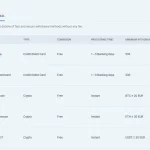
Choosing a reel-slots casino is easier when you can check the available operator information before deciding where to play. This shortlist gives you a starting point for reviewing the options.
1. Rollero Casino
License: Curacao Gaming Control Board OGL/2023/176/0095 (Hollycorn N.V.) Rollero Casino is listed with a Curaçao Gaming Control Board licence, OGL/2023/176/0095, held by Hollycorn N.V.
2. 7Bit Casino
License: Curacao, operated by Dama N.V. 7Bit Casino is operated by Dama N.V. and is listed as licensed in Curaçao.
3. JustCasino
License: Curacao Gaming Control Board JustCasino is listed with a Curaçao Gaming Control Board licence.
4. Bizzo Casino
License: Curacao Gaming Control Board (TechSolutions Group N.V.) Bizzo Casino is listed with a Curaçao Gaming Control Board licence, with TechSolutions Group N.V. named in connection with it.
5. SkyCrown
License: Tobique Gaming Commission · Payout speed: crypto ~10-15 minutes, fiat 1-5 days · Min. deposit: A$30 SkyCrown lists a minimum deposit of A$30. Its stated payout times are around 10–15 minutes for crypto and 1–5 days for fiat.
6. Uptown Pokies
License: Curacao (operating since 2017) · Min. deposit: A$20 Uptown Pokies is listed as operating since 2017 and has a minimum deposit of A$20. It is licensed in Curaçao.
7. DragonSlots Casino
License: Curacao Gaming Authority (Jumpman Gaming Ltd) DragonSlots Casino is listed with a Curaçao Gaming Authority licence, with Jumpman Gaming Ltd named as the operator.
8. Kingmaker
Payout speed: crypto ~90 minutes, fiat 1-5 days · Min. deposit: A$30 Kingmaker lists a minimum deposit of A$30. Its stated payout times are around 90 minutes for crypto and 1–5 days for fiat.
9. House of Pokies
License: international iGaming licence – jurisdiction not named in the source · Payout speed: PayID 1-24 hours · Min. deposit: A$30 (PayID from A$10) House of Pokies lists a PayID payout time of 1–24 hours and a A$30 minimum deposit, reduced to A$10 for PayID. Its source describes the licence as international but does not name the jurisdiction.
10. Wild Tokyo
License: Curacao · Payout speed: crypto 30-60 minutes, fiat 1-5 days · Min. deposit: A$10 Wild Tokyo lists a minimum deposit of A$10 and is licensed in Curaçao. Its stated payout times are 30–60 minutes for crypto and 1–5 days for fiat.
The word “tumble” can make the feature sound more complicated than it is. In this description, it refers to a winning result to which the combined multiplier may be applied. The multiplier does not turn a non-winning tumble into a winning one; the review’s account concerns the treatment of a winning tumble. That is the boundary of the mechanic as described. Beyond it, assumptions about how often the feature appears or what a particular sequence will return would be guesswork.
There is a small piece of theatre in the structure. Scatters mark an entrance; free spins suspend the usual rhythm; bombs make the eventual value of a winning tumble depend on a combination of values rather than one isolated figure. The sequence is designed to be watched as well as counted. Yet spectacle can blur the plain arithmetic, and bonus language often encourages a player to imagine that a feature is more predictable than it is. It is not.
The reported addition of bomb values is different from treating each bomb as a separate multiplier applied in turn. In the account given by the specialist review, the values are gathered and summed before the winning tumble is multiplied. That distinction is useful when reading a rules description or following the feature on screen. It does not require assumptions about the number of bombs, their possible values, or the result of any particular spin; those details are not established by the mechanic described here.
Pokies Tips and Tricks: What Actually Affects Play
The scatter award also deserves careful phrasing. The review’s account gives a threshold and an award, but that should not be turned into a universal guarantee. A bonus feature can be described in one source without every version necessarily sharing the same presentation or configuration. The safest reading is narrow: that specialist review says four or more scatters award 10 free spins in the version it describes. The game’s displayed rules remain decisive for the version being played.
That narrowness is not pedantry. Slot features are often reduced to a headline—scatter in, free spins out, multipliers on top—because the headline is quick to understand. But a headline leaves out the difference between a reported rule and an invariant one, and between a multiplier that can appear and one that must appear. Those distinctions are precisely where a description stops being useful if it becomes too confident.
The bonus round therefore has two clear ideas at its centre: scatters are associated with entry into free spins, and multiplier-bomb values, when present in the feature, are added together before being applied to a winning tumble. The rest should be read from the rules shown for the particular game version, rather than supplied by expectation. A bright bonus, in the end, still has rules.
Attention: Bonus features, such as free spins and multipliers, are not universal guarantees; their specific rules and triggers can vary between different versions of the same game.
Choosing a Slot: Paytables, RTP and Casino Settings
A game tile is a label, not a complete specification. It may show a title, an image and perhaps a few design cues, but it does not establish which RTP configuration is attached to the game. That distinction matters when comparing online pokies: two lobby entries can look like the same game while the information needed to assess their return sits elsewhere.
A specialist review reports that an operator can select which RTP build to offer, and that the selected build is not shown on the lobby tile. That is a useful warning, not a reason to treat every casino setting as identical or to infer a figure from a game’s reputation. The relevant detail is the configuration stated in the game itself. The paytable or rules panel is where the RTP is usually displayed.
The order of inspection is therefore simple: open the game’s information, find its rules or paytable, and read the RTP stated there. The lobby is a doorway. It is not the record.
That small distinction can disappear amid the visual shorthand of casino interfaces. A tile gives a game a recognisable face; it is designed for quick browsing, not necessarily for comparing technical settings. A title alone cannot answer whether the version in front of a player uses a particular RTP build. Nor does a familiar image settle the matter. The game’s own information is more useful than an assumption drawn from its appearance.
Compare like with like
A meaningful comparison begins with the information panel, not with artwork or promotional descriptions. If two games are being assessed, their displayed rules can be read side by side. The RTP figure, where provided, gives one point of comparison. It should be recorded as the figure shown for that particular game configuration, rather than carried over from a review or from another casino’s listing.
3-Reel Slots in Australia: How Each Spin Works · Casino Dice Games in Australia: Legal Boundaries
This is especially important when a search for seven-reel casino games turns up a mixture of classic-looking titles and newer designs. “Seven reel” may describe what a person expects to see, but it says nothing by itself about the RTP configuration. The same applies to searches for a seven-reel slot machine or a collection of free games: the category label is not a substitute for the rules attached to an individual title.
A comparison table, even a private one, need not be elaborate. A game name and the RTP displayed in its own information panel are enough to prevent one common confusion: treating a general figure associated with a title as though it must apply wherever that title appears. If the panel gives no clear figure, the absence should remain an absence, not be filled with a number remembered from elsewhere.
The check is game-specific. A lobby can group games neatly and still leave their configuration details undisclosed until the game opens. That is not a contradiction; it is a difference between catalogue design and game information. One helps with browsing. The other informs comparison.
Free play is not a settings label
Free versions can be useful for seeing how a game presents its rules, but the word “free” does not establish the configuration of a separately offered version. A free seven-reel game and a game with the same title elsewhere should not automatically be treated as identical in every setting. The RTP shown in the version being examined is the relevant one.
Do
- Open the game’s information panel
- Locate the rules or paytable
- Read the RTP stated for that specific version
Don’t
- Rely on the lobby tile for technical specs
- Assume RTP based on a game’s reputation
- Use a general figure from an external review
This is a modest point, but interfaces encourage broad conclusions. A title may be familiar, its symbols unchanged, and its rules panel still be the necessary place to check. The visual surface is persuasive; the underlying setting is less theatrical.
The distinction also keeps comparisons honest. A list of games described as seven-reel slots can tell little about their RTP unless the figures have been taken from the relevant in-game information. Conversely, a paytable figure does not turn a game into a better choice in every respect. It is one stated characteristic, not a full verdict on how the game will feel or what any session will produce.
The most careful reading separates three things: the name shown in the lobby, the version opened, and the information displayed inside it. Confusing them can make a general description look like a confirmed setting. Keeping them separate makes the comparison narrower—and more reliable.
For Australian readers, game information should not be mistaken for permission to wager. The practical point here is about how settings are displayed, not an endorsement of casino access. A paytable can clarify a game’s stated terms; it cannot change the legal status of the service presenting it.
A tile catches the eye. The rules do the accounting.
Five-Reel Slots in Australia: Bonuses and RTP · Live Baccarat Online in Australia: Legal Guide
Sweet Bonanza’s RTP Across Different Versions
Sweet Bonanza is often associated with an RTP of 96.51%, but that figure should be treated as a reported setting, not as a universal specification for every version of the game. A specialist affiliate review gives that percentage for the title while noting that versions can show a different RTP. The distinction matters: a familiar game name does not, by itself, establish which configuration is being used.
RTP, or return to player, is a theoretical calculation across a very large number of spins. It describes the expected proportion returned over that scale, not a promise about an individual session. A displayed percentage therefore says something about the game’s mathematical setting; it does not forecast the result of a particular run. The decimals can look exact, but their precision should not be mistaken for personal certainty.
Version differences can make the figure less straightforward than a single headline number suggests. A casino’s game library may identify Sweet Bonanza by name and image, while the version available there has a particular RTP configuration. The title alone does not tell a player which percentage applies. Nor does a figure quoted in a review necessarily match the one shown in the game elsewhere.
That is why the in-game rules or paytable matter more than a general description. The game’s own information panel is where its applicable RTP can be checked. If a listed figure differs from the one reported in an outside review, the discrepancy need not mean that either number is a typographical error: the two descriptions may refer to different versions. For wagering decisions, the figure attached to the version actually open on screen is the relevant one.
A specialist review reports Sweet Bonanza’s stake range as A$0.20 to A$100 per spin, though the upper limit may vary depending on the operator.
This is a small but useful example of how digital games can carry more than one mathematical profile under a single familiar name. A slot’s identity in the lobby is designed for recognition; its rules panel serves a less decorative purpose. One is the shop window. The other is the specification.
A specialist review also describes Sweet Bonanza’s stake range as A$0.20 to A$100 per spin, with the upper end varying by operator. That range is another reminder that a game’s presentation is not the same thing as a fixed experience everywhere it appears. The available stake settings and the RTP configuration are separate details, and neither can safely be inferred from a thumbnail or from the game title. The stated range should likewise be understood as a reported description, not a guarantee that every version offers the same controls.
For a comparison between versions, the useful record is plain: the RTP shown in the game, the rules attached to that version, and the stake options displayed there. Keeping those details together prevents a percentage from being detached from the game configuration it describes. It also stops a review figure from quietly becoming a claim about every casino carrying the same title.
Sweet Bonanza’s reported 96.51% is therefore a point of reference, not a universal label. Version settings can alter the displayed figure, and the in-game information identifies the configuration in front of the player. The difference is easy to overlook precisely because the game’s name remains unchanged. Small print, large consequence.
Video Slots in Australia: Features, Access and RTP
Classic Slots, Free Play and the Long View
Classic-style pokies carry a particular promise of legibility. Their visual language often borrows from older machines: familiar symbols, a plainly framed play area and outcomes that appear easy to read. The style can feel simpler than the terminology surrounding it. Yet a familiar screen does not make the mathematics behind a spin more predictable.
RTP, or return to player, is a theoretical calculation of how a game performs across a vast number of spins, often millions. It describes an aggregate, not a schedule for individual sessions. A higher RTP theoretically means a better return over time than a lower one, but that comparison belongs to the long view. It cannot tell what a single spin will produce, or when a particular result might appear.
That distinction matters especially in free play, where a sequence of outcomes can start to look like evidence. A run of wins may seem to suggest that the game is warming up; a stretch without one may feel like a debt waiting to be repaid. Neither impression changes the calculation. Each spin is generated independently, so earlier results do not direct later ones. The machine has no memory to consult.
Free play can still serve a modest purpose: it allows the structure of a game to be observed without turning the observation into a stake. The symbols, animations and result display become easier to follow when there is no real-money balance at risk. But practice outcomes are not a forecast. A long session in a free mode cannot establish that a later real-money session will behave similarly, nor can a short one reveal the game’s long-run return.
Long-Run Return
- RTP is a theoretical aggregate over millions of spins, not a forecast for a single session
- Each spin is generated independently by an RNG with no memory of previous results
- Free play allows observation of game structure but does not predict real-money outcomes
This is where the old appeal of the classic machine meets a modern statistical idea. The cabinet may have been replaced by a screen, and the visual conventions may have travelled with it, but apparent rhythm is not the same thing as mechanical memory. A result that follows another result can look connected because people are skilled at finding patterns. The Random Number Generator does not treat that sequence as a story.
The word “long” in long-run return is doing real work. RTP is not a promise that each player will receive the stated proportion back within a convenient stretch of play. It is a theoretical measure formed across an enormous body of spins. Individual experience can diverge sharply from that average, because the average describes many events rather than a personal session.
A classic design may make a game feel transparent, but its appearance cannot explain the probabilities by itself. The calculation remains statistical, and the next outcome remains uncertain. Plain symbols, no special insight.
Real-Money Play and Australia’s Offshore Boundary
A search for online pokies played with real money can make access sound like a matter of finding the right game. In Australia, the more important distinction is legal: the Interactive Gambling Act 2001 prohibits operators from providing real-money online casino games, including pokies, to people in the country. The restriction falls on the service provider. An individual is not penalised simply for playing at an offshore site.
Casino Games: Slots, Pokies and Table Games
That difference is easy to flatten. A site may be reachable, accept registrations or describe itself as licensed elsewhere; none of those details makes it an Australian-licensed online casino. Australian law does not provide a local licence for operators to offer online pokies to residents. Offshore licensing also does not place the service within Australia’s consumer-protection system. The player’s lack of criminal liability is not a guarantee of recourse if a dispute arises.
The boundary is therefore both legal and practical. Offshore services may remain visible on the internet, but visibility is not the same as reliable access or local oversight. A blocked domain may disappear from a connection while its operators, branding or affiliates reappear elsewhere. That cycle belongs to enforcement, not endorsement.
The Australian Communications and Media Authority, or ACMA, is the federal body charged with enforcing the Act and monitoring compliance with interactive-gambling laws. It can ask internet service providers in Australia to block sites that offer prohibited gambling services or advertise them. Since enforcement actions began in November 2019, the authority has blocked more than 1,455 illegal gambling and affiliate websites.
There is a discrepancy in reported withdrawal figures. One account says more than 210 illegal services have left the Australian market since ACMA began enforcing the rules in 2017; another puts the total above 190. The figures should not be collapsed into a single precise count. Both describe enforcement that has led services to withdraw, but they do not agree on how many.
A blocked site is not a verdict on every individual user, and an offshore operator’s disappearance does not settle a player’s complaint. Those are separate questions, governed by an awkward division: operators are prohibited from supplying the service, while players are not fined or prosecuted merely for using it. The arrangement may seem asymmetrical. It is.
Legal Restriction
The Interactive Gambling Act 2001 prohibits operators from providing real-money online casino games, including pokies, to people in Australia.
Free online games sit on a different side of the practical distinction when no real-money gambling service is being offered. But a free-play label does not alter the legal status of a real-money service, and a search for a particular reel layout does not override the law. The Australian boundary concerns what an operator provides to people in Australia, not the wording on a game tile.
The result is a market where offshore access may be attempted but is actively challenged, and where local consumer protections do not follow a site across the border. That is not a recommendation to seek out an alternative route. It is the condition that gives the word “available” a narrower meaning than a working link.
Free Slot Games and What Randomness Means
Free online pokies can look much like their real-money counterparts, but the absence of a stake does not turn the game into a forecast. The symbols still arrive through a Random Number Generator (RNG), the mechanism that produces outcomes for online play. A run of practice results reveals what happened in that run, not what a later one will bring.
That distinction matters because free play is often treated as a rehearsal. It can show how a game presents its symbols and play sequence, but it cannot make the next result more predictable. The RNG does not learn a player’s habits or keep a visible account of what has just appeared. A screen full of near misses may feel like a story building towards something; statistically, the feeling belongs to the person watching, not to the machine.
Best Low-Volatility Slots in Australia: How They Work
Nor does a free version provide a dependable test of future returns. Online pokies have theoretical RTP percentages: statistical measures of expected return across a vast volume of play, rather than promises about a short session. A result in a small sample can sit far from that theoretical figure. Free spins do not compress the long view into a useful preview.
This is why a “7 reel slot game” played without a stake should be understood as a way to encounter a game, not as evidence about how it will behave later. The same applies to free 7-reel games reached through a browser or another online interface. The label may describe the format a person is seeking, but it says nothing by itself about the RNG or the theoretical RTP attached to a particular game.
There is a small social history in the appeal of free play. Games have long offered a low-consequence space to learn their grammar: what counts as a result, what the symbols mean, and how the screen turns chance into a sequence that feels legible. Online design preserves that invitation, while the mathematics remains stubbornly less intimate. Familiarity with the display is not familiarity with the next outcome.
Free games slots with seven reels can therefore be approached as entertainment without treating practice as a strategy. A sequence of wins in free play does not establish that a later session will repeat them; a sequence of losses does not mean a win is due. The numbers shown by a game describe a theoretical property, while each played outcome remains a product of randomness.
Practice has its limits. It teaches the interface, not the future.
How the RNG works
The Random Number Generator (RNG) produces outcomes independently for every spin. This means a sequence of near-misses or wins in a free version does not increase the likelihood of a specific result in a future session.
Playing in a Browser or Downloading a Slot
A browser game and a downloaded game describe different ways of opening software, not different kinds of luck. The distinction can sound larger than it is: one version appears in a web page, while another may be installed on a device. Neither label, by itself, says how a game’s reels are arranged or what its results will be.
Online pokies use a Random Number Generator (RNG), and each game has a theoretical Return to Player (RTP) percentage. Those are properties of the game, not evidence that a browser session is more predictable than an installed one. The format on screen cannot turn a random outcome into a pattern, or make earlier results a guide to later ones.
The phrase “free download” can also blur two separate ideas. A download concerns how software is accessed; “free” concerns whether play involves a stake. One does not prove the other. A browser-based game may be offered without a download, but that wording alone does not establish whether a particular game is available, what its terms are, or whether it is suitable for use in Australia.
That distinction matters because a familiar interface can create a misleading sense of certainty. A file saved to a device may feel more permanent than a page opened in a browser; neither feeling is a measure of fairness or of likely returns. The RNG remains the relevant mechanism for online play, while RTP is a long-run theoretical figure rather than a forecast for an individual session.
High-Volatility Slots in Australia: How They Work
Labels are not evidence. A description of a game as downloadable, browser-based, or playable without an installation should be treated as a statement about access only. It should not be read as a claim about the game’s layout, its return, or the character of its results. Those features belong to the game itself, not to the route by which its screen appears.
A Spin Is Its Own Event
A spin invites a small act of interpretation. Symbols settle into a pattern, and the mind immediately compares it with the one before: a near-match feels like a clue, a win like confirmation, a loss like a change in fortune. The machine makes no such comparisons. Each result is generated independently by a Random Number Generator (RNG), rather than being shaped by the previous spin or setting up the next one.
That independence is easy to understand and oddly difficult to feel. A run of similar outcomes can look deliberate because people are skilled at finding patterns, even in sequences that have no continuing plan. A result may seem overdue after a string of losses, or newly likely after a recent win. Neither impression changes what the next spin produces. The game has no memory to consult.
This matters when considering seven-reel formats, whether encountered in a free-play setting or elsewhere. The number of reels may give a display its visual structure, but it does not turn a sequence of spins into a narrative with momentum. Each press begins another event; the previous arrangement is history, not an instruction to the system.
Independent Events
Each spin is a separate event determined by the RNG, meaning previous results have no influence on future outcomes.
The distinction is between the experience of play and its underlying mechanism. The experience encourages anticipation: a brief pause, an arrangement of symbols, then a result to read. The mechanism is less theatrical. The RNG determines each spin separately, and the visible sequence does not carry a message about what must follow. A cluster of outcomes can be memorable without being predictive.
This is why “due” is a feeling, not a property of the game. It gives chance the shape of intention, as though the machine were keeping accounts. It is not. A spin can be surprising, disappointing or pleasing, but it cannot make a later result more likely merely by having happened.
The ritual remains compelling because people naturally connect events. Slots place that habit inside a repeating frame, where each result arrives as a fresh image and is quickly replaced by another. The frame suggests continuity. The outcomes do not share it.
Live Roulette in Australia: Dealers and Legal Limits
Online Slots and the RTP Shown in the Game
A game’s lobby tile is a label, not a full account of its rules. The RTP figure is generally found inside the game, in its rules or paytable, where it can be read alongside the other information governing play. That distinction matters because a title alone does not establish which return setting is active.
A specialist review reports that an operator may select among different RTP builds of a game, and that the selected build is not shown on the lobby tile. The in-game information panel is therefore the relevant place to check the configuration before wagering. If the figure on a promotional tile or in a general game description differs from what appears in the rules, the game’s own panel is the more direct reference for the version being opened.
RTP is a theoretical measure, not a promise about an individual session. Its usefulness is in describing a game’s stated long-run return under a particular configuration; it cannot forecast what a sequence of spins will produce. The number belongs to the game setup, not to a player’s account of recent wins or losses.
Best Progressive Jackpot Slots: How They Work
This can be easy to overlook in free online pokies as well as games opened with real money. The screen may look familiar in either setting, but the figure should be read from the game’s own information rather than inferred from its name, artwork or position in a casino lobby. A tile can be attractive, prominent and incomplete. The paytable is less decorative, which is precisely its virtue.
For online pokies, checking the rules panel is a small but meaningful act of verification: it identifies the RTP stated for the version in play, rather than relying on a broad description that may refer to another configuration. No prediction follows. Just the setting.
What “Seven Reel” Means in Slot Searches
“Seven reel” and “seven-reel slots” can sound like competing descriptions, but the wording alone does not establish what a game contains or how it works. It may be a shorthand label, a reference to a visible layout, or simply an imprecise way of describing a pokie. Without checking the game’s own information, the phrase is not a reliable specification.
Mines Casino Game in Australia: Rules and Access
That distinction matters because labels are easy to repeat and harder to verify. A title, category tag or promotional description can suggest a format without explaining the rules that determine play. The number in a name is not a measure of return, nor does it explain how symbols pay or what features are available.
The useful comparison lies in details that can be checked. RTP is one such measure: it describes theoretical performance across a vast number of spins, not the result of an individual session. Players assessing a game are advised to look for an RTP of 96% or higher, while treating the displayed configuration as more informative than a broad label.
The old vocabulary of reels survives even as games acquire new visual forms. Search phrases inherit that history, sometimes more neatly than the products themselves. A label is a beginning, not evidence.
Are there any strategies for choosing slot games based on RTP?
Check the RTP in the game’s rules or paytable, since the lobby tile may not show which RTP build is offered. For a higher theoretical return, look for slots with an RTP of 96% or more.
Why is understanding slot RTP important for players?
RTP indicates a slot’s theoretical return over a very large number of spins, so it helps players compare games. A higher RTP theoretically offers a better return over time.
Do higher RTP slots guarantee bigger wins?
No. RTP is a long-run theoretical figure, and each spin is an independent random event, so a higher RTP does not guarantee a win or a bigger payout.
What is the RTP number?
RTP is the percentage a slot is theoretically expected to return over a vast number of spins. It is usually listed in the game’s rules or paytable.
Is higher or lower RTP better?
A higher RTP theoretically gives players a better return over time, though it does not guarantee results on individual spins.
Can Australian players legally play Sweet Bonanza?
Sweet Bonanza is available to Australian players through offshore-licensed casinos, while Australian-licensed operators cannot offer online pokies. Individuals are not penalised for playing at offshore sites, but those operators sit outside Australian consumer protection and the ACMA blocks access to some prohibited gambling websites.
Casino Games

3-Reel Slots in Australia: How Each Spin Works
Three visible reels shape the presentation, but an RNG makes every spin an independent event...

Five-Reel Slots in Australia: Bonuses and RTP
A practical look at bonus triggers, RTP, free-play odds, game versions and the legal limits...

Bonus Buy Slots in Australia: Features and RTP
A practical look at feature entry, demo limits, RTP settings and the checks that matter...

High-Volatility Slots in Australia: How They Work
High volatility means less frequent wins and a wider range of payouts, not a forecast...

Best Low-Volatility Slots in Australia: How They Work
Low volatility describes a tendency toward smaller, more frequent wins, not a guarantee of returns...

Pokie Machines to Play in Australia: Legal Guide
Australian rules prohibit operators from supplying real-money online pokies to residents, while game features and...

Best Progressive Jackpot Slots: How They Work
See how wagers feed shared prize pools, what can trigger a win and which terms...

RTP in Australian Slots: What Percentages Mean
RTP can help compare configured games, but it cannot predict a session’s outcome or guarantee...

Video Slots in Australia: Features, Access and RTP
From mobile layouts and bonus mechanics to offshore access, free play and paytable RTP, the...

Casino Dice Games in Australia: Legal Boundaries
The guide distinguishes operator obligations from player status and explains how online dice formats, bonuses...

Crash casino games in Australia: how they work
A guide to how crash games differ from pokies and what labels, payment terms, free...

Lightning Link Online Pokies in Australia Explained
The Aristocrat title is encountered on Australian venue machines; online pages, free play and similar...

Live Baccarat Online in Australia: Legal Guide
Australia has no locally licensed online casinos; this guide explains the legal position and practical...

Live Blackjack in Australia: Online Casino Rules
The guide separates operator restrictions from player status and weighs what live format, casino claims...

Live Roulette in Australia: Dealers and Legal Limits
Australia prohibits real-money online casino services for people in the country; the guide also explains...

Mines Casino Game in Australia: Rules and Access
The guide separates Mines from slot and pokie labels and explains what search results, demo...

Plinko Casinos in Australia: Games, Rules and Risk
A product’s Plinko label does not establish its mechanics; classification, terms and risk all matter...

Pokies Tips and Tricks: What Actually Affects Play
Pokie results are random, while RTP describes long-run play; neither tips nor session routines can...

Real Money Casino Table Games in Australia
See how live dealing and software-generated outcomes shape online table games, alongside the rules, odds...