Online Pokies in Australia: Legal and Payment Guide
 Available in AU

The guide separates operator legality from player liability and examines payment methods, bonus terms, free play and game settings.
Table of Contents
- The Legal Line Around Real-Money Online Pokies
- Australia’s Online Pokies Market, and the Limits of Its Regulator
- Bonuses, Turnover, and the Price of a Promise
- PayID Is a Payment Rail, Not a Seal of Approval
- Free Spins, Free Play, and the Fine Print
- E-Wallets and the Quiet Work of Moving Money
- What a Careful Comparison Can—and Cannot—Establish
- Online Chatter, Card Blocks, and Bonus Arithmetic
- New Games, Old Questions About Return Settings
- Practice Play and the Independence of Every Spin
- Pokies
The Legal Line Around Real-Money Online Pokies
The law draws its main line around the business supplying the game, not the person sitting at home. Under the Interactive Gambling Act 2001, companies cannot lawfully provide real-money online pokies to people in Australia without a domestic licence. None has been issued. The result is not a regulated local casino industry operating behind a familiar licensing system; it is the absence of an Australian-licensed online casino.
That distinction matters because the phrase “illegal online pokies” can make the legal position sound simpler than it is. The restriction is directed at operators offering the prohibited service. It does not make an individual player the target of that rule. But neither does the absence of player liability turn an offshore service into a lawful Australian business. Those are separate questions, and collapsing them into one is an easy way to misunderstand the arrangement.
The law is concerned with the supply of real-money gambling to people in Australia. In ordinary terms, a company outside the country does not become authorised to provide that service simply because its website can be reached, or because its games are described as pokies rather than casino games. The relevant point is what the operator offers to customers located here. A foreign address, a polished interface and familiar terminology do not create a domestic licence.
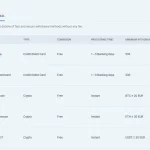
Choosing an online pokies site is easier when you can check the available details before signing up. Use this list as a starting point and consider which stated licensing, deposit and payout details matter to you.
1. Rollero Casino
License: Curacao Gaming Control Board OGL/2023/176/0095 (Hollycorn N.V.) Rollero Casino is listed with a Curacao Gaming Control Board licence, OGL/2023/176/0095, held by Hollycorn N.V.
2. 7Bit Casino
License: Curacao, operated by Dama N.V. 7Bit Casino is operated by Dama N.V. and is listed as licensed in Curacao.
3. JustCasino
License: Curacao Gaming Control Board JustCasino is listed with a Curacao Gaming Control Board licence.
4. Bizzo Casino
License: Curacao Gaming Control Board (TechSolutions Group N.V.) Bizzo Casino is listed with a Curacao Gaming Control Board licence, with TechSolutions Group N.V. named in connection with it.
5. SkyCrown
License: Tobique Gaming Commission · Payout speed: crypto ~10-15 minutes, fiat 1-5 days · Min. deposit: A$30 SkyCrown is listed with a Tobique Gaming Commission licence and a minimum deposit of A$30. Its stated payout times are around 10–15 minutes for crypto and 1–5 days for fiat.
6. Uptown Pokies
License: Curacao (operating since 2017) · Min. deposit: A$20 Uptown Pokies is listed as operating since 2017 under a Curacao licence. Its minimum deposit is A$20.
7. DragonSlots Casino
License: Curacao Gaming Authority (Jumpman Gaming Ltd) DragonSlots Casino is listed with a Curacao Gaming Authority licence, with Jumpman Gaming Ltd named as the operator.
8. Kingmaker
Payout speed: crypto ~90 minutes, fiat 1-5 days · Min. deposit: A$30 Kingmaker lists a minimum deposit of A$30. Its stated payout times are around 90 minutes for crypto and 1–5 days for fiat.
9. House of Pokies
License: international iGaming licence – jurisdiction not named in the source · Payout speed: PayID 1-24 hours · Min. deposit: A$30 (PayID from A$10) House of Pokies is listed with an international iGaming licence, though the jurisdiction is not specified. Its minimum deposit is A$30, or A$10 for PayID, with stated PayID payouts of 1–24 hours.
10. Wild Tokyo
License: Curacao · Payout speed: crypto 30-60 minutes, fiat 1-5 days · Min. deposit: A$10 Wild Tokyo is listed with a Curacao licence and a minimum deposit of A$10. Its stated payout times are 30–60 minutes for crypto and 1–5 days for fiat.
This is an unusual kind of boundary: firm on the supplier’s conduct, less direct in its treatment of the individual who encounters the service. A player is not made criminally liable merely by playing on an offshore site. That does not mean the transaction enjoys the protections that accompany a locally licensed business. Lawful status is not contagious; it cannot pass from the player to the operator, or from a website’s availability to the service it sells.
There is no Australian-licensed online casino. That absence is not a technicality to be solved by finding a foreign regulator’s seal on a page. An offshore licence, where one exists, belongs to another jurisdiction and does not amount to permission under Australian law to supply real-money online pokies to people here. The domestic licensing route has not produced a local online casino sector.
For the player, the most consequential difference may emerge only when something goes wrong. If an offshore casino refuses to pay winnings, an Australian player has no legal recourse in Australia against that operator. The gap between a game appearing on a screen and a claim that can be enforced in a local court is therefore substantial. A displayed balance may look precise; its practical value depends on a business beyond the reach of the domestic licensing system.
Pokies by Region: Australian City and State Guide
This leaves two propositions that need to be held together. The law’s prohibition is aimed at companies providing the service, rather than at players as the principal enforcement target. At the same time, the service remains prohibited when supplied to people in Australia, and the player does not gain Australian legal protection simply by being outside the law’s focus. “Not liable” and “protected” are not synonyms. Dry distinction, large consequences.
Searches for real-money online pokies in Australia often suggest a straightforward consumer choice: compare games, open an account, and decide where to play. The legal structure is less accommodating than that familiar retail pattern. A domestic licence is not available to establish the local status of an online casino, and an offshore operator’s willingness to accept Australian customers does not supply one. Nor does the player’s lack of criminal liability resolve the question of whether the operator is lawfully offering the service.
That is why the legal line is not a recommendation about where to play, or a finding that one offshore site is safer than another. It is a description of the arrangement: Australian law prohibits companies from providing real-money online casino-style games to people in Australia; no Australian online casino licence has been issued; and a player who is not the target of the operator-focused prohibition may still be left without Australian recourse if an offshore business withholds winnings.
The distinction can sound abstract until money is at stake. Then the limits become concrete. The law does not convert an offshore account into a locally supervised one, and it does not provide an Australian remedy when a foreign operator refuses payment. A familiar game, an Australian-facing page or an account balance cannot fill that legal space.
Legal Recourse
If an offshore casino refuses to pay winnings, Australian players have no legal recourse in Australia against that operator.
Australia’s Online Pokies Market, and the Limits of Its Regulator
The public picture of online pokies in Australia is shaped by two different questions: who may gamble, and what the state can do about services offered over the internet. The first has a clear threshold. The second is a matter of enforcement, with the Australian Communications and Media Authority (ACMA) responsible for applying the Interactive Gambling Act 2001 and blocking access to illegal offshore gambling sites.
The legal age for gambling in Australia, including online pokies, is 18. That threshold is easy to state, but it belongs to a wider social arrangement: gambling is treated as an adult activity, while the rules around it are divided between permission to participate and restrictions on what can be provided. Age is only one part of the picture. It does not turn a prohibited service into an approved one, or make the internet a separate jurisdiction where ordinary rules cease to matter.
ACMA is the country’s primary domestic regulator for this area. Its role includes enforcing the Interactive Gambling Act and maintaining a blocklist that internet service providers are required to follow. This is a concrete form of oversight: the regulator identifies illegal offshore gambling sites for blocking, and providers must comply. The machinery is less visible than a sign on a venue door, but it reflects the same underlying idea—that gambling is not merely a private transaction between a business and a customer.
A blocklist is also a particular kind of instrument. It acts on access to identified sites; it is not a general seal of approval for everything that remains visible online. Nor does the existence of a blocked address mean that the regulator has inspected every service connected to online pokies in Australia. The public often expects regulation to work like a single gate, opening onto a cleanly supervised market. Internet enforcement is more like a boundary drawn and maintained through specific measures. Useful, but not omniscient.
Big Red pokies online in Australia: legal status
That distinction matters because visibility can be mistaken for legitimacy. A site appearing in search results, being discussed online, or remaining reachable at a particular moment does not establish that it has been approved by ACMA. Likewise, the regulator’s role should not be confused with a promise that every claim made by an online gambling business has been checked. Oversight has a defined task: in this context, ACMA enforces the law and blocks access to illegal offshore gambling sites. It is not a universal quality mark for online services.
The requirement on internet service providers gives the blocklist practical force. ACMA identifies sites for blocking; providers are required to act on that list. This places enforcement within the everyday infrastructure through which people reach the internet, rather than leaving the law as a statement on paper. It also means the regulator’s intervention is focused on access to named sites. That is an important distinction from the broader and often imagined notion that a public authority continuously supervises every online interaction.
Pokies in Brisbane: Hours, Rules and Online Play
The market’s language can blur these boundaries. “Online pokies Australia” may sound like a single domestic category, as though the location of the player, the location of the company and the status of the service naturally line up. They do not necessarily do so. ACMA’s blocking role is part of how the Australian state responds to illegal offshore gambling, but it does not make every online service that can be found from Australia a domestic offering. A map on a screen is not a licence.
Age restrictions and site blocking therefore answer different questions. The 18-year threshold identifies who is legally old enough to gamble. ACMA’s enforcement concerns the provision of prohibited services and the restriction of access to illegal offshore sites. Neither measure should be used as shorthand for the other. Being an adult does not mean every service is lawful; seeing a service online does not mean a regulator has endorsed it.
There is a modest irony in the way digital markets invite people to think of availability as a kind of permission. The internet is designed to make distance feel inconsequential, while regulation is built around responsibilities, jurisdictions and specific acts. ACMA’s blocklist is one point where those systems meet: a domestic authority directs action through internet service providers, but the task remains targeted rather than universal.
Live casino online in Australia: legal limits
For anyone trying to understand Australia’s online pokies landscape, the useful distinction is not between what looks established and what looks obscure. It is between the regulator’s actual function and assumptions placed upon it. ACMA enforces the Interactive Gambling Act 2001 and blocks access to illegal offshore gambling sites; providers must comply with its blocklist. That is meaningful oversight. It is not a blanket endorsement of the wider online market, nor a guarantee that every service a person encounters has been reviewed. A limit, clearly marked.
Bonuses, Turnover, and the Price of a Promise
A bonus is presented as a gift, but its wagering requirement turns it into a task. The multiplier applies to a stated amount of play before winnings can be withdrawn; the crucial detail is what amount the operator uses as its base. A headline figure can therefore look generous while the condition attached to it makes the apparent value harder to realise.
Pokies in Canberra: venue hours and search limits
The arithmetic is plain. A specialist review uses a $500 bonus with a 40x wagering requirement to illustrate that the required turnover would be $20,000 before any winnings could be withdrawn. That is not a prediction of how much a player will lose, nor a promise that completing the turnover will leave a balance to cash out. It is the amount that must be wagered under the stated calculation. The distinction matters: turnover measures repeated bets, not money safely set aside for withdrawal.
A second calculation changes the base. If the requirement applies to a $500 deposit plus a $500 bonus, a 35x multiplier is applied to $1,000, producing $35,000 in required bets. The bonus has not merely doubled the balance available for play; it has also enlarged the amount against which turnover is calculated. A promotion that counts only the bonus and one that counts deposit and bonus together may display the same multiplier but impose different obligations.
A specialist review suggests treating requirements of 35x or less as the more tolerable end of the scale, while describing anything above 40x as punishing. That is a judgement offered by that kind of source, not a universal standard. The arithmetic still gives the reader a way to test the language: identify the multiplier, find the amount to which it applies, and calculate the resulting turnover. Without the base, the multiplier is only half the condition.
Bonus Turnover Calculation
Step 1: Identify the Base
Determine if the wagering requirement applies only to the bonus amount or to the sum of the deposit and the bonus.
Step 2: Apply the Multiplier
Multiply the base amount by the wagering requirement (e.g., $500 bonus × 40x = $20,000).
Step 3: Determine Total Turnover
Calculate the total amount that must be wagered before any winnings can be withdrawn.
The distinction is especially relevant to offers framed as a sign-up reward or as play without an initial deposit. “No deposit” describes how the offer is presented, not necessarily what must happen before winnings become withdrawable. A wagering condition can remain attached, and the stated reward may be subject to other terms. The absence of an upfront deposit does not turn a promotional balance into cash in hand.
The same caution applies to free spins, though their terms can work differently from a cash bonus. A specialist review notes that an offer may place a ceiling on the winnings that can be cashed out. In that case, a large result during the spins does not necessarily translate into an equally large withdrawal. The cap is a promotional condition: it concerns what the offer permits to be retained, not how a payment is made.
That difference is easily blurred in the language of online promotions. A payment method concerns the route by which funds move; wagering requirements and cash-out caps concern the conditions attached to a reward. One cannot resolve the other. A payment option does not make a demanding turnover clause smaller, and a bonus does not become more valuable merely because its terms are presented beside a familiar deposit method.
The useful comparison is therefore not between the largest headline bonus and the smallest one. It is between the promised amount and the work imposed on it: whether turnover is calculated on the bonus alone or on deposit plus bonus, and whether a cap limits cashable winnings. The numbers can be made to look welcoming. The calculation is less sentimental.
Best Pokies in Perth: What Can Be Verified
PayID Is a Payment Rail, Not a Seal of Approval
PayID is an address for a bank transfer, not a separate store of money. It sits over Australia’s New Payments Platform (NPP), letting a payment be directed through an email address, mobile number or ABN rather than by entering ordinary account details. The distinction is practical: the alias helps identify the destination, while the transfer itself moves through the banking system.
The NPP is supported by all major Australian banks and uses end-to-end encryption. That describes the payment network, not the conduct of every business that might accept a transfer through it. A secure rail can carry a payment to a destination without certifying what happens there afterwards. Infrastructure has limits; endorsements are not among its functions.
For a real-money transfer to an online casino, PayID must first be linked to a bank account. The bank account remains central: PayID supplies a recognisable route to it, rather than replacing it with an independent wallet. A transfer can therefore be affected by the bank’s own controls, even when the PayID address has been entered correctly.
That matters in a market where payment access and legal status are often blurred together. A payment option appearing on a cashier page does not establish that a service is licensed in Australia, that its games are fair, or that its return settings are disclosed. Nor does the NPP’s security provide a remedy if a dispute arises with an offshore operator. A payment system can confirm a transaction’s route; it cannot settle the larger questions about the recipient.
PayID Functionality
PayID acts as an alias for a bank transfer via the New Payments Platform (NPP); it does not replace the bank account or provide a separate store of money.
A specialist review has described PayID as being handled in the same way as other qualifying deposit methods at the sites it discusses. That is a report about those sites, not a rule of the payment network or a settled description of the whole market. Payment arrangements can vary, and the presence of one method says little about the conditions attached to another.
The same caution applies to transfer failures. A specialist review reports that some Australian banks, including members of the Big Four, sometimes block PayID transfers directed to known gambling merchants. The point is not that every transfer will be stopped, or that every bank applies the same controls. It is that the bank may intervene before the funds reach the recipient. A declined transfer can reflect a bank restriction, rather than a fault in the alias itself.
That distinction can be hard to see from the customer’s side. PayID makes the destination easier to address, but it does not overrule the bank’s decision about a payment. The NPP may be available across major banks while particular transfers remain subject to restrictions. Availability of the rail and approval of a transaction are separate matters.
The name can encourage an impression of directness: enter an email or mobile number, and money seems to travel as simply as a message. Yet the familiar alias conceals a chain of institutions and decisions. The bank account must be linked; the payment must pass the bank’s controls; the recipient must be willing and able to process it. None of those steps answers whether the recipient is trustworthy.
PayID is useful to understand as a piece of plumbing. It routes; it does not judge. In particular, it is no seal of approval for an online gambling service, and it cannot make an offshore operator accountable under Australian licensing arrangements. A payment method is not a licence.
Pokies in Sydney: Find a Venue and Check the Details
Free Spins, Free Play, and the Fine Print
A free-spin offer sounds like a small gift: a set of turns detached from the ordinary cost of playing. But the word “free” describes only the entry point. What matters at the other end is whether winnings can be withdrawn, and whether a ceiling applies to the amount that can be cashed out.
A specialist review reports that free-spin offers may include such a cap. That qualification matters. A win displayed in an account is not necessarily the same thing as money available to withdraw. If the offer limits cashable winnings, the promotional terms define how much of the result can leave the account. The headline gives the spins; the fine print sets the boundary.
This is a narrow point, but an important one. The existence of a cap does not establish that every offer has one, or tell how high any particular cap might be. Those details belong to the terms of the individual promotion. Treating a reported condition as a universal rule would be as misleading as treating the word “free” as a promise of unrestricted cash.
The distinction between free spins and free play also deserves care. The phrases can sound interchangeable in casual conversation, yet an offer tied to spins is a promotion with conditions attached, while “free play” may be used more loosely to describe play that does not involve a cash stake. Neither phrase, by itself, explains whether any resulting balance can be withdrawn. That question has to be answered by the offer’s own wording.
Promotions turn a simple action into a small piece of contract language. The attractive part is easy to read: spins are offered without a direct charge. The less visible part concerns what happens to any winnings. A cap can leave a balance that looks substantial on screen but cannot all be cashed out under that offer. The difference is not in the spin; it is in the terms governing the result.
Online Keno Casinos in Australia: Legal Limits
For that reason, the useful question is not merely how many spins are advertised. It is whether the offer places a limit on cashable winnings, and what that limit means in practice. A promotion that gives no clear account of this boundary leaves the most consequential part obscure. The word “free” cannot fill that gap.
Free spins are therefore best understood as a promotional arrangement, not as a guarantee of withdrawable money. The reported cap is a reminder that an apparent win and a cashable win may be different things. Small print, large consequence.
E-Wallets and the Quiet Work of Moving Money
Skrill and Neteller occupy a quieter corner of the payment landscape than bank transfers or cards. A specialist review describes e-wallets as popular for their speed and relative anonymity. That is a description of their appeal, not a promise of secrecy: the word “relative” carries much of the weight.
An e-wallet separates the act of paying from the account or card used to fund it. That extra step can make a transaction feel less exposed, but it does not settle the more important questions around an online pokies service. A payment method is not evidence of a licence, fair treatment or clear game settings. Money can move through a familiar channel without the destination acquiring any greater standing.
There is also a small but telling difference between the payment’s convenience and its cost. A specialist review reports that minimum deposits at many operators fall between AU$10 and AU$20, while some accept AU$5. These are reported terms, not a dependable price list: deposit rules belong to individual operators and can change. A low threshold may make an account feel easy to try; it says nothing about how straightforward it will be to get money back.
Instant payout online casinos in Australia
That distinction matters because payments are often treated as a technical detail, while they are also part of the relationship between a customer and a business. The wallet may make the first transfer feel orderly and familiar. It cannot make the business answerable in the same way a domestic institution would be. The interface is polished. The underlying bargain is not transformed.
Nor does relative anonymity mean that verification disappears. Online gambling businesses may ask for identity or other information as part of account procedures. A wallet should therefore not be read as a way to avoid scrutiny, or as a guarantee that personal details remain beyond reach. Its role is narrower: it is a means of moving funds.
The Australian setting gives that narrow role a particular edge. There is no Australian-licensed online casino, and offshore services sit outside the ordinary protections a domestic licence would provide. Skrill or Neteller may be familiar names, but familiarity belongs to the payment service, not to every merchant that accepts it. The distinction is easy to miss when both appear in the same payment screen.
For anyone comparing payment choices, the useful question is not whether a wallet sounds modern or discreet. It is whether the terms for deposits, withdrawals and account checks are stated clearly—and whether the operator can be held to them. A payment rail can reduce friction. It cannot repair a weak bargain.
What a Careful Comparison Can—and Cannot—Establish
A comparison of online pokies can describe terms; it cannot turn an offshore service into an accountable local one. That distinction tends to vanish beneath tidy tables of features. The more useful comparison asks what happens after a balance becomes a request for payment.
A specialist review reports that some casinos set weekly or monthly withdrawal ceilings of $5,000–$10,000. Under such a cap, a $50,000 jackpot could be paid in instalments over years rather than arriving as one sum. The figures describe a reported condition, not a universal rule: withdrawal terms belong to each operator and may change. A headline prize and the route by which it can be collected are different things.
Fast payout online casinos in Australia: key checks
Identity checks are another part of that route. A specialist review says casinos commonly ask for verification before a first withdrawal, potentially including a photo of identity documents and proof of address; some may also request a selfie with the identity document. These requirements can make a cash-out less immediate than the account balance suggests. They also mean that document handling is not a minor footnote to the comparison.
BetStop belongs in the same careful accounting, but for a different reason. It applies to Australian-licensed gambling operators; it does not bind offshore sites. Since Australia has no licensed online casino, registration with BetStop cannot be treated as a universal barrier to offshore gambling. The name may sound comprehensive. Its reach is not.
A neat scorecard can record stated limits, verification steps and available protections. It cannot establish that an offshore operator will honour a win, nor supply Australian legal recourse if it refuses. Comparison has a boundary. So does reassurance.
Online Chatter, Card Blocks, and Bonus Arithmetic
Discussion threads about online pokies in Australia can be useful as a record of what players say they encountered: a bonus credit that did not appear, a deposit that was declined, or a payment condition that seemed different from its headline. They are not proof that a particular account, transaction or offer was handled in the same way for everyone. Posts can omit the terms attached to an offer or the bank’s explanation for a declined payment. The distinction is modest, but important: chatter can point to a detail worth checking; it cannot settle the detail.
Bonus credit is especially easy to misread in a screenshot or a short post. The phrase may refer to promotional funds rather than withdrawable cash, and the surrounding terms determine what happens next. That question belongs to the offer itself, not to the payment card used to fund an account. A claim that credit was “added” says little about whether it can be withdrawn, or under what conditions.
Banking Fees
Attention: Some banks or card issuers may classify gambling deposits as cash advances, potentially applying a 3–5% fee and immediate interest.
Card deposits carry a separate cost risk. A specialist gambling review reports that banks and card companies are increasingly blocking transactions to known gambling sites; that describes a reported trend, not a guarantee that a given payment will be stopped. Separately, a specialist review notes that a bank or card issuer may classify a gambling deposit as a cash advance. If it does, a fee of 3–5% and interest from the day of the transaction may apply. The charge can therefore arise from the card contract, not from the casino’s own deposit terms.
That is why a successful payment is not, by itself, evidence that a transaction was ordinary shopping, or that the terms attached to bonus credit were clear. A declined payment is not proof of a site-wide rule either: the issuer’s decision can shape what appears to be a platform problem.
Online discussion is best read as a lead, then checked against the relevant payment and promotion terms. An anecdote can raise the right question. It cannot answer it for every account.
Pokies in Melbourne: What Can Be Verified
New Games, Old Questions About Return Settings
A newly released pokie arrives with the familiar promise of novelty: fresh artwork, a different theme, perhaps a feature that makes an old format look newly dressed. Yet the visible design is only part of the game’s configuration. A specialist review reports that some providers let casinos choose among multiple return-to-player (RTP) settings for the same pokie. The title can therefore be identical while its stated return percentage differs between casinos.
That distinction complicates the easy language of “new”. A release date says when a game became available; it does not, by itself, describe the setting in use at a particular venue. Nor does a familiar name establish that every version has the same RTP. Where a provider permits a choice, the casino’s selected setting matters. A game catalogue, screenshot or title alone cannot settle that question.
RTP is a theoretical measure of how much a game is designed to return across extended play, not a promise about an individual session. Its usefulness depends on knowing which setting applies. If a listing gives no setting, the percentage cannot safely be inferred from another casino’s listing for the same game. Similar branding is not technical confirmation.
Best Pokies in Adelaide: Hours and Legal Limits
This is a small piece of machinery with a large effect on how comparisons are read. New online pokies can be discussed as releases, but their novelty should not be confused with uniformity. The provider may supply the game and the available configurations; the casino’s choice can determine which configuration is offered. The distinction is less glamorous than a launch banner. It is also more informative.
A careful description should identify the game and the applicable RTP setting separately, where that information is available. If it is not stated, the uncertainty belongs in the comparison rather than being filled with an assumption. The title may be new. The old question remains: which version is actually being played?
Practice Play and the Independence of Every Spin
Practice play can make the mechanics of pokies easier to follow: buttons, symbols and the rhythm of a round become familiar without turning a previous result into a clue. That distinction matters. Familiarity is not foresight.
A pokie’s outcome is generated by a Random Number Generator (RNG). Each spin is a separate event, rather than a continuation of the one before it. A run of losses does not make a win due, and a recent win does not mean another is more likely next. The machine has no memory in the human sense; patterns visible across a short stretch of play do not establish what the next result will be.
This is the narrow, useful lesson of online pokies practice in Australia: it can show how a game behaves on screen, but watching or making earlier spins cannot reveal the next outcome. Practice may create confidence with the interface. It cannot teach a person to read randomness as a sequence of promises.
That is a modest boundary, but an important one. People naturally look for rhythm in repeated events; machines offer plenty of symbols on which to hang that instinct. The RNG offers no corresponding narrative. Every new spin begins without owing anything to the last.
What is the legal age for online gambling in Australia?
You must be at least 18 years old to gamble online in Australia.
What does “wagering requirement” actually mean?
It is the amount you must bet before bonus winnings can be withdrawn, calculated using a turnover multiplier. For example, a 40x requirement on a $500 bonus means $20,000 in bets.
What is the minimum PayID deposit?
Minimum deposits are usually AU$10–AU$20, though some sites accept AU$5. PayID is treated like other qualifying deposit methods.
Can casinos change the RTP of their games?
Yes. Some game providers let casinos choose between different RTP settings, so the same pokie can have different return percentages at different casinos.
Pokies

Aussie Online Casinos: Legal Limits, Terms and Payments
Australia has no domestic online-casino licences, so operator status, player protections and offer terms require...

Best Aussie Pokies Online in Australia: Free vs Real Play
The guide distinguishes simulated credits from cash wagers and examines the conditions, payments and checks...

Australian Online Pokies: Offers, Payments and Risks
The guide separates local terminology from operator licensing and explains payment, bonus, verification and cash-out...

Adelaide Casino Guide: Rooms, Dining and Practical Searches
A practical look at accommodation offers, nearby stays, dining and other searches—and what the available...

Brisbane Casino Hotel and Visitor Guide
A practical overview of accommodation, gaming distinctions, food and logistics helps clarify what a casino...

Canberra Casino: Hotel and Venue Information
The guide distinguishes a genuine casino property from nearby accommodation and explains what remains unverified...

Darwin Casino: A Guide to Stays, Dining and Visits
The guide considers the venue as a workplace and gathering place, alongside stays, food, events...

Hobart Casino Guide: Poker, Hotels and Key Questions
An overview of Hobart casino questions, including live poker formats, accommodation and amenities that the...

Melbourne casino stays: details to verify
The page distinguishes casino-related search terms from confirmed facts about stays, gaming, dining, facilities and...

Perth Casino Guide: Hotels, Access and What to Verify
A practical look at accommodation, venue access and casino-related details, with clear limits where the...

Queensland casino details: what to verify
Hotel labels, nearby accommodation and venue amenities are separate claims that need confirmation before plans...

Best Casino in Sydney: What the Search Can Confirm
A practical look at what the Sydney casino search can establish about accommodation, gaming, dining,...

Casino Stays in Tasmania: Hotel Listings and Practical
A guide to interpreting casino accommodation, gaming, dining and amenity searches in Tasmania without treating...

Victoria Casino Guide to Hotels, Dining and Facilities
The article distinguishes established casino information from unanswered questions about hotels, dining, facilities, parking and...

Casino Hotels in Western Australia: Stay Guide
A practical guide to accommodation, dining, venue facilities and the booking details that shape a...

Fast payout online casinos in Australia: key checks
An overview of offshore casino access in Australia and the conditions that can shape withdrawals,...

Instant payout online casinos in Australia
Withdrawal speed depends on separate stages, from operator review and account checks to approval and...

Live Dealer Casinos Online in Australia: What to Know
This guide distinguishes Australia’s rules for offshore casino operators from what game pages, reviews and...

Live casino online in Australia: legal limits
It distinguishes the Australian rule on offshore real-money services from what the available evidence can...

Online Keno Casinos in Australia: Legal Limits
This guide distinguishes real-money online casino keno from venue play and explains why offshore access...

Best Pokies in Adelaide: Hours and Legal Limits
Opening hours vary by venue, while online and mobile pokies remain subject to Australia’s legal...

Pokies in Brisbane: Hours, Rules and Online Play
Venue opening hours, machine operation and online casino settings are separate questions when searching for...

Pokies in Canberra: venue hours and search limits
Opening times, gaming-room access, location claims and payment labels all require venue-specific context. Canberra Pokies:...

Geelong Pokies: Venue Hours, Rules and Local Limits
Venue schedules can separate gaming rooms from other services, while local rules and safeguards shape...

Pokies in Melbourne: What Can Be Verified
The article distinguishes available evidence from assumptions about airport access, venues, opening hours, machine returns...

Pokies in New South Wales: Hours and Access
A venue’s opening status is not proof that poker machines are available, and location-based searches...

Best Pokies in Perth: What Can Be Verified
A cautious guide to checking gaming-area availability, payout claims and location details without treating listings...

Best Pokies in South Australia: A Practical Guide
A guide to interpreting game and RTP claims, checking local venue details and distinguishing online...

Pokies in Sydney: Find a Venue and Check the Details
Location, venue-specific opening times and the limits of payout claims all matter when comparing pokies...

Best Pokies in Tasmania: Venues, Hours and Online Limits
Venue listings, gaming-room availability and online casino searches each have limits that matter when comparing...

Real-money online pokies in Australia: legal gap
Australia has no licensed online casinos, so payment options, offshore status and game terms do...

RTP Pokies in Australia: How to Compare Returns
RTP describes a configured return over time, but settings and casino listings can vary, making...

Big Red pokies online in Australia: legal status
The page distinguishes unverified Big Red game and download claims from the legal limits on...

Most Trusted Online Casinos in Australia: Legal Reality
Australia has no domestic online-casino licences, so trust claims must be weighed against legal limits...

Pokies Open Near Me in Australia: Casino Hours
Casino operating hours do not confirm that every room, counter, restaurant or other service is...

Pokies Parlour Casinos in Australia: What to Know
The term describes a place or gaming area, while authorisation attaches to the casino property...