High-Volatility Slots in Australia: How They Work
 Available in AU

High volatility means less frequent wins and a wider range of payouts, not a forecast of when a feature or larger result will arrive.
Table of Contents
- The Shape of a High-Volatility Spin
- Why a Dry Spell Says Nothing About the Next Spin
- Online Pokies in Australia: The Legal Landscape
- The Bankroll Cost of Chasing Rare Features
- RTP Is an Average, Not a Session Forecast
- Choosing Between High and Low Volatility
- What to Check Before Trying a High-Volatility Slot
- Bonus Stages, Progressive Jackpots and Uneven Payouts
- Pragmatic Slots and the Limits of Volatility Labels
- Casino Games
The Shape of a High-Volatility Spin
A high-volatility pokie is defined less by what happens on any single spin than by the uneven shape of its payouts over time. Wins tend to arrive less often, but a successful one can be larger. The contrast is with low-volatility games, where smaller wins occur more frequently. In plain terms, one rhythm is sparse and dramatic; the other is busier and more modest.
That distinction can be easy to misread while a game is in motion. A run of losing spins may make a high-volatility pokie feel as though it is withholding something, while a small return in a lower-volatility game can feel like steady progress. Neither impression changes the game’s character. Volatility describes the pattern associated with a game, not a promise about the timing or size of a particular result.
The word itself comes from the language of variation: how much outcomes can swing around. In casino games, it is shorthand for the scale and frequency of payouts. A high-volatility game has a wider-feeling range between ordinary stretches and rare, more substantial wins. A low-volatility game tends towards a narrower rhythm, with smaller returns showing up more often. It is a useful description of payout behaviour, not a grade of quality.
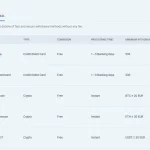
High-volatility slots can bring bigger swings in results, so it helps to check the available operator details before choosing where to play. Use this list as a starting point and consider what matters to you, including licensing and payment information where provided.
1. Rollero Casino
License: Curacao Gaming Control Board OGL/2023/176/0095 (Hollycorn N.V.) Rollero Casino is listed with a Curacao Gaming Control Board licence, number OGL/2023/176/0095, held by Hollycorn N.V.
2. 7Bit Casino
License: Curacao, operated by Dama N.V. 7Bit Casino is described as operating under a Curacao licence, with Dama N.V. as its operator.
3. JustCasino
License: Curacao Gaming Control Board JustCasino is listed with a Curacao Gaming Control Board licence.
4. Bizzo Casino
License: Curacao Gaming Control Board (TechSolutions Group N.V.) Bizzo Casino is listed with a Curacao Gaming Control Board licence, with TechSolutions Group N.V. identified.
5. SkyCrown
License: Tobique Gaming Commission · Payout speed: crypto ~10-15 minutes, fiat 1-5 days · Min. deposit: A$30 SkyCrown is listed with a Tobique Gaming Commission licence. The provided details give crypto payouts at around 10–15 minutes, fiat payouts in 1–5 days, and a A$30 minimum deposit.
6. Uptown Pokies
License: Curacao (operating since 2017) · Min. deposit: A$20 Uptown Pokies is described as operating under a Curacao licence since 2017. Its stated minimum deposit is A$20.
7. DragonSlots Casino
License: Curacao Gaming Authority (Jumpman Gaming Ltd) DragonSlots Casino is listed with a Curacao Gaming Authority licence, with Jumpman Gaming Ltd named.
8. Kingmaker
Payout speed: crypto ~90 minutes, fiat 1-5 days · Min. deposit: A$30 Kingmaker’s listed payment details include crypto payouts at around 90 minutes and fiat payouts in 1–5 days. Its stated minimum deposit is A$30.
9. House of Pokies
License: international iGaming licence – jurisdiction not named in the source · Payout speed: PayID 1-24 hours · Min. deposit: A$30 (PayID from A$10) House of Pokies is described as holding an international iGaming licence, though the jurisdiction is not named. The provided details list PayID payouts in 1–24 hours and a A$30 minimum deposit, or A$10 for PayID.
10. Wild Tokyo
License: Curacao · Payout speed: crypto 30-60 minutes, fiat 1-5 days · Min. deposit: A$10 Wild Tokyo is listed with a Curacao licence. Its stated payment details are crypto payouts in 30–60 minutes, fiat payouts in 1–5 days, and a A$10 minimum deposit.
The distinction also explains why two pokies with similar-looking reels can feel so unlike one another. Their themes, symbols and animations may invite the same basic action, but the payout pattern can create very different sessions. One may offer frequent little interruptions to a losing run; another may leave long spaces between meaningful returns. The screen supplies colour and motion. Volatility describes the less visible arrangement beneath them.
There is no universal visual sign that identifies a high-volatility game. A dramatic theme does not establish it, and a quiet-looking game need not have a gentle payout pattern. Nor does the size of a symbol or the spectacle of an animation, by itself, tell much about how often a game pays. The label concerns outcomes over time, not the costume in which a game presents them.
This is why the phrase “high-volatility slot machine” can sound more precise than it is in casual conversation. It identifies a broad category, not a forecast. A game in that category is associated with infrequent but larger payouts; it does not follow that a larger payout is due after a long wait, or that every session will contain one. The category says something about the shape of the experience in aggregate, while a session is only one passage through it.
Video Slots in Australia: Features, Access and RTP · Pokies Tips and Tricks: What Actually Affects Play
A useful comparison is musical rather than mechanical. Low volatility resembles a steady pulse, with modest changes happening often. High volatility resembles a piece with long quiet intervals and occasional crescendos. The comparison is not a claim that a crescendo must arrive on schedule. It describes contrast: how concentrated the more noticeable moments can feel beside the ordinary ones.
That contrast affects the emotional texture of play. Frequent small returns can keep the balance moving and make a session feel active, even when those returns do not amount to a net gain. Less frequent payouts can make a high-volatility game feel stark by comparison. A return may be more conspicuous precisely because the spaces around it have been longer. The mind, which is fond of patterns even when they are not promises, gives such moments extra weight.
A large payout can also be misunderstood as evidence that a session has been profitable. It is not enough to look at the size of one return without considering what was wagered along the way. A bonus round can produce an impressive-looking payout and still leave no profit overall. Display and arithmetic are not the same thing.
This is one reason volatility should not be treated as a synonym for generosity. High volatility does not mean that a game gives more back, or that its occasional larger wins compensate a particular player for every stretch without them. It describes the distributional character of the payouts, not a favourable bargain. A label can tell something about the ride; it cannot settle whether the ride is worth its cost.
Attention: High-volatility games are suited to people willing to risk a larger bankroll, as their less frequent returns can leave more room for losing stretches.
The same caution applies to the word “suitable”. High-volatility games are suited to people willing to risk a larger bankroll, because their less frequent returns can leave more room for losing stretches. That is a description of the financial tolerance such a pattern demands, not an endorsement. Setting a budget in advance and never wagering more than can be afforded to lose remain essential boundaries. A small balance may disappear before a feature or substantial payout appears.
Volatility is also separate from the theatrical language used around features. A bonus screen, a cascade of symbols or a chain of stages can make a game seem more active, but spectacle does not itself tell how the payouts are distributed. The apparent importance of a feature is not proof that it will arrive soon or return what has been spent waiting for it. Games can look generous at the very moment their arithmetic says otherwise. A rather polished contradiction.
In everyday speech, “high volatility meaning slots” tends to be a request for a simpler answer than the terminology offers. The simplest accurate one is that wins are less frequent and can be larger than in lower-volatility games. The less simple, but equally important, part is that this says nothing definite about the next stretch of play. No system beats a pokie; its outcomes are independent, and the game contains a built-in house edge. That fact belongs beside the definition, not hidden behind the excitement of a rare payout.
So the shape is not a staircase steadily climbing towards a reward. It is an uneven distribution: quiet or unproductive stretches, punctuated by the possibility of a more substantial return. Low volatility offers a different rhythm, with smaller wins appearing more often. Neither description promises comfort, profit or a particular ending. They name the broad character of the game, while the player’s balance bears the consequence of each spin.
3-Reel Slots in Australia: How Each Spin Works · Mines Casino Game in Australia: Rules and Access
Why a Dry Spell Says Nothing About the Next Spin
A run of losing spins can feel like a pattern with a message in it. A win that arrived after a long wait can seem like the answer to a question the machine had been asking. Both interpretations are human; neither describes how a pokie’s next result is produced. Each spin is independent of the one before it.
The random number generator, or RNG, produces combinations without consulting the recent history of play. A series of misses does not make a win due, and a recent payout does not make another one less likely. The screen may show a sequence that looks orderly, but that sequence does not tell the machine what to do next.
This can be awkward to accept because people are good at finding patterns, especially when money and anticipation are involved. A dry spell invites explanations: perhaps the game is “warming up”, perhaps a feature is close, perhaps a particular rhythm of pressing the button will help. Such ideas give uncertainty a shape. They do not give it predictive power.
The past is not a lever
High-volatility pokies can have extended stretches between significant payouts, alongside the possibility of rare, larger wins. That rhythm can make each quiet spin feel like evidence that something is building. But volatility describes the broad pattern of payouts, not a countdown to the next one. A long interval without a major result does not change the next spin’s independence.
Volatility describes the broad pattern of payouts, not a countdown to the next one; a long interval without a major result does not change the next spin’s independence.
Nor can a player make a particular outcome arrive by changing the timing of a spin, repeating a sequence of actions or raising a stake. The combinations cannot be predicted or manipulated in that way. Altering the wager changes the amount exposed, not the random process that determines the result.
That distinction matters when a feature has not appeared for a while. A bonus round can look close because its symbols have appeared separately or because the game has produced a memorable near miss. Yet those images are still the outcomes of completed spins. They do not create a debt the game must repay. A bonus round can also produce no profit, even when its payouts appear large; a dramatic sequence is not the same thing as a favourable result overall.
No system beats a pokie. Each spin remains independent, and the game has a built-in house edge. A method may make play feel more deliberate, but it cannot turn previous results into information about the next combination.
The symbols remember nothing.
Why near misses feel persuasive
A near miss has a special talent for keeping attention. Two matching symbols and a third just beyond the line can feel more significant than an ordinary loss, as if the game has disclosed how close success was. It has not disclosed a probability or a coming result. It has displayed one combination, and the next spin begins independently.
The same is true of a sequence that seems to repeat. A few similar outcomes can look like a trend, particularly in a game whose features are visually elaborate. But resemblance is not a signal. The RNG is not adjusting its next result to compensate for what has already happened, and a player cannot read a reliable forecast from the screen.
Five-Reel Slots in Australia: Bonuses and RTP · Live Baccarat Online in Australia: Legal Guide
This is one reason a high-volatility slot can be difficult to interpret in the moment. The possibility of a rare large win makes a quiet stretch feel charged with meaning. In reality, the stretch is part of the experience of uneven payouts, not proof that a significant result is imminent. The next spin may produce a win or another loss; the previous sequence cannot settle the matter.
Control what can be controlled
Since the result cannot be controlled, the sensible controls concern the session rather than the machine. A budget can mark the point at which play stops; it should be money that can be lost without compromising essential expenses. Stakes that remain disciplined are less likely to exhaust a balance rapidly. A small balance may run out before a feature appears, and no belief in a “due” bonus changes that risk.
Rapidly changing bet sizes during bonus rounds is not a way to influence randomness and may attract irregular-play flags. Keeping decisions steady avoids treating a feature as an opportunity to force a result. The distinction is plain, if not exciting: a player can choose how much to risk, but not what the RNG returns.
For people comparing high-volatility pokies in Australia, the label is not a promise about any individual session. It points to a broad tendency toward rare, larger payouts and longer gaps between significant wins. It does not mean a particular game is about to pay, or that a dry spell is nearly over. Whatever the title or its presentation, each spin stands on its own.
Bankroll Management
No system beats a pokie because each spin is independent and contains a built-in house edge.
The machine offers no memory to bargain with. A pause, a pattern or a rising stake cannot persuade the next combination to arrive.
Online Pokies in Australia: The Legal Landscape
The legal distinction is between the person playing and the business providing the game. Under the Interactive Gambling Act 2001, operators must not offer real-money online pokies to people in Australia. The prohibition also covers online casino-style games such as poker, blackjack and roulette. It is a rule aimed at supply, not a criminal penalty imposed on a player for placing a bet.
That distinction can be obscured by the familiar language of casino websites, where a game may appear only a click away. Availability is not the same as legality. No online pokie site is licensed in Australia; the sites that accept Australian customers operate under licences issued elsewhere, while the Australian law bars them from providing these services to people in the country. A foreign licence does not turn the service into an Australian-authorised one.
For people searching for high-volatility online pokies, the legal setting matters before any question of game preference. A site may describe its games as high volatility or promote a particular payout rhythm, but that description says nothing about whether the operator is permitted to serve Australian customers. The same applies to high-volatility pokies offered through a casino-style website: a menu, an account page or a familiar brand does not alter the law governing the operator.
7-Reel Slots in Australia: Features and RTP
The Australian Communications and Media Authority, usually shortened to ACMA, is the federal agency responsible for enforcing the Interactive Gambling Act and monitoring compliance with federal interactive-gambling rules. Its role is not limited to publishing warnings. When it identifies prohibited services or advertising directed at Australians, it can ask internet service providers in Australia to block access to the relevant websites. The mechanism is aimed at reducing access; it does not mean every prohibited site disappears at once, or that a blocked address cannot be replaced by another.
The scale of that enforcement can be seen in ACMA’s reported actions. Following enforcement measures, the authority has blocked more than 1,455 illegal gambling and affiliate websites since November 2019. These figures include affiliate sites, not only gambling operators. That detail matters: the routes leading to a gambling service can be part of the enforcement picture, even when a page itself is not taking bets.
There is also a reported count of services that have left the Australian market after ACMA began enforcing the rules in 2017. Here the published figures disagree: one account says more than 210 illegal services withdrew, while another says more than 190. The difference should not be quietly flattened into a single precise total. Both figures describe withdrawals, not a guarantee that prohibited services no longer reach Australians.
The law’s operator-facing focus should not be mistaken for official approval of offshore play. Players face no penalty under the Interactive Gambling Act simply for using an offshore online casino, but the service remains prohibited for the operator to provide in Australia. An absence of a player fine is not a local licence, consumer endorsement or assurance about the reliability of a site. The legal asymmetry is real; so is the regulatory boundary.
Legal Prohibition
Under the Interactive Gambling Act 2001, operators must not offer real-money online pokies to people in Australia.
That boundary also explains why an Australian-facing advertisement for real-money online casino services is not an ordinary invitation to try a game. Advertising these services to Australian audiences is prohibited. A referral link or promotional page can therefore sit within the same broader enforcement context as the gambling site it points towards. The commercial language may be polished; the legal character of the offer is not changed by the polish.
High-volatility online slots are still pokies when offered for real money through an online casino. Volatility is a description of a game’s payout pattern, not a legal category or an exemption from the Interactive Gambling Act. Nor does a game title, provider name or overseas licence create permission to offer it locally. Australia’s framework draws a relatively plain line: the operator may not supply the prohibited service to people in the country, while the player is not penalised under this law for taking part.
No system beats a pokie: each spin is independent and the game includes a house edge. A budget should be set in advance, and wagering should never exceed what can be lost without harm. The legal distinction does not make the financial risk disappear.
The Bankroll Cost of Chasing Rare Features
A high-volatility pokie can make a balance feel unusually exposed. Significant payouts may be separated by long dry spells, while a rare win can be much larger than the modest returns that appear more often in lower-volatility games. The practical cost lies in the gap: a balance has to withstand the quiet stretches, and it may not.
Bonus Buy Slots in Australia: Features and RTP
That is why a deeper bankroll is associated with high-volatility play. It does not mean that a larger balance secures a feature or makes a payout due. It means only that more funds can be lost while waiting for an uncertain event. A small balance, by contrast, may be exhausted before a feature arrives. And the feature, if it does arrive, may still fail to return what has already been spent.
The arithmetic can be blunt. Each stake is an amount put at risk; many such stakes during a dry spell can drain funds quickly. Smaller, disciplined stakes slow that exposure. They do not change the game’s outcome, and they cannot turn a losing session into a winning one. No system beats a pokie: spins are independent, and the game has a built-in house edge.
A budget is therefore a boundary, not a forecast. Money set aside for entertainment can be lost in full, so it should never come from funds needed for rent, bills, food or other essentials. The limit should be chosen before play, and once it is reached, the session ends. Borrowing, topping up from essential money or treating a rare feature as an unpaid debt owed by the game only deepens the risk.
Smaller stakes matter because they reduce the speed at which a balance can disappear. Increasing stakes to recover losses does the opposite: it raises the amount exposed at precisely the point when frustration can make judgement less reliable. Nor is a feature a reason to make abrupt changes to bet size during a bonus round. Offshore operators based in Curacao may scrutinise what they regard as irregular play; that is a caution reported in a specialist review, not a universal rule. The safer course is not to make sudden stake changes in pursuit of a payout.
Do
- Set a budget in advance
- Use smaller, disciplined stakes
- Stop play once the limit is reached
Don’t
- Borrow money to play
- Increase stakes to recover losses
- Change bet sizes abruptly during bonus rounds
A large bonus payout can still leave a session with no profit. The displayed win is not the same as the net result: earlier stakes have already left the balance, and a feature does not erase them by appearing. This is one reason that chasing a bonus can distort the view of what is being spent. The attention goes to the possible prize; the bankroll absorbs every spin along the way.
There is no reliable point at which a dry spell becomes a signal to continue. A feature might arrive soon, much later, or not within the funds available. Continuing because the balance is already lower turns past losses into pressure for future decisions, although they do not improve the odds of the next spin. A stop-loss boundary is useful only if it remains a boundary.
High volatility may suit a player willing to accept a deeper bankroll being at risk, but that is not the same as making it a sound choice for every budget. The relevant question is not how impressive a rare payout could look. It is whether the cost of reaching it is acceptable even if it never comes.
Often, it does not.
RTP Is an Average, Not a Session Forecast
RTP, or return to player, describes a game’s theoretical return across a very large number of plays. It is a long-run measure, not a promise about what happens during one visit. A high RTP does not mean that a particular session will return more than it takes in, or that payouts will arrive at steady intervals.
RTP in Australian Slots: What Percentages Mean
That distinction matters when a game combines a high RTP with high volatility. The two labels describe different things: RTP concerns the long-run return, while volatility concerns the rhythm and size of payouts. A game may therefore have a comparatively high theoretical return and still leave long stretches between meaningful wins. A figure on a game information panel cannot schedule those wins.
Nor does RTP work like a balance that gradually corrects itself. A run of losses does not create a debt the game must repay, and a large win does not mean the next result has been reduced to compensate. There is no system that beats a pokie: each spin is independent, and the game has a built-in house edge. The arithmetic belongs to the long run; the player belongs to a particular session.
The gap between those scales is easy to overlook. A theoretical rate can be meaningful across extensive play while saying little about whether a short session ends ahead, behind, or without a notable feature. Even a game described as high RTP and high volatility can produce an uneven experience. The label is not a forecast in disguise.
Games with several bonus stages sharpen that mismatch. Their combination of low RTP and high volatility is associated with less frequent payouts. A feature may look elaborate, and a displayed payout may look substantial, yet a bonus round can still leave no profit. Complexity is not a receipt.
RTP is useful as one piece of information about a game’s long-run design, but it cannot settle the practical question of how a session will go. It should not be read as a recovery plan, a timing signal or evidence that a payout is due. The sensible boundary is less glamorous: set a budget in advance and never wager more than can be afforded to lose. Averages do not pay tonight’s bills.
Casino Games: Slots, Pokies and Table Games
Choosing Between High and Low Volatility
The difference between high and low volatility is chiefly a difference in rhythm. High-volatility pokies can leave long stretches without a significant payout, then produce a much larger win. Low-volatility games tend to return smaller wins more often. Neither pattern tells the whole story of a session, but each shapes how play can feel: one is marked by waiting and occasional peaks, the other by more frequent, modest interruptions to a losing run.
That contrast is easy to mistake for a ranking. A larger possible win can look like a better prospect, while frequent small returns can feel more reassuring. Yet these are different payout patterns, not a promise that one game will be more rewarding overall. A small win may simply soften a loss; a rare large one may arrive after a long dry spell. The size and frequency of wins describe tendencies, not a verdict on what any player will receive.
Whether high or low volatility is better depends on what kind of uncertainty a person is willing to sit with. High volatility concentrates the drama: fewer notable payouts, with the possibility of a larger one. Low volatility spreads activity across more frequent, smaller wins. The distinction resembles a cultural preference for spectacle or continuity, though neither is a sound measure of value. A game’s pace can be appealing without making its returns favourable.
Pokie Machines to Play in Australia: Legal Guide
Nor does choosing a lower-volatility game create a reliable route to profit. There is no system that beats a pokie; each spin is independent, and the game has a built-in house edge. The previous result cannot make a future result due, nor can a run of small wins establish that the next one will follow suit. The visible rhythm belongs to the experience of play, not to a dependable pattern that can be exploited.
A useful comparison, then, is not “Which one pays?” but “Which pattern is less likely to distort the experience?” Some people find long gaps between meaningful wins frustrating; others find repeated small returns too slight to hold interest. Those reactions are personal, while the underlying uncertainty remains unchanged.
Any play should sit inside a set budget, with no wager exceeding what can be afforded to lose. That boundary matters more than a preference for either rhythm. Volatility can change the texture of a session; it cannot make the outcome safe.
What to Check Before Trying a High-Volatility Slot
A title alone cannot establish how a pokie behaves. High volatility describes a payout rhythm: significant wins arrive less often, but may be larger. That pattern can suit people prepared to risk a larger bankroll; it can also mean a long stretch of ordinary spins. The label is a description, not a promise about what any session will produce.
Before trying a game, look at its paytable and rules. Check how wins are formed, what symbols or features are involved, and whether the rules explain how a bonus round works. These details make the structure legible; they do not tell anyone when a win will arrive. A dramatic feature name is not evidence of a generous result.
Before Trying a Slot
- Review the paytable and game rules
- Understand how wins are formed
- Check how bonus rounds work
- Establish a firm budget
Titles such as Big Bass Bonanza, Bonanza Megaways, Book of Dead, Gates of Olympus and Sweet Bonanza can be starting points for that inspection, rather than a league table. The same applies to Gonzo’s Quest II, Lightning Link, Starburst, Sugar Rush 1000, Wanted Dead or a Wild and Wild West Gold Megaways. Their names alone do not settle their volatility.
There is a broader Australian question before the game itself. Real-money online pokies are prohibited for operators under Australian law, and no online pokie site is licensed in Australia; sites offering them are offshore-licensed. A description of a game should not be mistaken for an invitation or an endorsement.
Any consideration of play needs a firm budget, with no wagering beyond what can be lost. No system beats a pokie: each spin is independent, and the game has a built-in house edge. The mathematics does not negotiate.
Bonus Stages, Progressive Jackpots and Uneven Payouts
Some pokies divide a bonus into several stages, making a feature less like a single event and more like a sequence of gates. Reaching one stage does not mean the next will follow, and a bonus can end without producing a profit. A conspicuous payout is not necessarily a net gain once the wagers that preceded it are counted.
Games built around several bonus stages can pay out less frequently, a pattern associated with low RTP and high volatility. The feature may dominate the game’s presentation, but its visibility says little about how often it will arrive or what it will return. Bright graphics are not a timetable.
Progressive jackpots use another kind of structure. A portion of each wager contributes to a shared jackpot, which grows as play continues. That contribution helps explain why progressive pokies generally pay out less frequently and are often high volatility: the possibility of a large prize sits alongside a payout pattern that can leave long intervals without a meaningful return. The jackpot’s growth is visible; the wait is less photogenic.
Live Roulette in Australia: Dealers and Legal Limits
Neither structure makes a feature due. A bonus stage cannot be summoned by having reached the previous one, and a rising progressive total does not make a win more certain on the next spin. A large advertised prize also does not establish what a particular session will return.
The sensible boundary is financial rather than theatrical: set a budget in advance and never wager more than can be afforded to lose. That matters especially where a feature is the central attraction, since the game can consume the available balance before it appears. A jackpot can grow for a long time. So can the suspense.
Pragmatic Slots and the Limits of Volatility Labels
Pragmatic Play titles often appear in searches for high-volatility pokies, but a provider’s name is not a volatility rating. Nor does a game’s reputation, a striking feature or a dramatic run of results establish how its payouts are distributed. Without a verified rating for a particular title, attaching the label would turn an impression into a claim.
Lightning Link Online Pokies in Australia Explained
The distinction matters because a spin does not carry a memory of the one before it. Random number generators produce combinations independently; previous results cannot predict or manipulate the next outcome. A long dry spell therefore does not make a payout due, and a recent win does not make another less likely. The game has no ledger to settle.
That principle applies across providers. Pragmatic Play’s catalogue cannot be treated as one uniform machine, and a title should not inherit a volatility label merely because it comes from a familiar studio. Even a player’s personal record describes only what happened in that run, not a dependable forecast of what will happen next.
The careful reading of a label is modest: it can describe a game’s general payout pattern when that information is established, but it cannot promise a particular result or turn past spins into evidence about the next one. Brand recognition supplies no shortcut around randomness. That is the limit.
Casino Games

3-Reel Slots in Australia: How Each Spin Works
Three visible reels shape the presentation, but an RNG makes every spin an independent event...

Five-Reel Slots in Australia: Bonuses and RTP
A practical look at bonus triggers, RTP, free-play odds, game versions and the legal limits...

7-Reel Slots in Australia: Features and RTP
A practical look at seven-reel searches, game rules, RTP differences, free play and the limits...

Bonus Buy Slots in Australia: Features and RTP
A practical look at feature entry, demo limits, RTP settings and the checks that matter...

Best Low-Volatility Slots in Australia: How They Work
Low volatility describes a tendency toward smaller, more frequent wins, not a guarantee of returns...

Pokie Machines to Play in Australia: Legal Guide
Australian rules prohibit operators from supplying real-money online pokies to residents, while game features and...

Best Progressive Jackpot Slots: How They Work
See how wagers feed shared prize pools, what can trigger a win and which terms...

RTP in Australian Slots: What Percentages Mean
RTP can help compare configured games, but it cannot predict a session’s outcome or guarantee...

Video Slots in Australia: Features, Access and RTP
From mobile layouts and bonus mechanics to offshore access, free play and paytable RTP, the...

Casino Dice Games in Australia: Legal Boundaries
The guide distinguishes operator obligations from player status and explains how online dice formats, bonuses...

Crash casino games in Australia: how they work
A guide to how crash games differ from pokies and what labels, payment terms, free...

Lightning Link Online Pokies in Australia Explained
The Aristocrat title is encountered on Australian venue machines; online pages, free play and similar...

Live Baccarat Online in Australia: Legal Guide
Australia has no locally licensed online casinos; this guide explains the legal position and practical...

Live Blackjack in Australia: Online Casino Rules
The guide separates operator restrictions from player status and weighs what live format, casino claims...

Live Roulette in Australia: Dealers and Legal Limits
Australia prohibits real-money online casino services for people in the country; the guide also explains...

Mines Casino Game in Australia: Rules and Access
The guide separates Mines from slot and pokie labels and explains what search results, demo...

Plinko Casinos in Australia: Games, Rules and Risk
A product’s Plinko label does not establish its mechanics; classification, terms and risk all matter...

Pokies Tips and Tricks: What Actually Affects Play
Pokie results are random, while RTP describes long-run play; neither tips nor session routines can...

Real Money Casino Table Games in Australia
See how live dealing and software-generated outcomes shape online table games, alongside the rules, odds...