Best RTG Casinos in Australia: What to Check
 Available in AU

RTG names the software supplier behind some games; it does not establish a casino’s licence, legal status or cash-out terms.
Table of Contents
- RTG Online Casinos: The Software Behind the Label
- Why an RTG Casino List Is Not a Trust List
- The RTG Game Portfolio, Beyond the Pokies
- Offshore RTG Casinos and Australian Law
- RTG Slots, Jackpots and the Cost of Volatility
- Free Play, Bonuses and the Small Print
- Real-Money Play: Payments and Payout Conditions
- What a Casino Licence Does—and Does Not—Tell You
- New RTG Slots: What Can Be Verified
- Australian-Facing Casinos: Verification and Cash-Out Limits
- Casino Reviews
RTG Online Casinos: The Software Behind the Label
RTG is short for RealTime Gaming, a software development company founded in Atlanta in 1998. The label on a casino site points to the company behind some of its games; it does not name the casino itself. That distinction is easy to miss in a market where a provider’s initials can become shorthand for an entire online venue.
The company began in the United States and later moved its operations to Costa Rica. That history describes the provider, not the location or legal status of every site carrying its software. A game’s maker and the business presenting it to the public are separate entities, even when their names appear together on the same screen.
Software is the part of the experience that determines how a game is built and how its outcomes are generated. A casino site may offer games from several providers, while RTG’s name may appear beside only some of them. In that sense, “RTG” is a mark of origin, rather like a publisher’s imprint: useful for identifying who supplied a product, but not a summary of everything surrounding it.
The letters also do not describe a single type of game. They identify a provider whose software can appear in different formats. For the player, the label may be most visible in a game’s loading screen or information panel, rather than in the design of the site as a whole. The brand belongs to the software layer; the venue belongs to the operator.
That separation matters because online gambling sites often present a seamless surface. A game opens inside a website, shares its menus and account interface, and can feel like part of one system. But the software that generates a game and the site that hosts it are not the same thing. A familiar provider name therefore answers a narrow question: who made or supplied this game? It does not, by itself, answer broader questions about the business using it.
Wazdan Online Casinos in Australia: What’s Verifiable
What independent testing means
RTG’s games use a certified Random Number Generator, or RNG. Independent testing agencies, including Technical Systems Testing (TST), audit that system. An RNG is the mechanism used to produce game outcomes; independent auditing is a way of examining whether the mechanism meets the applicable testing standards.
The word “independent” is important here. A provider’s own description is not the same as an assessment by an outside testing agency. An audit gives a separate organisation a role in checking the system rather than leaving the account entirely in the hands of the company whose software is being assessed. It is a meaningful distinction, though not a magic one.
Testing of a game system should not be mistaken for a general seal on every part of a casino website. It concerns the software and the audited mechanism, not every practice of every business that may display the game. Nor does the existence of testing make every individual outcome predictable. Randomness is precisely the point: the system is designed to generate outcomes without a player being able to infer a reliable sequence from what came before.
That can sit uneasily with the habits people bring to games. A run of results invites a story: a pattern, a streak, a sense that the next turn is owed. Human beings are skilled at finding intention in chance. The RNG’s role is less romantic; it supplies outcomes under the game’s rules, while the audit addresses the system rather than the player’s interpretation of a run.
A certificate or audit reference can therefore help identify what has been examined, but the label alone is not a complete account of the examination. The precise scope matters. “Audited” is not a synonym for “everything about this site has been checked,” any more than a publisher’s name on a book guarantees the conduct of every shop selling it.
NetEnt Casinos in Australia: Offshore Rules and Limits
A provider, not a promise
The phrase RTG online casino is often used as if RTG were itself the casino. More accurately, it describes a casino site associated with games supplied by RealTime Gaming. The distinction is not pedantry: it keeps the identity of the software maker separate from the identity of the service presenting that software.
A provider can build the machinery; an operator decides how to place it within a site. The RTG name may explain why a game carries a particular visual or technical identity, but it should not be stretched into a judgement about the whole venue. Software provenance is one piece of information, not a verdict.
This is the modest value of the label. It names the maker, gives a point of reference for the game software, and can be connected to the stated independent auditing of its RNG. Beyond that, the initials grow quiet. A brand can travel farther than the facts attached to it.
Why an RTG Casino List Is Not a Trust List
A directory of casinos associated with RealTime Gaming can establish a narrow point: the listed operators use, or are presented as using, RTG software. It cannot turn that shared label into a common standard of conduct. The operator is a separate business, with its own decisions and responsibilities.
That distinction matters because casinos using RTG software are independently licensed. Their quality and trustworthiness can therefore vary. A list may place them side by side, but proximity on a page is not evidence that they are managed alike, answerable to the same authority or equally dependable.
What a directory can tell you
At its most useful, a directory is an index. It can help identify businesses associated with a particular provider and make the landscape easier to survey. It may also show how a category has been assembled: by software, by a stated licence, or by some other editorial criterion.
Microgaming Online Casinos in Australia: Game Terms
That criterion should be read narrowly. Inclusion does not amount to an endorsement, and a long directory does not become more reliable merely by being long. Nor does a polished presentation establish that an operator’s claims have been independently checked. A list is a sorting device, not an inspection.
The same caution applies to labels such as “complete” or “full”. Those words imply a fixed, verifiable boundary: every relevant operator is included, and the definition of relevance is clear. Without that boundary, completeness is a claim about presentation, not proof that nothing has been missed.
What it cannot settle
The shared software label says little about the separate operator behind a site. It does not establish the quality of that business, the consistency of its decisions or how it would handle a disagreement. Those questions belong to the operator relationship, not to the directory category.
This is where lists can quietly acquire more authority than they deserve. Repetition creates familiarity; neat formatting suggests order; a familiar provider name can lend the entire page an air of assurance. None of those impressions demonstrates that every listed casino has been assessed against the same criteria. The category may be real. The implied equivalence is not.
A directory also cannot substitute for scrutiny of the operator’s own terms and processes. A casino’s policies are its own, rather than a promise made collectively by every business using the same software. Even where a list offers useful factual sorting, that sorting leaves the harder questions unanswered.
For Australian residents, there is a further limit: offshore casino transactions have minimal or no protection under Australian consumer law. A directory cannot supply local protections that are not available, or make a dispute with an offshore operator equivalent to a domestic consumer complaint. That is not a verdict on every individual business; it is a boundary on what a list can promise.
Australian Law
Offshore casino transactions have minimal or no protection under Australian consumer law, and disputes with foreign operators cannot be resolved through domestic consumer complaint channels.
The sensible reading, then, is modest. A list of RTG casinos can be a starting map of operators linked by software. It is not a trust register, a shared guarantee or a finding that each entry is safe. The software label identifies a connection. It does not certify the company attached to it. The difference is plain.
The RTG Game Portfolio, Beyond the Pokies
The range associated with RealTime Gaming is broader than its best-known category. Online pokies may dominate the public image of casino software, but RTG’s catalogue also includes video poker, table games driven by random number generation, and smaller specialty formats. Together, these categories show how casino software packages old forms of chance into a single digital environment.
Pokies are the familiar centre of gravity: games built around reels, symbols and combinations. Yet a software portfolio is not simply a shelf of machines. Video poker, for instance, borrows the language of poker while changing its setting and pace. The player is dealt a hand and decides which cards to keep before the hand is completed. The result sits between the solitary rhythm of a machine game and the recognisable rules of a card game.
Betsoft online casinos in Australia: what’s verifiable
That distinction matters. “Poker” can suggest a contest between people, with reading an opponent and managing a shared pot. Video poker instead turns the hand into an individual game against a programmed outcome. The name carries a social history; the format removes the table. A small rearrangement, with a different kind of play.
RTG also supplies RNG table games. RNG means random number generator: outcomes are determined by software rather than by a physical wheel, deck or dice. The category includes familiar casino forms such as blackjack and roulette, as well as craps. Their rules may be recognisable from a traditional table, but the digital version changes the surroundings. There is no dealer’s gesture or clatter of chips to lend the result a public performance. The interface does the work quietly.
That quietness is part of the transformation. Games once organised around a room, a table and other people become individual screens and software processes. The rules survive in compressed form; the social setting does not. A roulette wheel can be rendered as an image, but its digital counterpart belongs to a different kind of place.
The specialty category makes the portfolio less tidy, and more revealing. RTG’s games include scratch cards, keno and bingo alongside craps. These formats do not all share the same mechanics. Some turn on selecting numbers, others on matching outcomes or revealing a result. Their common ground is not a single style of play but their place within the broad casino-game catalogue.
Pokies
Games built around reels, symbols, and combinations.
Video Poker
A format that borrows poker language but functions as an individual game against a programmed outcome.
RNG Table Games
Digital versions of blackjack, roulette, and craps where outcomes are determined by software.
Specialty Games
A diverse category including scratch cards, keno, and bingo.
Bingo, in particular, arrives with associations beyond the casino: community halls, repeated calls and a room waiting for the next number. Keno and scratch cards have their own familiar simplicity. In software, these games can sit beside table games and pokies without needing to resemble them. The catalogue collects different customs under one commercial roof. It is an oddly capacious family.
The range matters because “RTG casino software” can sound as though it names one kind of game. It does not. It refers to a suite spanning machine-style play, card formats, table games and specialty titles. The category labels help distinguish the forms, but they do not imply that every site using RTG software presents the same selection. The games belong to the provider’s portfolio; the site determines what appears in its own catalogue.
Taken as a whole, the portfolio shows the breadth of digital casino design rather than a single house style. Pokies remain prominent, but they share space with games shaped by cards, numbers, dice and familiar community pastimes. Different histories, one interface.
Offshore RTG Casinos and Australian Law
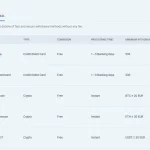
Choosing an RTG casino in Australia for 2026 calls for a careful look at the information available about licensing, deposits and payouts. Use the details below as a starting point and check the current terms before signing up.
1. Rollero Casino
License: Curacao Gaming Control Board OGL/2023/176/0095 (Hollycorn N.V.) Rollero Casino is listed with a Curacao Gaming Control Board licence, OGL/2023/176/0095, held by Hollycorn N.V.
2. 7Bit Casino
License: Curacao, operated by Dama N.V. 7Bit Casino is operated by Dama N.V. and is listed as licensed in Curacao.
3. JustCasino
License: Curacao Gaming Control Board JustCasino is listed with a Curacao Gaming Control Board licence.
4. Bizzo Casino
License: Curacao Gaming Control Board (TechSolutions Group N.V.) Bizzo Casino is listed with a Curacao Gaming Control Board licence, with TechSolutions Group N.V. named in connection with it.
5. SkyCrown
License: Tobique Gaming Commission · Payout speed: crypto ~10-15 minutes, fiat 1-5 days · Min. deposit: A$30 SkyCrown lists a Tobique Gaming Commission licence and a minimum deposit of A$30. Its stated payout times are around 10–15 minutes for crypto and 1–5 days for fiat.
6. Uptown Pokies
License: Curacao (operating since 2017) · Min. deposit: A$20 Uptown Pokies has operated since 2017 and has a minimum deposit of A$20. It is listed as operating under a Curacao licence.
7. DragonSlots Casino
License: Curacao Gaming Authority (Jumpman Gaming Ltd) DragonSlots Casino is listed with a Curacao Gaming Authority licence, with Jumpman Gaming Ltd named as the operator.
8. Kingmaker
Payout speed: crypto ~90 minutes, fiat 1-5 days · Min. deposit: A$30 Kingmaker lists a minimum deposit of A$30. Its stated payout times are around 90 minutes for crypto and 1–5 days for fiat.
9. House of Pokies
License: international iGaming licence – jurisdiction not named in the source · Payout speed: PayID 1-24 hours · Min. deposit: A$30 (PayID from A$10) House of Pokies lists an international iGaming licence, though the jurisdiction is not named. Its stated PayID payout time is 1–24 hours, and the minimum deposit is A$30, or A$10 when using PayID.
10. Wild Tokyo
License: Curacao · Payout speed: crypto 30-60 minutes, fiat 1-5 days · Min. deposit: A$10 Wild Tokyo is listed with a Curacao licence and a minimum deposit of A$10. Its stated payout times are 30–60 minutes for crypto and 1–5 days for fiat.
The legal line in Australia falls mainly on the operator, not the person at the screen. Under the Interactive Gambling Act 2001 and its amendments, online casino operators cannot lawfully offer casino games to people in Australia. The prohibition concerns the service being provided: a website based offshore does not make the offer lawful simply because its servers, staff or company paperwork sit elsewhere.
That distinction matters for RTG-branded casino sites. The software label does not change the legal position of an online casino offering games to people in Australia. Nor does the fact that a site can be reached from a particular location establish that it is authorised to provide its service there. Access and legality are separate questions.
Australian players are not explicitly criminalised for accessing offshore casino sites. That does not turn the arrangement into a protected consumer transaction. The law’s focus on operators leaves players in an awkward position: they are not the party the prohibition targets, yet they may have little practical help if something goes wrong. A narrow distinction. Not a safety net.
The Australian Communications and Media Authority, or ACMA, works to disrupt access to illegal gambling services. It blocks sites and maintains a blacklist that continues to grow. A block can make a particular address inaccessible, but the broader point is regulatory rather than technical: offshore services are not treated as ordinary local businesses operating under Australian casino rules. A site’s availability at one moment says little about whether it will remain reachable or what remedy would exist if access disappears.
BGaming Casinos in Australia: Slots and Bonus Rules
The gap becomes clearest in a dispute. Offshore casino transactions do not come with local Australian legal protection, and a player cannot assume that Australian consumer channels will resolve a disagreement with a foreign operator. The usual route for a complaint is to approach the regulator in the jurisdiction where the operator is based. That route is distant by design: it depends on identifying the relevant foreign authority and using its process, rather than relying on a familiar local tribunal or regulator.
This also explains why the word “offshore” is more than a description of geography. It marks the point at which local expectations about oversight and redress stop being dependable. A foreign regulator may receive complaints, but that is not the same as Australian protection, and it does not guarantee a particular outcome. The player’s position is therefore distinct from the operator’s legal exposure, but not necessarily comfortable.
The phrase “RTG casino Australia” can sound as if it describes a recognised local category. It does not alter the central legal distinction: Australian law prohibits operators from offering online casino games to people in the country, while players are not explicitly criminalised for accessing offshore sites. Meanwhile, ACMA’s blocking activity makes clear that these services are not simply part of a locally regulated entertainment market.
For Australians, the practical picture is therefore two-sided. The operator faces the prohibition on providing the service; the player faces limited local recourse if a dispute arises. An offshore address may explain which regulator to contact. It does not bring the transaction under Australian protection.
Under the Interactive Gambling Act 2001, online casino operators cannot lawfully offer casino games to people in Australia, regardless of where their servers or company paperwork are located.
RTG Slots, Jackpots and the Cost of Volatility
A progressive jackpot changes the economics of an online pokie in a way that is easy to miss when attention settles on the prize. Part of each bet is directed into the jackpot pool, so the possible top payout grows through play. The prize is not simply an extra feature added at no cost: the money feeding it has been taken from the same stream of wagers that would otherwise support ordinary returns.
That trade-off matters when comparing progressive games with versions that do not build a shared jackpot. A specialist review describes progressive RTG titles as having lower RTP than their non-progressive counterparts, attributing the difference to the portion of each bet allocated to the prize pool. RTP is a model of return across play, not a promise about what any single session will produce. A larger advertised prize can therefore sit alongside a less favourable theoretical return. The headline and the underlying arithmetic point in different directions.
Platipus Casinos in Australia: Bonus Rules
Progressive jackpots also alter the scale of the possible outcome. Most spins do not deliver the top prize; the attraction is the chance of a rare, unusually large result. That possibility is part of the design, not evidence that a game is more generous overall. The pool’s growth may make the prize more conspicuous, but it does not make it more likely to appear on a particular spin.
Volatility describes another part of the same landscape: the pattern of payouts rather than the size of the jackpot alone. High-volatility pokies tend to pay larger sums less frequently. A run without a notable return can therefore be consistent with the game’s stated character, while a substantial win may arrive only occasionally. It is a distribution with longer quiet stretches and more pronounced peaks.
That pattern is not a measure of quality. A game with infrequent larger payouts may suit one idea of entertainment and frustrate another; the label says something about the rhythm of outcomes, not whether a player will come out ahead. Nor does high volatility mean that a large payout is due after a sequence of losing spins. Each result remains uncertain, and a previous outcome does not turn the next one into an obligation.
Online Casinos in Australia: Bonuses, Slots and Rules
For anyone assessing RTG slot games, the relevant distinction is between a prize mechanism and a payout pattern. A progressive jackpot describes where part of the wager goes and how a top prize can accumulate. Volatility describes how often, and at what scale, payouts tend to occur. They can overlap in one game, but they are not synonyms. A progressive title can be judged for its jackpot structure; its volatility is a separate characteristic.
This is why a search for the “best” RTG pokies cannot be answered by the biggest displayed prize alone. A jackpot figure speaks to a possible outcome, not the ordinary shape of play or the theoretical return. The prize is vivid. The trade-off is quieter.
Free Play, Bonuses and the Small Print
RTG games can be played in demo mode or for real money. The distinction matters: a demo can show how a game behaves, but it does not turn a result into cash or establish what a promotion will pay. “Free” describes the absence of a stake in that session, not necessarily the absence of conditions attached to an offer.
Playtech Online Casinos in Australia: Slots & Terms
A demo is therefore a limited way to inspect a game, not a reliable guide to the value of a bonus. It cannot show whether promotional funds can be withdrawn, whether winnings are capped, or which games count towards a wagering requirement. Nor does a run of favourable demo results establish that a game is especially generous. The balance on screen is not a payout promise.
Specialist reviews describe RTG casinos as offering welcome bonuses, free spins and reload promotions to Australian players. Such descriptions concern promotional terms, not an endorsement or an assurance that an offer is lawful, available or suitable. Australian law prohibits operators from providing online casino games to people in Australia, and advertising those services to Australian audiences is prohibited. A bonus banner does not alter that position.
The fine print changes the meaning of promotional credit. Free-spin winnings may be credited as bonus funds rather than cash, with separate wagering conditions and a maximum amount that can be withdrawn. The value displayed after a spin can therefore differ from the amount ultimately available to cash out. The cap and the conditions are part of the offer, not footnotes to it.
Booongo Casinos in Australia: What Can Be Verified
A no-deposit bonus also comes with terms. Specialist reviews report that winnings from such offers can be withdrawn if the stated requirements are met. That conditional wording matters: a displayed win is not automatically withdrawable, and failing to meet the terms can leave the balance unusable. The same caution applies to matched-deposit bonuses, where a casino adds promotional credit in proportion to a deposit. The headline figure says little about what can later be withdrawn.
Wagering rules can also vary by game. Slots are generally counted in full towards requirements, while blackjack and roulette may count only partly or not at all. A promotion that appears simple can consequently take different amounts of play to clear, depending on the games permitted and how each is weighted. A sticky bonus is more restrictive still: it is play-only credit, removed from the balance when a withdrawal is made.
These distinctions matter more than claims about the best-paying or loosest RTG games. Demo play cannot verify a real-money return, and a promotion cannot make one game’s results predictable. Before any promotional balance is treated as cash, the relevant terms are the eligible games, wagering rules, withdrawal cap and treatment of unused bonus funds. Small print, large consequences.
KA Gaming Casinos in Australia: Bonus Terms
Real-Money Play: Payments and Payout Conditions
Payment arrangements at offshore RTG casinos are set by each operator, not by the software provider. A specialist review describes Bitcoin (BTC) and Tether (USDT) as widely accepted options at Australian-facing sites. That is a report about the operators it examined, not a dependable rule for every site or a permanent picture of the market. Methods can differ, and a payment option displayed on a deposit page does not by itself establish how a withdrawal will be handled.
The distinction between depositing and cashing out matters. A casino may set separate conditions for incoming and outgoing transactions, including the currencies it accepts and any fees or conversion steps. With cryptocurrency, the amount received can also differ from the displayed amount if exchange values move between deposit and withdrawal. The operator’s payment terms should therefore be read as a set of conditions, not as a promise that funds will arrive on a particular schedule.
Attention: A stated processing window for withdrawals describes only the casino’s internal stage and does not include verification, approval, or payment network transit times.
A specialist review reports that casinos may process crypto withdrawals within 24 hours. This describes the casino’s processing stage, not necessarily the full journey to a player’s wallet: verification, internal approval and the payment network can add time. It should not be treated as a universal service standard. A stated processing window is useful only when its starting point is clear and when the terms explain what can pause or delay it.
Australian players also face a larger uncertainty than the payment method itself. Offshore casino transactions have minimal or no protection under Australian consumer law, and a dispute does not come with ordinary local recourse. A payment record can document what happened, but it cannot make an offshore operator answerable to Australian consumer authorities. The border is not merely geographical; it marks the limit of practical remedies.
Tax is a different question. Recreational gambling winnings are generally not taxed in Australia. That broad treatment does not turn an offshore casino transaction into a locally protected service, nor does it settle every individual tax circumstance. Payment and tax sit in separate columns.
In practical terms, the advertised speed is only one part of a withdrawal. The operator’s processing policy, account checks and the payment network all shape the final wait. A number on a cashier page can sound precise while describing only one link in the chain. The fine print remains consequential.
What a Casino Licence Does—and Does Not—Tell You
RTG casinos commonly operate under a licence issued in Curaçao. That describes the jurisdiction in which an operator is authorised; it does not amount to an Australian licence, nor does it make the casino part of Australia’s regulated gambling system. The distinction matters because a foreign permit can look reassuring while offering little practical help to someone in Australia when a dispute arises.
Casinos Not on BetStop in Australia: What It Means
A licence is evidence of a regulatory relationship, not a complete account of how a particular business behaves. It cannot, by itself, establish that withdrawals will be handled fairly, that account terms will be applied consistently, or that complaints will be resolved in a player’s favour. Casinos using the same software may be separately operated and licensed, so the provider’s name does not fill in the gaps left by the operator’s own conduct.
There is a more consequential limit. Australian players have minimal or no protection under Australian consumer law for transactions with offshore casinos. If a dispute cannot be resolved with the operator, the typical route is a complaint to the foreign regulator. That is a distant form of recourse: the regulator is not an Australian consumer tribunal, and a licence does not guarantee a particular outcome. Paper can travel. Leverage is another matter.
Withdrawal terms offer a separate, practical signal. A specialist review describes a pending period of 24–48 hours as standard and treats a longer wait as a warning sign. A pending period is the time a casino holds a withdrawal request before approving or processing it; it is not necessarily the time funds take to arrive after approval. The distinction is useful, since one clock belongs to the operator and another may belong to the payment route.
The stated period should be read alongside the casino’s written terms, rather than as a promise that every withdrawal will be completed within that window. A delay may also be presented as a review, but a licence alone says little about how clearly the operator explains such steps or how it handles a disagreement about them. Those details belong to the individual business, not the software label.
In Australia, the licensing question therefore has two parts: where the operator answers to a regulator, and what meaningful protection remains for a player located here. A Curaçao licence answers the first. It does not answer the second, and it cannot turn an offshore casino into a locally protected service.
Relax Gaming Slots at Australian Online Casinos
New RTG Slots: What Can Be Verified
“New” is a slippery label in casino software. It can mean a recent release, a title newly added to one operator’s catalogue, or simply a game being presented with fresh promotional language. Those meanings are not interchangeable, and the label alone establishes neither a release date nor a change in the game itself.
For RTG titles, the useful distinction is between what can be observed and what is being asserted. The games support demo play as well as real-money play. A demo can show how a title looks and behaves during a session; it does not, by itself, prove when the game was released or that an operator’s claim of novelty is accurate. Nor does a new listing on a casino site necessarily mean the software itself is new. A catalogue can change while the underlying game does not.
That gap matters because “new RTG casinos” and new games are often bundled together in promotional language, as though a recently encountered site made every title on it recent too. It does not. A claim about a game’s launch needs a dated, attributable announcement or catalogue record. Without that, “new” is best treated as a description supplied by the operator, not an independently established fact. A sleek thumbnail is not a release note.
There is also a difference between checking a game and endorsing the way it is offered. RTG’s demo option permits observation without wagering, but it does not establish the fairness of every operator, its terms, or its suitability for Australian residents. The Interactive Gambling Act 2001 prohibits operators from providing real-money online casino games to people in Australia. Offshore transactions also carry minimal or no protection under Australian consumer law, and disputes do not have local Australian legal protection.
GameBeat online casinos in Australia: bonus terms
So the restrained answer to interest in newer titles is not a catalogue of supposed arrivals. It is a standard of proof: separate the game’s observable features from the operator’s claim about its age, and do not mistake availability for verification. Novelty is a claim, not a credential.
Australian-Facing Casinos: Verification and Cash-Out Limits
A withdrawal request can turn an apparently simple account into a document check. Specialist casino reviews report that a first cash-out may prompt enhanced verification, with operator approval ranging from minutes to 48 hours. That is the casino’s review stage, not necessarily the time for funds to reach an account. Identity details, payment ownership and account records may all become relevant when a site checks a request.
The distinction matters because a displayed balance is not the same as money cleared for withdrawal. A site’s terms may set a pending period before approval, then describe separate processing after approval. Specialist reviews commonly describe a 24–48-hour pending period as standard and treat longer delays as a warning sign; these are review-based observations, not a guarantee about any operator. Delays should be assessed against the site’s own published rules, rather than explained away as routine.
Cash-out caps can also narrow what a balance means in practice. Specialist reviews report that many casinos set weekly or monthly withdrawal limits, with tighter restrictions sometimes applying to winnings linked to bonuses. The cap, the period over which it applies and any distinction between ordinary and bonus-derived winnings belong in the terms. A limit that is difficult to find is itself useful information.
There is a larger Australian context. The Interactive Gambling Act 2001 prohibits operators from offering online casino games to people in Australia, and the Australian Communications and Media Authority blocks illegal gambling sites. Offshore transactions have minimal or no protection under Australian consumer law; disputes generally depend on recourse to a foreign regulator. A verification checklist cannot repair that gap. It can only make the conditions attached to a cash-out less obscure.
What is the fastest way to get a payout from an Australian-facing RTG casino?
Bitcoin and Tether withdrawals are typically processed by the casino within 24 hours. Bank transfers can take 5–10 business days, and a pending period of 24–48 hours is standard.
Can I play RTG games for free?
Yes. RTG games support demo play as well as real-money play.
Is there a strategy for winning at progressive jackpots?
No strategy can reliably predict a win: RTG games use an audited RNG, so outcomes are random. Progressive titles typically have lower RTP than non-progressive versions because part of each bet funds the jackpot.
How do I complain if I’m treated unfairly?
You can file a complaint with the casino’s foreign regulator. Offshore casino disputes do not have local Australian legal protection.
What is the fastest way to get my winnings?
Crypto withdrawals using Bitcoin or Tether are typically processed within 24 hours. Bank transfers can take 5–10 business days; a first withdrawal may also require extra verification, with casino approval taking from minutes to 48 hours.
Casino Reviews

1Spin4Win Online Casinos in Australia: What to Check
A practical look at game details, offshore availability, real-money payments and bonus rules, without treating...

Betsoft online casinos in Australia: what's verifiable
A cautious guide to what can and cannot be established about Betsoft games, promotions and...

BGaming Casinos in Australia: Slots and Bonus Rules
A practical look at BGaming slots, casino promotions, wagering calculations and the terms that affect...

Online Casinos in Australia: Bonuses, Slots and Rules
A practical look at pokies, bonus conditions, demo play and the limits of what can...

Booongo Casinos in Australia: What Can Be Verified
A provider name alone does not confirm a game catalogue, demo access, bonus terms or...

Casinos Not on BetStop in Australia: What It Means
A BetStop registration does not automatically prevent access to offshore platforms or bring them under...

Online Craps Casinos in Australia: Legal and Play Guide
The guide explains the distinction between players and operators under Australian law and why game...

GameBeat online casinos in Australia: bonus terms
The guide distinguishes branded labels from confirmed games and explains how wagering conditions can affect...

KA Gaming Casinos in Australia: Bonus Terms
The article explains how wagering requirements affect slot bonuses and what searches can—and cannot—establish about...

Microgaming Online Casinos in Australia: Game Terms
A practical look at how game rules and promotional wagering terms shape Microgaming slot play....

NetEnt Casinos in Australia: Offshore Rules and Limits
The page separates offshore licensing and payment questions from claims about slots, mobile access, bonuses...

New online casinos in Australia: checks before play
A practical look at operator identity, offshore licensing, bonus conditions, PayID payouts and wagering rules...

Novomatic online casinos in Australia: what to verify
A practical look at game attribution, mobile availability, bonus conditions and the limits of protection...

Big Jackpot Pokies at Online Casinos: What to Know
A practical guide to reading jackpot labels, understanding the limits of odds claims, and distinguishing...

Big Jackpot Slots at Online Casinos: How They Work
Jackpot labels can describe different prize structures, while game rules, bonus terms and the Australian...

Platipus Casinos in Australia: Bonus Rules
Slot weighting, bonus conditions, offshore context and payout considerations shape how Platipus games fit into...

Playson Casinos in Australia: Games and Key Checks
A practical overview of game formats, offshore access, offer conditions and the limits of claims...

Playtech Online Casinos in Australia: Slots & Terms
A practical look at slot wagering, bonus conditions, mobile evidence and the limits around offshore...

Pragmatic Play Casinos in Australia: Legal Context
The guide separates offshore operators from Australian licensing and examines verification, payments, wagering terms, and...

Quickspin Casinos in Australia: Games and Terms
A Quickspin label does not describe an individual slot, its features or the terms under...

Real-Money Online Casinos in Australia: Legal Context
Australia has no locally licensed real-money online casinos, making offshore status and the terms for...

Relax Gaming Slots at Australian Online Casinos
A provider name identifies a label, not a complete game catalogue or proof of demo...

Wazdan Online Casinos in Australia: What’s Verifiable
A provider label does not confirm which games a casino offers, what features they have...

Australian casino sites and slots: real-money essentials
A practical guide to Australian pokie spins, game features and what to examine before using...

Curacao Casino Licence for Australian Players
An offshore licence may identify a regulator, but it does not make casino services lawful...

Golden Pokies Casino Australia: Meaning and Checks
The name may describe a website or individual pokies, but neither a game title nor...

Highest Payout Online Casino Australia: What RTP Means
RTP describes a game’s long-term design, not a promised result for an individual session or...

House of Pokies Casino Australia: Offers and Safety
An overview of how free play differs from real-money play and what bonus conditions, verification...

Most Secure Online Casino in Australia: Legal Limits
The Interactive Gambling Act 2001 prohibits operators from providing online casino games to Australian residents,...

Pocket Pokies Casino Australia: Spins and Safety
An overview of how RNG outcomes work and what to consider when assessing reviews, bonuses,...

Online Casino Safety in Australia: Legal Limits
Legality, account control, deposits, withdrawals, game return rates and site blocks all shape the risks...

Australian Online Casinos for Real-Money Play
A clear look at operator licensing, offshore access and the limits of what a casino...

Top Rated Online Casinos in Australia: What Ratings Mean
A practical look at offshore licensing, wagering terms, payment delays and what ratings can—and cannot—tell...

Uptown Pokies in Australia: Legal and Practical Review
The review separates operator restrictions from player liability and considers bonus conditions, payments, checks and...