Mines Casino Game in Australia: Rules and Access
 Available in AU

The guide separates Mines from slot and pokie labels and explains what search results, demo play, bonuses and cashout terms can establish.
Table of Contents
- When “Mines” Meets the Language of Slots
- The Australian Rules Behind Offshore Casino Searches
- Online Access, and the Limits of a Search Result
- Free Play Without a Cash Balance
- A Demo Is Not a Deposit
- Bonus Figures, Wagering and the Small Print
- Real-Money Searches and the Cashout Conditions
- Where Play Sits in Victoria’s Pokies Debate
- Strategy Searches, and What the Evidence Can Support
- What “Casino Guru” Can—and Cannot—Establish
- Casino Games
When “Mines” Meets the Language of Slots
“Mines” can arrive dressed in the vocabulary of slots without being a pokie. That distinction matters because a search phrase is often a bundle of labels rather than a precise description: “casino” signals a setting, “slots” suggests a category, and “Mines” may be the name attached to a particular game. Put together, the words can sound more definite than they are.
In Australia, “pokies” is the familiar local word for poker machines. It carries a history of clubs, pubs and machine rooms; it does not automatically describe every digital game that borrows the atmosphere of risk and reward. “Slot” is often used more broadly online, sometimes as a catch-all for casino games. That habit may be convenient for a website’s filing system, but it can blur meaningful differences between formats.
The result is a small linguistic muddle. A person looking for Mines may use slot-related wording because that is the vocabulary presented around casino games, or because the game is grouped under a broad “slots” heading. The wording alone does not establish that Mines is a conventional reel-based pokie, that it shares a particular provider, or that the same rules apply. A category label is not a description of how a game works.
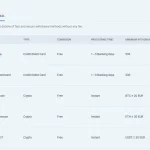
When choosing a Mines casino game in Australia for 2026, it helps to check the available licensing and payment details before deciding where to play. This reference card highlights the confirmed facts available for each listed operator.
1. Rollero Casino
License: Curacao Gaming Control Board OGL/2023/176/0095 (Hollycorn N.V.) Rollero Casino is listed with a Curacao Gaming Control Board licence, OGL/2023/176/0095, held by Hollycorn N.V.
2. 7Bit Casino
License: Curacao, operated by Dama N.V. 7Bit Casino is operated by Dama N.V. and is listed as licensed in Curacao.
3. JustCasino
License: Curacao Gaming Control Board JustCasino is listed with a Curacao Gaming Control Board licence.
4. Bizzo Casino
License: Curacao Gaming Control Board (TechSolutions Group N.V.) Bizzo Casino is listed with a Curacao Gaming Control Board licence, with TechSolutions Group N.V. named in connection with it.
5. SkyCrown
License: Tobique Gaming Commission · Payout speed: crypto ~10-15 minutes, fiat 1-5 days · Min. deposit: A$30 SkyCrown is listed with a Tobique Gaming Commission licence. Its stated minimum deposit is A$30; crypto payouts take about 10–15 minutes, while fiat payouts take 1–5 days.
6. Uptown Pokies
License: Curacao (operating since 2017) · Min. deposit: A$20 Uptown Pokies is listed as operating since 2017 under a Curacao licence. Its stated minimum deposit is A$20.
7. DragonSlots Casino
License: Curacao Gaming Authority (Jumpman Gaming Ltd) DragonSlots Casino is listed with a Curacao Gaming Authority licence, with Jumpman Gaming Ltd named as the operator.
8. Kingmaker
Payout speed: crypto ~90 minutes, fiat 1-5 days · Min. deposit: A$30 Kingmaker’s stated minimum deposit is A$30. Crypto payouts take about 90 minutes, while fiat payouts take 1–5 days.
9. House of Pokies
License: international iGaming licence – jurisdiction not named in the source · Payout speed: PayID 1-24 hours · Min. deposit: A$30 (PayID from A$10) House of Pokies is listed with an international iGaming licence, though the jurisdiction is not specified. PayID payouts take 1–24 hours; the minimum deposit is A$30, or A$10 when using PayID.
10. Wild Tokyo
License: Curacao · Payout speed: crypto 30-60 minutes, fiat 1-5 days · Min. deposit: A$10 Wild Tokyo is listed with a Curacao licence. Its stated minimum deposit is A$10; crypto payouts take 30–60 minutes, while fiat payouts take 1–5 days.
That is why “Mines casino” and “Mines slot” should not be treated as interchangeable facts. One may describe the context in which a title is presented; the other may reflect a loose classification. Neither phrase, by itself, settles what the game is, who made it, or what features it has. The name is a starting point, not a technical specification.
The same caution applies to a review. A page called a review may discuss a game, a website, or both, while its headline may compress those subjects into a few broad terms. A title that joins Mines and slots does not prove that the page has tested the game, verified its mechanics, or established a relationship with a named developer. Those are separate claims and require separate evidence.
Login wording introduces another shift. A phrase about a casino login could refer to access to an account on a particular service, rather than to the Mines game itself. The game name and the service name are not necessarily one thing. A page may place both beside each other, but proximity on a screen does not make them identical.
Best Progressive Jackpot Slots: How They Work
Likewise, an app label can mean that a service has a mobile application, that a website is designed for a phone, or simply that the page is discussing mobile access. It does not, on its own, establish that Mines exists as a standalone app. Search terms tend to compress these distinctions because the person typing them is trying to reach a subject quickly, not draft a product taxonomy.
“Bonus” is another word that changes the subject. Joined to Mines, it may refer to a promotion attached to a casino account, not a feature built into the game. “No deposit” makes the same kind of leap: it points towards a funding or promotional condition rather than explaining the identity of Mines. The surrounding label can make a product and an offer appear to be one package. They remain different things.
The distinction is more than housekeeping. Game names, categories, account services and promotions are separate layers of a commercial page. Mixing them together can make a reader infer that a feature belongs to Mines when it belongs to an operator, or that a game has been verified because it appears beside a review label. Online presentation is designed to make browsing feel seamless. The underlying objects are not always so neatly joined.
Plinko Casinos in Australia: Games, Rules and Risk
There is also a cultural difference in the vocabulary. “Pokies” belongs to Australian speech and the physical landscape of local gambling; “slots” is common in international online casino language. A page aimed at Australians may use both, sometimes without explaining the change in register. The result can sound as if a single game has acquired several identities. Often it is the description that has shifted, not the subject.
For a clear reading, the terms need to stay in their lanes. Mines is the named subject; “slot” or “pokie” may be a loose category applied around it; casino can describe the wider setting; login and app concern access to a service; bonus and no-deposit language concern an offer. None of those labels, alone, verifies the others.
That is the useful distinction. A familiar word is not proof. A category is not a rulebook, and a headline is not a test report. When “Mines” meets the language of slots, the phrasing may tell more about how a page is organised than about the game it claims to describe.
The Australian Rules Behind Offshore Casino Searches
A casino label can travel across borders more easily than the service it describes. In Australia, an offshore licence does not make a real-money online casino lawful to offer to people in the country. The central boundary is set by the Interactive Gambling Act 2001: operators are prohibited from providing online casino services to people physically in Australia. That includes casino-style games offered for money, rather than merely the branding or theme attached to a game.
This distinction matters when “Mines” appears beside the word casino. The name of a game, or the fact that a site accepts Australian payments, does not settle whether the service may lawfully be supplied here. Offshore casinos may take payments from Australians while operating under a licence issued elsewhere. That licence governs the operator in its licensing jurisdiction; it is not an Australian authorisation to provide online casino gambling.
Casino Dice Games in Australia: Legal Boundaries
The law’s focus is on the provider. Australian players are not criminalised simply for using an offshore site, but that does not turn the service into a permitted local casino. The difference is easy to blur in commercial language: a site may appear available, process a payment or display a foreign licence, yet still fall on the prohibited side of Australia’s rules. A working payment route is not a legal seal.
The federal regulator is the Australian Communications and Media Authority, usually shortened to ACMA. Its responsibilities include enforcing the Interactive Gambling Act and overseeing compliance with federal interactive-gambling rules. That places ACMA between a law on the books and the practical measures used to uphold it—not as a licensing office for offshore casinos, but as an enforcement body.
One of the tools available to ACMA is to ask Australian internet service providers to block websites that provide prohibited interactive gambling services, or advertise them to people in Australia. Blocking is therefore part of enforcement, not a declaration that every page bearing a casino word has been individually assessed or that every attempt to reach a site will produce the same result. The legal status of a service and the mechanics of reaching it are related, but they are not identical questions.
The scale of ACMA’s work gives the policy a more concrete outline. Following enforcement action, the authority has blocked more than 1,455 illegal gambling and affiliate websites since November 2019. The figure covers both gambling services and affiliate sites; it is not a count of Mines games, nor a measure of how many Australians have used any particular service. Enforcement has also led to offshore services leaving the Australian market. Here, published totals differ: one account reports more than 210 withdrawals since ACMA began enforcing the rules in 2017, while another gives a figure above 190 for the same period.
That enforcement history also explains why the Australian position cannot be reduced to the familiar internet shorthand of “licensed” or “unlicensed”. A foreign licence may tell something about the operator’s regulatory home, but it does not override the Australian restriction on providing online casino services to people here. Nor does a site’s appearance in search results confer permission. In this market, visibility and lawful supply are separate matters.
Legal Restriction
Under the Interactive Gambling Act 2001, operators are prohibited from providing online casino services to people physically located in Australia.
The arrangement reflects a particular choice about responsibility. Australia does not treat offshore casino gambling as a locally licensed consumer service and then ask players to distinguish stronger operators from weaker ones. Instead, the law restricts the service being offered, while ACMA can pursue enforcement measures against sites and their advertising. The player is not made a criminal for visiting an offshore service, but the operator’s foreign paperwork does not create a lawful Australian casino.
That is the boundary behind the wording. A casino name can be easy to find; permission to provide the service is another matter. The distinction is less glamorous than a licence badge. It is also the important one.
Online Access, and the Limits of a Search Result
A result that appears to offer Mines through an online casino can look like a simple matter of availability: a page is visible, its title names the game, and a button suggests that the next step is obvious. But visibility is not access. A listing can remain in circulation even when the service it describes cannot be reached from Australia, or when the page no longer reflects what the service provides.
That gap matters in a market where access is actively contested. The Australian Communications and Media Authority (ACMA) blocks offshore gambling sites. A person searching for an online Mines game may therefore encounter a result that exists as a piece of text but does not lead to a usable service. The distinction is easy to miss because search pages are designed to present links as openings, not as uncertain records of what may be available.
A blocked page can leave several different impressions. A connection may fail; a page may load only partly; or a result may lead somewhere other than its description suggests. None of those outcomes, by itself, explains why the page is unavailable or establishes what is happening behind it. A search result is not a live inspection of the service, and its continued presence does not settle whether the service is accessible in Australia.
Crash casino games in Australia: how they work
The same caution applies when a result uses familiar casino language. “Mines” may appear beside claims about online play, but a label does not prove that a working game is being offered, that the page is current, or that an Australian visitor can reach the service. The wording can be broad enough to gather several kinds of pages under one heading. A result might describe a game, refer to a casino category, or simply repeat terms intended to attract attention. The name alone cannot distinguish among them.
Nor does a page’s apparent polish answer the practical question. A detailed description, a set of images or a prominent play button can make a site look settled and available. Those features are still features of a page. They do not show whether the service will remain reachable, whether its content matches the description, or whether the link leads to the same destination later. Web pages are unusually good at looking more certain than they are.
RTP in Australian Slots: What Percentages Mean
This is why online availability should not be treated as a permanent property of a result. A link may be visible at one moment and inaccessible at another. A result may also persist after the page it points to has changed or disappeared. In a setting where ACMA blocks offshore gambling sites, access cannot be inferred merely from the fact that a page has been indexed or can be viewed in a list of results.
There is a further distinction between seeing information about a game and reaching the game itself. A review, an advertisement, a forum post or a casino landing page may all mention Mines, but they do not amount to the same thing. The route from a description to an actual service is not guaranteed by the description. The screen can supply a trail of names and claims without confirming that the final destination is available.
Searches that attach “casino” to Mines may also combine two questions that sound like one: what the game is, and whether an online casino offering it can be accessed from Australia. A result may answer the first in general terms while leaving the second unresolved. Even a page that appears to answer both does not make its own claim self-verifying. The difference is not pedantic; it is the difference between a description and an accessible service.
Real Money Casino Table Games in Australia
A failed link is not proof that a particular game has vanished everywhere. A working-looking link is not proof that it can be used in Australia. Between those two assumptions lies the actual limit of a search result: it can show that a page has been presented, but it cannot promise continuity or access. The interface is confident. The connection may not be.
Free Play Without a Cash Balance
A free-play label changes the question being asked. It points away from depositing money and towards an experience that appears to use no cash balance at all. That distinction matters, but the label alone cannot establish what is being offered. It may describe a practice mode, a game-like feature on a general entertainment site, or simply wording attached to a page. The same few words can cover rather different things.
In a genuine no-cash arrangement, any displayed balance would be for play within that environment, not money held for withdrawal. A changing number on a screen is not proof of a cash account, and a win recorded in such a mode does not thereby become payable. The boundary is simple in principle: if no real funds are staked and no cash winnings are available, the activity is not a way to build a withdrawable balance.
That can still leave a meaningful experience. People may be curious about a game’s appearance, want something to occupy a few minutes, or prefer an activity without a financial stake. Those motives do not make every free version authentic, safe or even playable. A title and a button marked “play free” are claims made by a page, not evidence of how its software works or who operates it.
The phrase “fake casino” can sound like a warning, but it is not a precise category. It might mean a casino-style setting using fictional credits, a simulation made for entertainment, or a page that imitates a gambling service. These are not interchangeable. Fictional credits may clarify that no cash is involved; imitation branding may instead make the nature of the activity harder to judge. Appearance does not settle the distinction.
Do
- Check if money can be added to the balance
- Verify if winnings are described as withdrawable
- Look for payment prompts or account creation
Don’t
- Assume the word “free” guarantees a safe experience
- Mistake a fictional balance for cash
- Ignore age boundaries based on a no-cash label
The useful test is what happens to the balance. Can money be added? Is anything described as withdrawable? Does a supposed free mode lead into account creation, payment prompts or promotional claims? Those details reveal more than the word “free” on its own. They do not require the activity to be treated as a financial product, but they do show when the boundary between entertainment and commercial gambling is being blurred.
There is another limit to free play: it cannot establish what real-money play would be like. A no-cash version may use different rules, omit features, or have no relationship to a separately operated gambling service. Even where the screen resembles a casino game, resemblance is not proof of identical mechanics. Nor does practice with fictional credits demonstrate that a player can predict or control a later outcome. A rehearsal can resemble the performance without sharing its stakes.
For that reason, “free” should be read narrowly. It may mean no deposit is needed for that particular activity; it does not promise that the activity is available everywhere, that every feature is unlocked, or that a balance can be converted into money. Conditions can sit elsewhere on the page, and the label may refer to a limited mode rather than a complete game. None of those possibilities turns a free balance into cash.
Best Low-Volatility Slots in Australia: How They Work
For anyone under eighteen, gambling is not appropriate; a no-cash label should not be treated as a reason to bypass age boundaries. Adults, too, can find that gambling imagery or repeated play carries risks even when no money changes hands. Problem gambling can cause serious harm to vulnerable individuals. The absence of a deposit removes one financial transaction, not every possible consequence of the activity.
Free play, then, is best understood as a claim about the immediate balance, not a guarantee about the wider experience. It may offer entertainment without a cash stake, but its label cannot certify the game, the operator or the terms surrounding it. A balance can be fictional. The distinction should not be.
A Demo Is Not a Deposit
The word “demo” sounds conclusive. It suggests a version set apart from cash play, a small glass case in which the game can be examined without money changing hands. But the label is only a label until the page explains what it means. It does not, by itself, establish that a Mines game is available to try, or what a supposed demonstration contains.
Video Slots in Australia: Features, Access and RTP
In ordinary use, a demo refers to a non-cash version: play is presented without a deposit being used as the stake. That is different from merely seeing a game’s name, image or promotional description. A page can use demo language without making clear whether it offers an interactive version, a preview, or just an invitation to continue elsewhere. The distinction matters. A picture of a game is not a demonstration of it.
Nor does “demo” identify the game’s maker, its rules or its relationship to a casino service. Those are separate questions. The same word can sit beside different arrangements, while the tidy label gives the impression that everything behind it is settled. It is not.
A Mines demo, if one is presented, should therefore be understood narrowly: as a claim about a non-cash way to encounter a game, not proof of what the game does or where it comes from. The label does not establish that the version matches any real-money offering, that its behaviour carries over to another setting, or that a service is available to Australians. A demo cannot certify its own context.
This is where the distinction from free play becomes useful. Free play describes the absence of a cash balance being used; “demo” describes how a version is framed or presented. The terms can overlap, but they are not interchangeable guarantees. A free mode might be described without being called a demo, and a demo label may leave the practical details unclear.
There is no deposit in the idea of a demo. There may still be uncertainty around the thing being demonstrated. A careful reading separates the mode claimed from the game and service supposedly behind it. The small word carries less evidence than it appears to.
Bonus Figures, Wagering and the Small Print
A promotional balance can look like money on a screen while remaining money with conditions attached. A no-deposit offer or bonus code changes how funds are credited, not what they can immediately be used for or withdrawn as. Bonus funds are not cash: the terms may require a set volume of wagering before winnings attributed to them become eligible for withdrawal.
3-Reel Slots in Australia: How Each Spin Works
The multiplication can make a headline figure less generous than it first appears. One specialist review describes a $100 bonus carrying a 40x wagering requirement: $4,000 in bets would have to be placed before bonus-derived winnings could be withdrawn. That is an illustration from a particular review, not a standing rule for every promotion. The calculation also does not mean that the amount wagered is returned; it measures qualifying bets, while losses and other conditions remain relevant.
Requirements described in specialist reviews can be expressed as a multiple of the bonus, or sometimes the bonus and deposit together. The distinction matters. A 30–50x requirement, as cited in some reviews of bonus terms, is not interchangeable across offers unless the calculation base is clear. A figure attached to the bonus alone produces a different target from the same multiple applied to a combined balance.
Games may count differently toward that target. One specialist review reports blackjack contributing only 10% of wagering. Under such a condition, a bet does not necessarily advance the requirement by its full face value. The game contribution table therefore matters as much as the headline multiple: an offer may restrict eligible games, cap stakes, or exclude particular activity. Those details belong to the terms, not the banner.
The small print also determines whether the offer can be claimed at all. It may set an expiry period, a maximum conversion amount, or rules about withdrawing before wagering is complete. Those conditions vary, so a bonus code by itself establishes little. The amount displayed is not a promise of cash in hand.
Promotional arithmetic has a quiet talent for changing the apparent size of a sum. Read the calculation base, eligible games and contribution rates together; otherwise, the bold number does most of the talking.
Real-Money Searches and the Cashout Conditions
Interest in a cash balance changes the practical question. A withdrawal is not simply the reverse of a deposit: an offshore site may set a minimum amount before it will process a cashout, and the balance shown on screen may fall below that threshold. Minimum withdrawal requirements commonly sit between A$75 and A$150 on offshore sites. A small balance, then, can be real in the account’s arithmetic and unavailable in its payment process.
Withdrawal Thresholds
Minimum withdrawal requirements on offshore sites commonly range between A$75 and A$150.
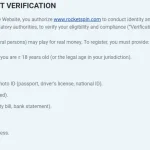
The first cashout may bring a separate hurdle: KYC, or identity checks. Sites commonly ask for documents such as a passport or driver’s licence, alongside a utility bill. These checks are intended to connect an account with a person and an address. They can also mean that a withdrawal cannot proceed until the requested material has been supplied and accepted. The timing and outcome depend on the service’s own process; a payment option alone cannot settle either.
That distinction matters to searches for real-money Mines play. A displayed withdrawal threshold describes a site’s stated procedure, not a promise that a particular balance can be recovered, nor evidence that a service is suitable for people in Australia. The availability of a payment route and the practical ability to use it are different things. Paperwork is part of the transaction, not a footnote.
There is a larger boundary, too: real-money online casino games cannot lawfully be provided to people in Australia under the Interactive Gambling Act 2001. The fact that an offshore service may accept Australian payments does not change that. Players are not criminalised for using offshore sites, but that does not make the operator’s service lawful here. The cashout conditions belong to a service operating beyond the local framework.
For adults, withdrawal rules are worth understanding as terms, not reassurance. Gambling can cause serious harm, particularly for vulnerable people, and a prospect of retrieving a balance does not turn it into income. A threshold is only a threshold.
Where Play Sits in Victoria’s Pokies Debate
A request for somewhere to play a casino-style game can sound private and weightless: a few words, a screen, perhaps the promise of a lucky result. In Victoria, however, gambling sits inside a much larger public argument about where losses accumulate and who bears their cost. The local vocabulary is telling. Pokies are not an abstract category; they are fixtures in hotels and clubs, woven into ordinary places.
Five-Reel Slots in Australia: Bonuses and RTP
A report published by gamble.com.au put Victorian poker-machine losses at $2.6 billion for the year it examined. Its comparison with 2015 showed the later figure was higher by more than $44.7 million. That is not a description of every player’s experience, nor a forecast. It is a measure of money lost across a state, where individual sessions become an industry total.
The report also singled out the Epping Plaza Hotel in Melbourne’s north: its 100 machines brought in more than $21 million during the year covered. A venue-level figure gives the statewide total a physical address. It also makes the old distinction between “a game” and “an industry” rather harder to maintain.
Reform arguments have followed those figures for years. Senator Nick Xenophon and MP Andrew Wilkie proposed limiting poker-machine bets to $1. The proposal framed the dispute around the speed and scale of losses: whether a smaller permitted stake could change the way machines draw money from repeated play. It was a political proposal, not a description of a rule currently in force.
Against that backdrop, interest in Mines or a lucky casino game belongs to a culture already debating the place of gambling, not outside it. The comparison should not blur different products or imply that one set of figures measures another. It does show why “where to play” is not merely a question of venue or interface. In Victoria, gambling has a public footprint, and the argument over that footprint remains unresolved.
The cost is social, too. Gambling can cause serious harm to vulnerable people; a search for entertainment does not erase that fact. Nor does a digital setting make the wider debate disappear.
7-Reel Slots in Australia: Features and RTP
Strategy Searches, and What the Evidence Can Support
A strategy can only be as sound as the rules it starts from. In a game built around concealed hazards, advice about when to stop, how many selections to make or how to size a stake depends on the particular game’s mechanics and payout structure. The name “Mines” alone supplies none of those details. It does not establish how hazards are placed, whether outcomes are generated independently, or what happens after a selection.
That gap matters. Familiar-looking interfaces invite borrowed advice: a pattern from one title is carried over to another, or a sequence of wins is treated as evidence that the next outcome is due. Neither inference follows from the name. Without confirmed rules for a particular version, a supposed Mines strategy is speculation dressed as instruction. A tidy system is still a system without a foundation.
The same restraint applies to claims linking Mines with Spribe. A phrase pairing the game name with a provider’s name may reflect a label, a listing or an assumption; by itself, it does not establish who made a game or whether a particular title belongs to that provider. A provider connection should be supported by the game’s own identifying information, not inferred from neighbouring words.
There is also a difference between describing a strategy and recommending one. Here, responsible description means identifying what would need to be known before any strategy could be assessed: rules, payout conditions and how outcomes are determined. It cannot turn uncertainty into a reliable method, and it cannot make gambling predictable.
For adults aged 18 or older, gambling remains a form of risk, not a route to income. Problem gambling can cause serious harm, particularly for vulnerable people. The absence of a sound basis for gameplay advice is not a puzzle to solve by staking more. It is a reason not to mistake confidence for evidence.
High-Volatility Slots in Australia: How They Work
What “Casino Guru” Can—and Cannot—Establish
A reference to Casino Guru beside Mines can look like a stamp of authority. It is not one by itself. A name appearing in a heading, snippet or page title establishes only that the name has been attached to the subject somewhere; it does not establish that a particular Mines game has been reviewed, tested or endorsed.
That distinction matters because a search result compresses several things into a small space: a site’s name, a game term and sometimes language suggesting a rating or guide. The compression can make an association seem more definite than it is. A page might discuss casinos generally, use Mines as a comparison, or repeat wording found elsewhere. None of those possibilities confirms an assessment of the specific game or service being sought.
Even a page that does discuss Mines would need to be read for what it actually covers. Does it identify a particular version? Does it describe the basis for its claims? Is the material about gameplay, a provider, an operator, or simply the phrase itself? Those are different subjects, and a familiar label cannot make them interchangeable.
Nor does a review label settle whether a service is lawful, available or suitable in Australia. Those are separate questions, governed by the status of the service and the rules applying here, not by the reputation implied by a third-party name. A review can inform a reader about its own stated scope; it cannot turn an association into proof.
The same restraint applies to praise. “Recommended” or “trusted” is a conclusion, not the evidence behind it. Without a clearly identifiable assessment and its limits, the name is only a signpost. A small one.
Casino Games

3-Reel Slots in Australia: How Each Spin Works
Three visible reels shape the presentation, but an RNG makes every spin an independent event...

Five-Reel Slots in Australia: Bonuses and RTP
A practical look at bonus triggers, RTP, free-play odds, game versions and the legal limits...

7-Reel Slots in Australia: Features and RTP
A practical look at seven-reel searches, game rules, RTP differences, free play and the limits...

Bonus Buy Slots in Australia: Features and RTP
A practical look at feature entry, demo limits, RTP settings and the checks that matter...

High-Volatility Slots in Australia: How They Work
High volatility means less frequent wins and a wider range of payouts, not a forecast...

Best Low-Volatility Slots in Australia: How They Work
Low volatility describes a tendency toward smaller, more frequent wins, not a guarantee of returns...

Pokie Machines to Play in Australia: Legal Guide
Australian rules prohibit operators from supplying real-money online pokies to residents, while game features and...

Best Progressive Jackpot Slots: How They Work
See how wagers feed shared prize pools, what can trigger a win and which terms...

RTP in Australian Slots: What Percentages Mean
RTP can help compare configured games, but it cannot predict a session’s outcome or guarantee...

Video Slots in Australia: Features, Access and RTP
From mobile layouts and bonus mechanics to offshore access, free play and paytable RTP, the...

Casino Dice Games in Australia: Legal Boundaries
The guide distinguishes operator obligations from player status and explains how online dice formats, bonuses...

Crash casino games in Australia: how they work
A guide to how crash games differ from pokies and what labels, payment terms, free...

Lightning Link Online Pokies in Australia Explained
The Aristocrat title is encountered on Australian venue machines; online pages, free play and similar...

Live Baccarat Online in Australia: Legal Guide
Australia has no locally licensed online casinos; this guide explains the legal position and practical...

Live Blackjack in Australia: Online Casino Rules
The guide separates operator restrictions from player status and weighs what live format, casino claims...

Live Roulette in Australia: Dealers and Legal Limits
Australia prohibits real-money online casino services for people in the country; the guide also explains...

Plinko Casinos in Australia: Games, Rules and Risk
A product’s Plinko label does not establish its mechanics; classification, terms and risk all matter...

Pokies Tips and Tricks: What Actually Affects Play
Pokie results are random, while RTP describes long-run play; neither tips nor session routines can...

Real Money Casino Table Games in Australia
See how live dealing and software-generated outcomes shape online table games, alongside the rules, odds...