Plinko Casinos in Australia: Games, Rules and Risk
 Available in AU

A product’s Plinko label does not establish its mechanics; classification, terms and risk all matter in the Australian context.
Table of Contents
- Plinko in the Slot Machine’s Neighbourhood
- Online Play Meets Australian Law
- Real-Money Play, Cashouts and the Cost of Crypto
- Plinko, Pokies and the Shape of Risk
- A Review Is Also a Reading of the Terms
- Free Play and the Question of What It Proves
- The UK, Casino Guru and the Limits of Comparison
- Casino Games
Plinko in the Slot Machine’s Neighbourhood
“Plinko” names a visual idea before it names a settled way of playing. In a casino catalogue, the word may appear on a slot-style product, where the familiar image of a ball dropping through pegs is joined to the conventions of digital pokies. That combination can make the label feel self-explanatory. It is not. A title tells little, by itself, about what happens after a spin begins, how outcomes are determined, or what the game’s rules actually are.
The distinction matters because the same word can travel between formats. Plinko is associated with a ball’s path through a field of pegs, an image that suggests physical movement and a visible destination. A digital slot, by contrast, belongs to a category built around programmed outcomes and a defined paytable. A product can borrow Plinko’s visual language while still being designed and presented as a slot. The appearance may recall one kind of game; the product’s classification and rules may point to another.
That is why “Plinko slot” is best understood as a description of a product’s place in a catalogue, not as a promise about its mechanics. Some titles may put the falling-ball image at the centre of their presentation. Others may use it as a theme around slot-style play. Even the broad label “Plinko game” does not settle whether a product is a slot, a separate game format, or a particular blend of familiar conventions. Names are convenient shorthand. They are not rulebooks.
Mines Casino Game in Australia: Rules and Access
A slot machine’s neighbourhood is large enough to contain many visual styles. Traditional symbols, cartoon worlds, mythic settings and mechanical-looking displays can all sit within the same broad category. The screen’s personality changes; the underlying product type need not. Plinko-themed slots fit this pattern: a recognisable motif gives a product a distinct identity, but it does not establish the structure beneath the artwork. A dramatic path across the screen is still presentation unless the rules explain what role it has in determining an outcome.
This distinction is easy to lose when a title is discussed as though it were a genre. “Gods of Plinko,” “Plinko Rush” and similarly named products may sound like variations on a single established format, but a shared word does not prove shared features. Their descriptions, game rules and provider information would need to be considered separately. No conclusion about one title should be carried over to another merely because both display pegs or use the Plinko name.
7-Reel Slots in Australia: Features and RTP
The same caution applies to a “Plinko slot machine” as a phrase. It can refer to a digital product presented with slot conventions, not necessarily a physical machine or a standardised design. The phrase is often doing two jobs at once: it points towards an image and towards a category. Those are different things. One helps identify the theme; the other describes the product. Confusing them can make a familiar screen seem more transparent than it is.
There is also a quiet cultural reason that these hybrids attract attention. Casino products have long borrowed the shapes of activities that look tactile: wheels turn, reels stop, cards appear, balls descend. The screen offers movement in place of the object, and a recognisable metaphor in place of an explanation. Plinko’s appeal as an image lies partly in the apparent visibility of the journey. Yet seeing a ball move does not reveal how a digital outcome has been set. The performance is visible; the calculation is not.
KA Gaming’s published-style slot RTP percentages typically fall within a range from 94% to 96%, though this is a provider-level observation and not a guarantee for every Plinko-branded product.
RTP figures belong to a different kind of description. They refer to a theoretical return across extended play, not a forecast for an individual session or an assurance about what any one player will receive. KA Gaming’s published-style slot RTP percentages typically fall within a range from 94% to 96%. That is a provider-level observation, not a universal figure for every Plinko-branded product, and it cannot be applied to a title without checking its own stated details. A range is not a guarantee.
The number can be useful as context, but only if its boundaries remain clear. It does not tell whether a game is engaging, easy to understand, or suitable for a particular person. Nor does a slot’s theme determine its RTP. The artwork and the return figure answer different questions: one concerns how the product presents itself, the other a theoretical property of its mathematical design. Blending the two produces a confident impression without much information.
A careful description of Plinko-themed slots therefore begins with modesty. The label identifies a family resemblance, not a complete specification. The product’s actual rules, format and published figures have to be read on their own terms, rather than inferred from the title or the animation. In a market crowded with borrowed images, that is a small but useful distinction.
The picture is not the mechanism.
Online Play Meets Australian Law
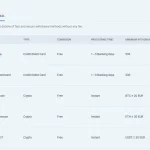
For Australian players exploring Plinko casinos in 2026, a useful starting point is to check the licensing and payment details available for each operator. Use these notes as a reference, and confirm that Plinko is available and review the current terms before signing up.
1. Rollero Casino
License: Curacao Gaming Control Board OGL/2023/176/0095 (Hollycorn N.V.) Rollero Casino lists a Curacao Gaming Control Board licence, OGL/2023/176/0095, held by Hollycorn N.V. This gives readers a specific licensing detail to check.
2. 7Bit Casino
License: Curacao, operated by Dama N.V. 7Bit Casino is operated by Dama N.V. and lists a Curacao licence.
3. JustCasino
License: Curacao Gaming Control Board JustCasino lists a Curacao Gaming Control Board licence. That is the main verified detail available for assessing it here.
4. Bizzo Casino
License: Curacao Gaming Control Board (TechSolutions Group N.V.) Bizzo Casino lists a Curacao Gaming Control Board licence, with TechSolutions Group N.V. named alongside it.
5. SkyCrown
License: Tobique Gaming Commission · Payout speed: crypto ~10-15 minutes, fiat 1-5 days · Min. deposit: A$30 SkyCrown lists a Tobique Gaming Commission licence and a minimum deposit of A$30. Its stated payout times are around 10–15 minutes for crypto and 1–5 days for fiat.
6. Uptown Pokies
License: Curacao (operating since 2017) · Min. deposit: A$20 Uptown Pokies lists a Curacao licence, has been operating since 2017, and has a minimum deposit of A$20.
7. DragonSlots Casino
License: Curacao Gaming Authority (Jumpman Gaming Ltd) DragonSlots Casino lists a Curacao Gaming Authority licence, with Jumpman Gaming Ltd named as the operator.
8. Kingmaker
Payout speed: crypto ~90 minutes, fiat 1-5 days · Min. deposit: A$30 Kingmaker lists a minimum deposit of A$30. Stated payout times are around 90 minutes for crypto and 1–5 days for fiat.
9. House of Pokies
License: international iGaming licence – jurisdiction not named in the source · Payout speed: PayID 1-24 hours · Min. deposit: A$30 (PayID from A$10) House of Pokies lists an international iGaming licence, though the jurisdiction is not named. PayID payouts are stated at 1–24 hours, with a A$30 minimum deposit (A$10 for PayID).
10. Wild Tokyo
License: Curacao · Payout speed: crypto 30-60 minutes, fiat 1-5 days · Min. deposit: A$10 Wild Tokyo lists a Curacao licence and a minimum deposit of A$10. Its stated payout times are 30–60 minutes for crypto and 1–5 days for fiat.
The legal question surrounding an online casino is not settled by the design of a game or the currency shown on its screen. In Australia, the central distinction is between a game that resembles a familiar amusement and a service that provides real-money gambling to people in the country. The Interactive Gambling Act 2001 restricts operators from providing online casino games to people physically located in Australia. Casino-style offerings—including slots, poker, blackjack and roulette—fall within the prohibited category when supplied to customers here. A Plinko label does not create an exception.
That framework is directed at the provider. An offshore website may accept Australian payments and hold a licence issued elsewhere, but neither feature makes its real-money casino service lawful to provide to Australians. The foreign licence governs the operator under the rules of the licensing jurisdiction; it does not replace Australian law. A site’s apparent accessibility, familiar payment options or polished presentation can make the legal distinction seem remote. It is not.
The statute’s basic arrangement is therefore asymmetrical. Operators are restricted from offering these services to people in Australia, while players are not criminalised simply for using an offshore site. That does not turn the service into a locally authorised one, nor does it erase the restrictions on providing it. The absence of a player offence and the prohibition on the operator’s conduct are separate parts of the same framework.
Advertising belongs to that framework too. Promoting real-money online casinos to Australian audiences is prohibited; an advertisement does not become permissible merely because it describes a game, points toward an offshore licence or avoids naming a particular stake. This matters in a market where the boundary between an explanation and a solicitation can be made deliberately thin. The law does not depend on whether the pitch is dressed as a review, a bonus notice or a catalogue of games.
Live Baccarat Online in Australia: Legal Guide
A person encountering references to an online Plinko game may therefore find several different things bundled under one phrase: a visual format, a free demonstration, or a real-money casino service. The legal status turns on the service being offered and to whom, not on the name attached to the game. “Live” presentation, a digital board, or a familiar arrangement of pegs does not alter the underlying question if money is being wagered through an online casino. Format is not jurisdiction.
The regulator and the blocklist
The Australian Communications and Media Authority, generally known as ACMA, is the federal regulator charged with overseeing compliance with the Interactive Gambling Act and other federal rules for interactive gambling. Its role is not simply to publish the law and leave the internet to interpret it. Where a website is found to provide prohibited gambling services or advertise them in Australia, ACMA can ask Australian internet service providers to block access to it.
The wording matters: ACMA can request blocking by internet service providers. A block is an enforcement measure aimed at restricting access from Australia, not a declaration that every prohibited site has vanished from the global internet. Websites can change addresses, appear under new names or remain visible through routes outside ordinary access. That does not make the original restriction disappear. It illustrates the practical difficulty of enforcing a national law against services hosted and operated across borders.
Legal Restriction
The Interactive Gambling Act 2001 prohibits operators from providing online casino games to people physically located in Australia.
Since November 2019, ACMA has blocked more than 1,455 gambling and affiliate websites it identified as illegal, following enforcement action. The scale of that figure says something about the work involved: enforcement has not been a single sweep followed by a tidy ending. The online environment keeps producing new points of entry, while regulators attempt to limit Australians’ access to services that should not be offered here.
There is also a reported measure of operators leaving the market. One published figure puts the number of illegal services that withdrew after ACMA began enforcing the rules in 2017 at more than 210. Another account gives a lower figure: more than 190. Those totals disagree, so neither should be smuggled into the other as though they were identical. They both describe withdrawals, not the number of blocked websites. A service choosing to stop operating in Australia is a different enforcement outcome from an internet provider blocking a particular address.
The distinction is useful because public descriptions can compress several actions into a single claim that a site was “shut down”. A block may limit access without ending the operator’s business elsewhere. A withdrawal means the service has stopped targeting or serving the Australian market, though the available figures do not by themselves explain every case. A legal restriction, a regulator’s action and a company’s decision are related, but they are not interchangeable events.
Offshore does not mean locally approved
The presence of an offshore licence can sound reassuring because licensing is associated with oversight. Yet the relevant question for an Australian audience is not merely whether a licence exists somewhere. It is whether the service is permitted to be offered to people in Australia. Under the Australian framework, an offshore authorisation does not grant that permission.
Best Low-Volatility Slots in Australia: How They Work
The same distinction applies when a website continues to accept Australian payments. Payment acceptance describes a technical and commercial arrangement; it does not establish compliance with Australian law. Nor does a site’s continued availability prove that ACMA has approved it. Some prohibited services may remain reachable for a time, or through changing web addresses, even as enforcement measures are applied. Access and legality are different measures of the same uneasy border.
This is one reason a list of sites can be a poor substitute for understanding the market. Names and domains can change; the law’s core test does not change with the branding. A real-money casino service offered online to someone in Australia remains within the prohibited category whether the game is styled as Plinko, a slot, a card table or something newly devised. A page that directs people toward such a service is not made neutral by calling itself informational.
The arrangement also reflects a particular view of responsibility. The law concentrates on stopping operators from supplying prohibited online casino services and gives ACMA tools to act against access and advertising. It does not make the individual player the target of criminal penalties merely for using an offshore site. That division may be less dramatic than a blanket warning, but it is more precise: the legal exposure described here belongs to the supply of the service, not to a player’s simple act of visiting it.
Legal Realities
- Offshore licenses do not grant permission to provide services in Australia.
- Acceptance of Australian payments does not establish legal compliance.
- ACMA can request internet service providers to block access to prohibited gambling sites.
- Legal exposure primarily belongs to the operator providing the service, not the individual player.
Precision matters in a digital market built to blur categories. A site can look local while being operated offshore; a game can look like a novelty while functioning as casino gambling; and a licence can be genuine without authorising service in Australia. None of those appearances settles the Australian legal question. The governing issue is the offer of real-money online casino gambling to people here, with ACMA responsible for monitoring and enforcing the federal rules and requesting access blocks where the law has been breached.
A border drawn through a browser window is difficult to make visible. Australian law draws it anyway.
Real-Money Play, Cashouts and the Cost of Crypto
A Plinko-branded game may look like a small, self-contained wager: a ball drops through pins and lands in a prize slot. The money around it is less self-contained. A deposit, a balance shown on screen and a withdrawal are separate stages, each governed by the payment rules of the service offering the game. The label on the game tells little about how quickly funds can leave, or what conditions stand between a displayed balance and money received.
That distinction matters in Australia, where real-money online casino services are prohibited for operators to provide to people in the country. Offshore casinos may still accept Australian payments, but a payment option is not evidence that a service is locally authorised or that its cashout process will be straightforward. The mechanics of getting money back are a practical question; they do not change the status of the service.
High-Volatility Slots in Australia: How They Work
The threshold before a withdrawal
Offshore sites commonly set a minimum withdrawal threshold between A$75 and A$150. A balance below the site’s stated floor may not be eligible to leave, even if the account shows winnings. The threshold can make a modest balance feel more substantial on screen than it is in practice: the relevant figure is not simply what appears in the account, but what the rules permit to be withdrawn and what remains after any applicable charges.
The difference between a minimum withdrawal and a promised payout is important. A threshold is a gate, not a timetable. It says how much may be needed before a request can be made; it does not, by itself, establish when the request will be processed or how long a payment will take to reach a bank or wallet. Those stages may involve different parties, and the player sees only the final movement of money.
There is also a difference between the payment route used to deposit and the route available for withdrawal. A service may describe several ways to put funds into an account, while setting separate conditions for cashing out. The practical details sit in the withdrawal terms: the permitted method, any minimum, and whether the account has to be verified first. A familiar payment name does not make those conditions disappear.
Some payment timings can be quite specific, but they should be read as claims about the method rather than a universal clock. A specialist review, for instance, describes BPAY transfers as potentially taking a bank day. That is a useful indication of how a transfer may behave, not a guarantee that every request will arrive on the same schedule. Processing by the service and movement through the payment system are not necessarily the same event.
Do
- Check the minimum withdrawal threshold of the service.
- Verify account documents (KYC) before expecting a cashout.
- Account for network fees and conversion spreads when using crypto.
Don’t
- Assume a displayed account balance is immediately withdrawable.
- Expect instant payouts regardless of the payment method used.
- Confuse the speed of a game round with the speed of the payment process.
Why the first cashout asks for papers
The first withdrawal commonly brings KYC checks. These can require a passport or driver’s licence, together with a utility bill. The point is to connect the account to an identifiable person and address; the inconvenience is that the process may arrive precisely when a player expects a balance to become usable outside the site.
This makes account verification more than a box at registration. Details entered when an account is opened may later be compared with documents, and a mismatch can complicate a withdrawal. KYC is a routine feature of financial services, but in an offshore gambling account it also becomes a condition attached to access to funds. The money can appear settled while the person behind the account is still being checked.
There is a quiet asymmetry here. Depositing can feel immediate because the balance changes on screen; withdrawing can involve documentation and a separate review. That contrast is not unique to Plinko, nor does a game’s quick round imply a quick cashout. A game can resolve a wager in moments while the payment process moves at the pace of paperwork, account checks and external systems.
Claims about an instant payout should therefore be understood narrowly. They may describe one stage, one payment method or a particular account, rather than the whole path from submitting a request to receiving usable funds. The word “withdrawal” compresses several steps into one. The interface makes it look like a button. The process is longer.
Crypto: speed is not the same as value
Crypto withdrawals are often described as the fastest option in specialist reviews. Yet speed alone does not measure what arrives. Network fees can reduce the amount transferred, and a conversion spread can change the value when cryptocurrency is exchanged for Australian dollars. A payment that clears quickly may still leave the recipient with less than the balance first suggested.
Video Slots in Australia: Features, Access and RTP
The relevant comparison is therefore between the amount requested and the value ultimately received, after the transaction has passed through the chosen network and any conversion. The displayed balance may be denominated in one currency, the transfer made in another, and the funds later converted again. Each step can make the final sum differ from the number that first appeared in the account.
Crypto also changes the form of the risk, rather than removing it. A transfer can be fast and still be difficult to reverse if details are wrong; its value can move during conversion; and the network charge is not the same thing as the amount sent. None of this makes crypto inherently unsuitable or suitable. It makes the route less legible than a simple Australian-dollar transfer, especially when the account balance and the final proceeds are measured in different units.
In a Plinko-style game, the visible event is the ball’s fall and the prize slot where it lands. In a real-money account, the less visible event is the movement of value through payment rules. Those two systems should not be mistaken for one another. A fast game is not a fast payment, a balance is not yet a cashout, and a quick transfer is not necessarily a full-value one.
Plinko, Pokies and the Shape of Risk
A Plinko-branded game and a progressive jackpot pokie may both be presented as casino entertainment, but the labels describe different things. “Plinko” points to a game format; a progressive jackpot describes a prize pool that increases as people play connected machines or games. The distinction matters because a large jackpot is not an ordinary feature of every game carrying a casino label.
Progressive Jackpot
A prize pool that increases as people play connected machines or games, which may be confined to a local machine or networked across a fleet.
On a pokie with a progressive prize, part of the play may feed a pool shared with other machines. A standalone progressive is confined to a local machine-level pool. A networked jackpot draws on play across many linked machines, or across an online operator’s fleet. The first is a neighbourhood affair; the second has a wider catchment. Neither structure tells anything by itself about the chances of winning.
That is a different kind of risk from the one suggested by a Plinko-style game. A falling ball and a changing payout pattern may make outcomes easy to watch, but visual simplicity is not a measure of risk. Nor does the word “casino” establish that a game participates in a jackpot network. The rules for a particular product have to say whether a progressive prize exists and what conditions attach to it. A brand name is not a jackpot mechanism.
Eligibility can be tucked into the details. A specialist review advises checking both the jackpot contribution rate and the minimum stake needed to qualify, since some games exclude bets below a stated threshold. A$1.00 is one example of a qualifying minimum in a game; it should not be read as a general rule for pokies or Plinko games. The important distinction is between making a bet and making a bet that counts toward a particular prize. The small print has a job.
The social meaning of pokies in Australia is harder to reduce to a game mechanic. In a report, gamble.com.au put Victorian poker-machine losses at $2.6 billion over the year it covered, more than $44.7 million above the comparison figure for 2015. Those figures describe losses on poker machines, not Plinko, and they do not establish anything about the results of an individual game. They do, however, show why discussions of gambling risk in Australia often turn quickly from entertainment to public policy.
3-Reel Slots in Australia: How Each Spin Works
A separate figure in the same reporting concerned the Epping Plaza Hotel in Melbourne’s north: its 100 machines generated more than $21 million over the reported year. A venue-level total is not a measure of what any one person lost, but the scale is striking. It also marks a difference between a digital game’s screen and the physical places where pokies have long been part of local hospitality. The machine sits in a room; the consequences do not stay there.
The proposed response has included limits on the size of individual bets. Senator Nick Xenophon and MP Andrew Wilkie advocated a $1 ceiling for poker-machine bets. That proposal concerned pokies, not Plinko, and it should not be mistaken for a rule that governs every gambling product. Its purpose was to reduce the speed and scale at which losses could accumulate through machine play. The argument itself reflects a familiar tension: whether regulation should focus on the design of a product, the amount placed at risk, or the settings in which gambling is made routine.
Progressive prizes can make a machine’s promise more visible, while a Plinko-style format can make each result feel like a self-contained event. Neither appearance changes the underlying need to distinguish prize-pool rules from game rules. For people under 18, gambling is not an option; for vulnerable individuals, problem gambling can cause serious harm. The categories are not interchangeable. Neither are the risks.
Attention: Gambling can cause serious harm, particularly for vulnerable individuals, and is not an option for anyone under 18.
A Review Is Also a Reading of the Terms
A review of a Plinko-branded casino game can describe its interface, but a review of the offer attached to it has a less glamorous job: separating the headline from the conditions. A bonus is not cash. It is a promotional balance, and any winnings derived from it may remain unavailable for withdrawal until the stated wagering requirements have been met. The distinction is easy to blur in promotional language and difficult to ignore when a withdrawal is requested.
The arithmetic matters more than the adjective attached to an offer. A specialist review describes a $100 bonus carrying a 40x wagering requirement: the calculation produces $4,000 in required bets before bonus-derived winnings can be withdrawn. That is a worked example from one review, not a universal casino rule. It shows what the multiplier does, however. The figure beside “bonus” is not necessarily the amount that can leave an account.
Reviews sometimes report wagering requirements in the 30–50x range, but those figures also need attribution and context rather than being treated as a permanent market standard. The terms can specify whether the multiplier applies to the bonus alone or to the bonus plus a deposit. Those are different calculations. A clear review identifies the base amount, the multiplier and the point at which the requirement is considered complete. If any of those pieces is missing, the headline cannot fill the gap.
Contribution rules complicate the sum further. A dollar wagered on one game may not count as a dollar toward the requirement on another; some games may contribute less, or be excluded. One specialist review gives blackjack a 10% contribution in the offer it examined. At that rate, a wager does not advance the requirement at face value. This is a condition attached to that particular offer, not a reliable description of every bonus. A review that merely repeats the multiplier has left out half the calculation.
Five-Reel Slots in Australia: Bonuses and RTP
The same care applies to Plinko variants and branded names. Words such as “Rush”, “Deluxe” or “Gods” may distinguish one presentation from another, but they do not explain how a bonus is calculated. Nor does a familiar name—whether connected in a search to a celebrity or a particular casino—establish who sets the terms or what a player can withdraw. The useful question is not what the label suggests, but what the offer’s rules say about eligible games, contribution rates and bonus-derived funds.
A careful review therefore reads small print as structure, not decoration. It checks what counts as a qualifying wager, whether games contribute differently, which funds a requirement applies to, and when winnings become withdrawable. It also distinguishes a no-deposit offer from cash: removing the need for an initial deposit does not turn promotional funds into unrestricted money. The conditions still govern their use and any resulting winnings.
That distinction matters in comparisons. Two offers with the same advertised bonus can impose different requirements; two identical multipliers can lead to different totals if one applies to a different base or if games contribute at different rates. A review that ranks offers by the largest headline figure may therefore say little about the actual obligation. Precision is more useful than enthusiasm.
For an Australian audience, reviews should be read as descriptions of terms, not invitations to open an account or try a service. A page can explain how a wagering calculation works without endorsing the activity it describes. That boundary is especially important where promotional language makes a conditional balance look like a prize already won. It is not.
Bonus Calculation
Identify the base
A bonus is offered, for example, in the amount of $100.
Apply the multiplier
A 40x wagering requirement is applied to the bonus amount.
Calculate the total
The result is $4,000 in required bets that must be placed before bonus-derived winnings can be withdrawn.
Adults aged 18 or older are the only appropriate audience for gambling-related material. Gambling can cause serious harm, particularly for people who are vulnerable to it; no bonus calculation makes that risk disappear. A review has value when it makes the conditions legible, not when it lends them a reassuring tone.
Free Play and the Question of What It Proves
A free-play version can show the shape of a Plinko-style game: where a ball is released, how it moves through pegs, and how the landing position connects to a displayed result. That is useful for understanding the format. It proves little beyond that.
Without a real-money stake, the mode does not show what a session would cost, what a cashout would involve, or whether any displayed result predicts another. A run of favourable outcomes is still just a run in that version. It is not evidence that the same sequence, or its value, will recur under different conditions.
The word “free” can also blur distinct arrangements. A no-cost demonstration is not the same thing as bonus funds attached to an account. Bonus funds are not cash: they can carry wagering requirements before bonus-derived winnings are withdrawable. That question belongs to the terms governing a bonus, not to what a free-play screen appears to demonstrate.
Nor does a free mode establish that a particular site is suitable for Australian players. The legal position concerns the service being offered, not whether a visitor is spending money in a particular session. A practice screen cannot turn a prohibited online casino service into a lawful one.
There is a small, honest use for it: learning the interface and seeing how the game presents its outcomes, without confusing familiarity with proof. The distinction matters because games are good at making repetition feel like knowledge. A screen can be familiar. The risk is not thereby understood.
Pokies Tips and Tricks: What Actually Affects Play
Free spins raise a different ambiguity. The phrase may refer to a promotion, rather than a free demonstration of Plinko; if so, its value depends on the attached conditions, not on the word “free”. For Australian audiences, promotions for real-money online casinos are not an appropriate invitation. The label does not change the service behind it.
Free play can explain a format. It cannot certify real-money outcomes, settle the terms of a bonus, or answer the legal question. A modest claim, and the useful one.
The UK, Casino Guru and the Limits of Comparison
A page about a Plinko-style casino game may carry a British setting, a familiar review brand or both. That tells little about whether the same service is available to Australians, how it operates here, or what rules apply. A UK-facing page is written for a different market; its descriptions and conclusions cannot simply be carried across the Tasman in the mind.
Live Roulette in Australia: Dealers and Legal Limits
The same caution applies to Casino Guru references. A review or discussion associated with that name may help explain how a particular game or operator has been presented elsewhere. It is not, by itself, evidence that an Australian service exists, that its terms match those described, or that the service is lawful for people in Australia. The name on a page is a point of reference, not a passport.
“Lucky Plinko” is similarly ambiguous. It might be a game title, a promotional label or wording used by a particular site. Without identifying the actual product and the market for which it is offered, the phrase cannot establish what the game does or who may access it. A shared title can conceal different providers, versions and conditions.
Australia’s legal setting is its own: the Interactive Gambling Act 2001 prohibits operators from providing real-money online casino games to people physically in the country. That boundary matters when overseas material is read as if it were local guidance. Search results cross borders more easily than services do.
The distinction is modest but important. British coverage can illuminate British context; a review brand can identify a source of commentary. Neither substitutes for evidence about Australian circumstances. A familiar label is not local proof.
Casino Games

3-Reel Slots in Australia: How Each Spin Works
Three visible reels shape the presentation, but an RNG makes every spin an independent event...

Five-Reel Slots in Australia: Bonuses and RTP
A practical look at bonus triggers, RTP, free-play odds, game versions and the legal limits...

7-Reel Slots in Australia: Features and RTP
A practical look at seven-reel searches, game rules, RTP differences, free play and the limits...

Bonus Buy Slots in Australia: Features and RTP
A practical look at feature entry, demo limits, RTP settings and the checks that matter...

High-Volatility Slots in Australia: How They Work
High volatility means less frequent wins and a wider range of payouts, not a forecast...

Best Low-Volatility Slots in Australia: How They Work
Low volatility describes a tendency toward smaller, more frequent wins, not a guarantee of returns...

Pokie Machines to Play in Australia: Legal Guide
Australian rules prohibit operators from supplying real-money online pokies to residents, while game features and...

Best Progressive Jackpot Slots: How They Work
See how wagers feed shared prize pools, what can trigger a win and which terms...

RTP in Australian Slots: What Percentages Mean
RTP can help compare configured games, but it cannot predict a session’s outcome or guarantee...

Video Slots in Australia: Features, Access and RTP
From mobile layouts and bonus mechanics to offshore access, free play and paytable RTP, the...

Casino Dice Games in Australia: Legal Boundaries
The guide distinguishes operator obligations from player status and explains how online dice formats, bonuses...

Crash casino games in Australia: how they work
A guide to how crash games differ from pokies and what labels, payment terms, free...

Lightning Link Online Pokies in Australia Explained
The Aristocrat title is encountered on Australian venue machines; online pages, free play and similar...

Live Baccarat Online in Australia: Legal Guide
Australia has no locally licensed online casinos; this guide explains the legal position and practical...

Live Blackjack in Australia: Online Casino Rules
The guide separates operator restrictions from player status and weighs what live format, casino claims...

Live Roulette in Australia: Dealers and Legal Limits
Australia prohibits real-money online casino services for people in the country; the guide also explains...

Mines Casino Game in Australia: Rules and Access
The guide separates Mines from slot and pokie labels and explains what search results, demo...

Pokies Tips and Tricks: What Actually Affects Play
Pokie results are random, while RTP describes long-run play; neither tips nor session routines can...

Real Money Casino Table Games in Australia
See how live dealing and software-generated outcomes shape online table games, alongside the rules, odds...