Real Money Casino Table Games in Australia
 Available in AU
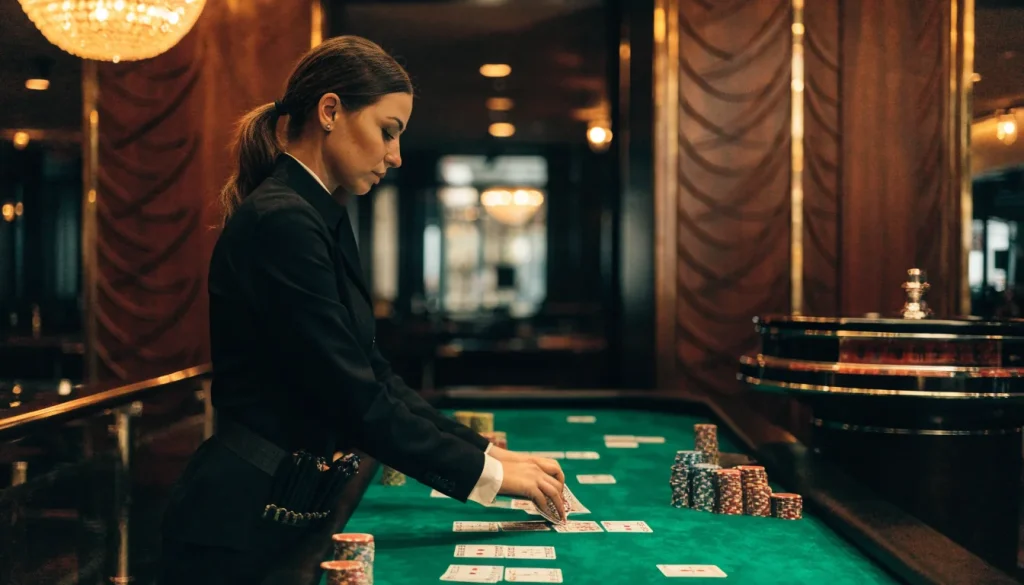
See how live dealing and software-generated outcomes shape online table games, alongside the rules, odds and formats discussed in Australia.
Table of Contents
- What Counts as a Casino Table Game?
- The Australian Rules Behind Online Table Games
- Table Games on Screen: Live Dealing and Digital Outcomes
- The People and Rituals Around the Table
- Cards, Dealers and the Shape of a Hand
- What “Best Odds” Can—and Cannot—Mean
- Roulette’s Green Zeroes
- Poker as a Contest of Hands
- Bitcoin Table Games and the Limits of Comparison
- Searching for a Nearby Casino with Table Games
- Casino Games
What Counts as a Casino Table Game?
A casino table game is best understood by how its result is produced, not simply by the image of a felt surface on a screen. In a live-dealer format, a real dealer operates real casino equipment, and a video stream carries the action to players. In a digital version, software generates the outcome: it may determine which cards are dealt or where a roulette ball lands. The familiar table can therefore describe two quite different kinds of experience.
The live format preserves a visible human presence. There is a dealer, physical equipment and a camera’s view of events as they happen. The screen is a window onto an actual dealing process, rather than a moving illustration of one. That distinction gives the format some of the theatre associated with a casino floor: objects are handled, actions unfold in real time, and the dealer is part of what the camera shows.
A software-based table game has no physical deal or wheel result behind the image. Its outcome comes from a Random Number Generator, or RNG, which selects the cards or determines the ball’s landing place. Graphics may present that result as a table, a wheel or a hand of cards, but the visual design is not what decides the outcome. Here the screen depicts a game produced by code.
7-Reel Slots in Australia: Features and RTP
This is why “table game” can be a slightly misleading label when applied to online play. It names a family of formats, but does not tell how any particular version works. Two games may look much alike while one is streamed from a real dealer and the other is rendered by software. Conversely, a digital presentation need not resemble a traditional table in every detail to belong to the same broad category.
The distinction also explains why casino table games software is not one simple thing. In a game whose outcome is generated digitally, software is central to the result; in a live-dealer game, the stream shows a dealer using physical equipment. The terms describe different production methods, not merely different screen designs. “Casino table games management software” is a separate phrase and should not be mistaken for the game itself: the defining question here is whether the outcome comes from a real, streamed process or from software.
3-Reel Slots in Australia: How Each Spin Works
So, what are casino table games? They are games presented in the casino-table tradition, with the important qualification that online versions can be live-dealt or digitally generated. A screen can show the same broad kind of play without showing the same process. The distinction is quiet, but fundamental.
The Australian Rules Behind Online Table Games
Australia’s rules for online casino table games begin with a distinction between a game’s familiar name and the service that makes it available. Blackjack, roulette and poker may be recognised around the world, but offering them for real money over the internet to people in Australia is not treated as an ordinary extension of a physical casino. The governing framework is the Interactive Gambling Act 2001, which places the obligation on service providers.
Section 5 of the Act prohibits operators based in Australia from offering real-money interactive casino games to residents. The restriction is not a licensing route by which a local company can obtain permission to provide an online casino. Its effect is to bar Australian-based operators from supplying this kind of service to people in the country. A website’s polished design, familiar games or Australian-facing language does not alter that rule.
The law also addresses the service as it reaches its customer, not merely where a familiar table or dealer might be found. Online casino-style games—including table games—are among the interactive gambling services that operators may not provide to customers physically located in Australia. The internet can make a business look remote and abstract; the legal question remains decidedly local. Geography still matters.
That framework gives the Australian Communications and Media Authority, or ACMA, an enforcement role. The regulator is responsible for compliance and blocks unlicensed platforms operating in breach of the rules. In this setting, enforcement is not a decorative line beneath a policy statement. It is part of how the national prohibition is applied to online services.
The arrangement says something about the country’s approach to gambling. Australia has not treated digital access as a reason to let casino services pass unnoticed through the cracks between jurisdictions. Instead, the law puts responsibility on those providing the service and gives a federal regulator a role in responding when the rules are ignored. A borderless screen, a bordered statute.
Legal Prohibition
Section 5 of the Interactive Gambling Act 2001 prohibits operators based in Australia from offering real-money interactive casino games to residents.
This is why searches for ways to play casino table games online for real money can meet a legal reality quite different from the language of an international website. A site may describe itself as an online casino or present a table-game lobby, but that presentation does not make the service lawful for an operator to provide to people in Australia. Nor does the appearance of a promotion change the underlying category of the service. The question is not whether an offer sounds attractive; it is whether the service is one the law permits an operator to provide.
The same distinction matters when people encounter free-play versions of casino games. A no-cost demonstration and a real-money gambling service are not interchangeable descriptions. The rules discussed here concern the provision of real-money interactive casino games. A game’s visual resemblance to a casino table, by itself, does not explain its legal status; what matters is the nature of the service being provided. Free play should not be used as a loose label for a real-money offer, or the other way around.
The law is not a verdict on the social history of table games, nor a guide to their rules. It is a boundary around commercial provision. Whether a table is presented as live or digital, or whether a page calls its games the best online table games, does not displace the central restriction on supplying real-money casino play to people in Australia. Marketing language has no power to rewrite an Act.
Mines Casino Game in Australia: Rules and Access
That point also applies to claims about bonuses and other incentives. A promotional label does not convert a prohibited service into a permitted one. The legal framework concerns the underlying offer of online casino gambling, rather than the particular wording used to draw attention to it. A bonus is still attached to something. The label is not the law.
For readers, the important distinction is between describing a game and describing an operator’s right to offer it. Online casino table games are familiar entertainment in many parts of the world, but the Australian framework does not allow a locally based company to provide them for real money to residents. The law also treats the provision of online casino-style games to customers in Australia as prohibited interactive gambling. ACMA’s compliance and blocking role gives that rule an enforcement mechanism.
The result is a market defined less by a menu of tables than by a legal limit on who may provide them. That is the starting point for understanding real-money casino table games in Australia: the rules are about the service and its provision, not merely the name of a game or the design of a screen.
Table Games on Screen: Live Dealing and Digital Outcomes
A table game on a screen can present two very different kinds of event. In one, a camera carries a live view of a real dealer working with real casino equipment. In the other, software determines the result: a Random Number Generator selects the cards dealt or the point at which a roulette ball lands. The screen may make both feel immediate. Their underlying processes are not the same.
Live Dealing
A broadcast of real-world action where a camera carries a live view of a real dealer using physical equipment.
Digital Outcomes
A computation where software uses a Random Number Generator to determine the result, presented via graphics.
Live dealing keeps a human being and physical objects in view. The dealer handles the equipment; the video stream brings that scene to viewers elsewhere. What appears on screen is therefore a broadcast of a real-world action, rather than a computer-generated depiction of one. The dealer is present in the production of the game, even though the stream is what connects that scene to people watching remotely.
Digital outcomes are produced differently. There is no filmed card deal or roulette ball whose movement determines the result. Instead, the game’s software uses a Random Number Generator to select the cards or the roulette result. The screen presents that selection as part of the game. Its graphics may resemble a physical table, but resemblance is not evidence that physical equipment is involved.
That distinction matters because an image can make separate processes look alike. A dealer’s hands, a felt surface and a roulette wheel belong to a visible scene when they are shown through a live stream. In a software-led version, the same sorts of images may be part of a digital presentation, while the outcome itself comes from the generator. One is a broadcast; the other is a computation dressed for the table.
Best Low-Volatility Slots in Australia: How They Work
Neither description says whether a particular game is enjoyable, easy to understand or suited to any individual. Those are different questions. Here, the useful distinction is simply where the result comes from: activity involving a real dealer and equipment, or a software-generated selection. The stream does not turn the second process into the first, and a digital display does not make the first less real.
The difference also changes what “watching” means. With a live dealer, the moving image shows an event taking place in front of a camera. With a software outcome, the displayed action is a way of presenting what the generator has determined. Both can be viewed through a screen, but only one involves a real-time view of a dealer handling real equipment. The other has no physical deal or wheel movement behind the result described here.
It is tempting to treat the familiar table image as the defining feature: cards laid out, a dealer nearby, a wheel in view. Yet those visuals can sit over distinct ways of producing an outcome. The screen is the common surface, not the common machinery. For anyone trying to learn how table games are presented online, that is a more useful starting point than judging by the set dressing.
Crash casino games in Australia: how they work
The old table persists in both forms, but not in the same way. One arrives as a live scene; the other as a software result given a visual shape. A small difference, until it is not.
The People and Rituals Around the Table
A table game gives chance a social shape. Instead of a private result appearing on a screen, there are roles to recognise: a player, a dealer, sometimes a banker, and other people watching the same contest unfold. The rules divide the room into participants and witnesses. Even when the wager is small, the arrangement makes an outcome feel shared.
Blackjack offers the clearest face-to-face contest. A player is trying to finish with a hand closer to 21 than the dealer’s. That aim is simple enough to follow from across the table, which matters in a game where attention moves between one person’s decisions and everyone else’s result. The dealer is not merely a person handling cards; the dealer represents the opposing side of the game. The ritual depends on that visible counterpart.
Other table formats organise the wager differently. Players may bet on their own hand, the banker’s hand or a tie. Those choices turn a single outcome into several possible positions around it: one person backs a player, another backs the banker, while someone else stakes a claim on neither side winning outright. The table becomes a small map of expectation. No speech is required, though the choices are public.
Poker has a different social centre. Its players compete to build the best possible hand, so attention falls not only on what is dealt but on the rival hands being assembled. The contest is among players rather than a simple opposition between a player and a dealer. That difference changes the atmosphere: each person’s hand belongs to a larger comparison, and the table’s drama comes from the possibility that another player has made something stronger.
Casino Dice Games in Australia: Legal Boundaries
This is why a catalogue of casino table games can miss what draws people to the format. Names and rules describe the machinery; the social arrangement explains its pull. A table gives strangers a common subject, a sequence of turns and a reason to watch closely. The dealer’s role, the banker’s position, the rival hand: each is a part assigned by the game, and each helps make uncertainty legible.
There is a modest theatre to it. The players do not control every outcome, but they occupy recognisable places within it. A wager declares where someone stands; a hand gives that position something to wait for. The rules can be intricate elsewhere. Here, the human detail is enough: people gathering around a contest whose ending none of them can command.
Small ceremony. Real stakes.
Cards, Dealers and the Shape of a Hand
A card table can organise play around different kinds of comparison. In blackjack, the central contest is direct: the player’s hand is measured against the dealer’s, and the aim is to finish closer to 21. The dealer is not merely a figure at the edge of the table; the dealer’s hand is the reference point that gives the player’s target its shape.
High-Volatility Slots in Australia: How They Work
That arrangement makes the game’s social grammar unusually clear. One hand faces another, and the outcome depends on their relative values. The target is fixed, but the comparison is personal: a player is not trying to outscore every other person at the table. The dealer stands opposite, carrying the house’s role in the contest. There is the hand, the rival hand, and the distance between them.
Other card-table formats place the wager on a different footing. Rather than setting a player’s own hand against a dealer’s, they allow a bet on the player’s hand, the Banker’s hand or a tie. Those choices turn the table into a small map of possible outcomes. The participant does not necessarily need to identify with one side; a wager can rest on either hand, or on neither having the advantage.
The contrast matters. In blackjack, the stated objective belongs to the player: get a hand closer to 21 than the dealer’s. In the other format, the named options describe what the wager predicts. One centres a personal contest; the other makes the possible result itself the focus. Both use cards, but the cards do not organise the room in quite the same way.
In card-table formats, the role of the "Banker" names a side of the contest rather than an individual opponent, and a tie remains a distinct possible outcome.
That difference helps explain why “card games” is a broad label rather than a single set of table rituals. The materials may be similar, yet the structure can ask for different kinds of attention: comparison in one case, selection among outcomes in another. A table’s rules decide who is being measured against whom, and what exactly a stake is meant to support. Small distinctions, visible at once.
The word “Banker” also changes the implied relationship. It names a side of the contest, not an individual opponent in the same sense as the dealer in blackjack. A tie remains a distinct possibility, rather than simply a failure to beat the other hand. The wager therefore has more than one direction in which it can be right.
These are different shapes for a hand to take: a player pursuing a target against a dealer, or a wager attached to one of several named outcomes. The cards are only the beginning.
What “Best Odds” Can—and Cannot—Mean
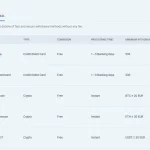
Choosing a real-money casino for table games means weighing the operator information available before deciding where to play. This list provides a concise reference to the details known for each casino.
1. Rollero Casino
License: Curacao Gaming Control Board OGL/2023/176/0095 (Hollycorn N.V.) Rollero Casino is listed with a Curaçao Gaming Control Board licence, OGL/2023/176/0095, held by Hollycorn N.V.
2. 7Bit Casino
License: Curacao, operated by Dama N.V. 7Bit Casino is operated by Dama N.V. and is listed as licensed in Curaçao.
3. JustCasino
License: Curacao Gaming Control Board JustCasino is listed as licensed by the Curaçao Gaming Control Board.
4. Bizzo Casino
License: Curacao Gaming Control Board (TechSolutions Group N.V.) Bizzo Casino is listed with a Curaçao Gaming Control Board licence, with TechSolutions Group N.V. named as the operator.
5. SkyCrown
License: Tobique Gaming Commission · Payout speed: crypto ~10-15 minutes, fiat 1-5 days · Min. deposit: A$30 SkyCrown is licensed by the Tobique Gaming Commission. Its listed minimum deposit is A$30, with crypto payouts taking about 10–15 minutes and fiat payouts 1–5 days.
6. Uptown Pokies
License: Curacao (operating since 2017) · Min. deposit: A$20 Uptown Pokies is listed as operating since 2017 under a Curaçao licence. Its minimum deposit is A$20.
7. DragonSlots Casino
License: Curacao Gaming Authority (Jumpman Gaming Ltd) DragonSlots Casino is listed as licensed by the Curaçao Gaming Authority, with Jumpman Gaming Ltd named in the licensing information.
8. Kingmaker
Payout speed: crypto ~90 minutes, fiat 1-5 days · Min. deposit: A$30 Kingmaker lists a minimum deposit of A$30. Its stated payout times are about 90 minutes for crypto and 1–5 days for fiat.
9. House of Pokies
License: international iGaming licence – jurisdiction not named in the source · Payout speed: PayID 1-24 hours · Min. deposit: A$30 (PayID from A$10) House of Pokies lists an international iGaming licence, though the jurisdiction is not specified. PayID payouts are stated as taking 1–24 hours; the minimum deposit is A$30, or A$10 via PayID.
10. Wild Tokyo
License: Curacao · Payout speed: crypto 30-60 minutes, fiat 1-5 days · Min. deposit: A$10 Wild Tokyo is listed as licensed in Curaçao. Its minimum deposit is A$10, and stated payout times are 30–60 minutes for crypto and 1–5 days for fiat.
“Best odds” sounds like a single property a casino table game either has or lacks. It is not. The phrase can refer to different things: the chance that a particular bet wins, the size of its payout, or the amount expected to be returned over repeated play. Those measures answer different questions. A game could offer a bet that wins often but pays less, while another bet wins less often but pays more. Neither description, by itself, establishes which offers the better overall return.
A house-edge chart can make comparisons look settled because numbers sit neatly in columns. But a chart is useful only when its figures describe comparable bets and conditions. A percentage without its assumptions is a label without a measurement: it may concern one wager, a particular way of playing, or a broader theoretical calculation. A table-game ranking that leaves those distinctions unstated offers certainty in place of explanation.
There is also a specific measurement problem. Return to Player, or RTP, is defined here for pokies: it is the theoretical share returned across millions of spins. That long-run percentage belongs to a model of repeated spins. It is not a universal score that can simply be transferred to blackjack, roulette or other table games. Calling one of those games “high RTP” without a substantiated table-game figure would blur categories rather than clarify them.
This matters because “casino table games with the best odds” is often treated as though it were a stable list. Yet a ranking needs a common yardstick. Does “best” mean the highest theoretical return, the greatest chance of winning a chosen bet, or the smallest expected loss over time? Without a clear answer, the order can change with the question. The word “best” does a lot of work. It does not do the arithmetic.
The same caution applies to claims about the worst odds. A game name alone is not enough to establish a universal position at the bottom of a table. A comparison needs figures tied to particular bets and a stated method. Otherwise, “worst” may describe a player’s impression, a single result, or an unstated calculation—not a conclusion that can be checked against a consistent measure.
Bonus Buy Slots in Australia: Features and RTP
So what are the best odds at casino table games? No defensible table-game ranking follows from the RTP definition above. That is a limit on the claim, not a claim that all table games are equivalent. It means that a precise comparison would need suitable, comparable table-game data and clear assumptions. Without them, assigning a winner or loser would be guesswork dressed as a chart.
A careful reading separates what a number measures from what its headline promises. RTP has a defined meaning for pokies, but it cannot serve as a ready-made table-game odds scale. And a neat house-edge chart is only as informative as the methods behind it. The distinction is less exciting than a ranking. It is also more honest.
Roulette’s Green Zeroes
Roulette’s variants are easiest to distinguish by looking at the wheel’s green markings. European and French roulette share the same stated layout: 36 numbered spaces and a green 0. American roulette has a green 0 as well, but adds a second green space, marked 00.
That extra marking is a small physical difference with an outsized role in how the variants are recognised. The European and French versions belong together on this point; the American version stands apart. The names may suggest a broad contrast between national styles, but the visible distinction described by their layouts is narrower: whether the wheel has one green zero or two.
The numbered spaces do not tell the whole story of a wheel’s character. The green spaces sit alongside them as distinct outcomes, and the double-zero layout makes the American version visibly different from its European and French counterparts. No elaborate ceremony is needed to spot it. One green mark, or two.
Roulette appears in several versions, with European, French and American among the main forms. A table’s name therefore matters less as decoration than as a clue to its structure. European and French roulette have the same count of numbered spaces and the same single green zero; American roulette retains the green 0 and adds 00. That is the core comparison, without turning a difference in layout into a claim about what any particular table will pay or how a game will unfold.
Live Baccarat Online in Australia: Legal Guide
In discussions of casino table games, roulette can seem like one familiar game repeated under different labels. The zeroes complicate that impression. The American wheel carries an additional green outcome, while the European and French wheels share a single one. A glance at the layout is enough to separate the three names into two structural patterns.
The distinction is modest in appearance, but roulette is a game defined by its wheel. Here, a second green marking is not a decorative flourish. It is the feature that sets the American version apart.
Poker as a Contest of Hands
Poker has a different centre of gravity from a contest against a dealer: its defining idea is that players try to build the best possible hand. The cards are not merely a route to a target value. They are the material from which each player’s claim to the strongest hand is made.
That premise turns a table into a small contest of judgment and comparison. Each participant is working toward the same broad aim, but the result belongs to whoever can assemble the best hand. The drama lies in that shared objective: several players, one standard of success, and no guarantee that effort will decide the outcome.
The language of poker often makes the game sound like a battle, and the metaphor fits its competitive shape. Yet the contest is contained in the hands themselves. Poker is not defined here by a player trying to beat a banker, or by a wager on whether one side or another will prevail. Its central question is narrower: whose hand is best?
That distinction helps explain why poker sits comfortably among casino table games while retaining a character of its own. The table is not simply a place where a result is generated and announced; it is where players pursue a common goal in direct comparison with one another. The hand gives the contest its form.
There is an old social pleasure in such comparisons. A rule can make unlike people temporarily answerable to the same measure, and poker’s measure is the strength of the hand each has built. No elaborate mythology is required. The attraction is plain: a shared contest, a clear object, and a winner defined by the cards in hand.
Lightning Link Online Pokies in Australia Explained
Poker’s appeal, then, is not reducible to the presence of cards on a table. It rests on the possibility of making the best hand among competing players. A simple premise. A stubbornly human one.
Bitcoin Table Games and the Limits of Comparison
The phrase “bitcoin table games” sounds as though it names a separate branch of casino play. It does not, on its own, tell what happens at the table. A hand, a dealer and a wager are not transformed into a different game merely by attaching a currency label to the description. Yet that observation is not enough to establish how a bitcoin-based table game compares with one described as a normal casino table game.
The distinction matters because several different questions can hide inside the comparison. One concerns the game itself: whether its rules, available decisions or outcomes differ. Another concerns how a stake is recorded or handled. A third concerns whether a particular game is offered at all. The name alone settles none of these. Without specific details about the particular service and game, claims about those differences would be guesswork dressed as comparison.
Pokies Tips and Tricks: What Actually Affects Play
That leaves little ground for a responsible list of the best bitcoin table games, or for naming a best table game in a bitcoin setting. “Best” might refer to rules, atmosphere, the kinds of decisions a player makes, or the chance of a favourable result. Those are not interchangeable measures. A label involving Bitcoin supplies no basis for ranking games by any of them, and a list would imply a standard that has not been established.
Nor does the label support claims about fairness. It cannot show how a game’s outcome is produced, how its rules are applied, or whether its presentation resembles that of another version. Such matters need information about the actual game, not an inference drawn from the currency named beside it. Familiar table-game terms may make a description feel complete; they do not fill in what the description leaves unstated.
The same restraint applies to “best odds”. A comparison would need relevant, like-for-like information about the games being compared. Bitcoin, by itself, says nothing about those odds. It cannot turn an unsupported ranking into a meaningful one. A game may be called a top casino table game in promotional language, but that phrase is not a measurable property and does not explain why one option should be placed above another.
Attention: A currency label such as "Bitcoin" does not establish a game’s rules, fairness, or odds, and should not be used as a basis for ranking games as "best."
This is why searches for casino table games for Bitcoin can produce a misleadingly neat category. The wording groups games by an apparent association, while leaving the important particulars unresolved. It does not establish that every such game has the same rules, that the selection matches that of other services, or that any one title deserves the label “best”. The short name carries more certainty than its contents warrant. A tidy category; an untidy comparison.
Even the difference between a felt table and a table displayed on a screen does not answer the bitcoin question. The surface or presentation of a game is not evidence of a payment method, a fairness feature or a distinct set of rules. Likewise, the availability of a game cannot be inferred from the broad label alone. Each claim would need to be tied to a particular game and its stated terms.
So “bitcoin table games versus normal casino table games” is not, by itself, a comparison of two clearly defined kinds of play. It is a comparison waiting for details: which game, which rules, what is meant by “normal”, and what feature is actually being compared. Until those particulars are supplied, the most accurate distinction is a narrow one. The label signals a proposed association with Bitcoin; it does not establish how the table game differs.
Searching for a Nearby Casino with Table Games
A request for a casino close by is a question about place before it is a question about play. It asks whether there is a physical venue within reach, and whether table games are available there. An online page can blur that distinction: a casino-themed result may describe a digital service, while a map result may point to a building. Neither label, by itself, settles what kind of place is involved.
That distinction matters in Australia. The Interactive Gambling Act 2001 prohibits operators from providing real-money online casino games to people in the country. A physical venue and an online casino are not interchangeable categories, even when both use the same familiar word. Search language tends to flatten such differences. Geography does not.
Five-Reel Slots in Australia: Bonuses and RTP
The phrase “near me” also has no fixed meaning until a location is supplied. For one person it may mean a short trip; for another, a venue reachable only after crossing a large stretch of the country. A result described as the nearest casino may be nearest according to a map’s starting point, not to a person’s actual circumstances. And proximity alone says nothing about whether a particular table game is operating when someone arrives.
Table-game availability is a separate question from the existence of a casino. A venue’s general description may not establish which games are offered, whether a table is open, or whether that information is current. New games and changing schedules make freshness important; a page carrying the word “new” may simply be newly published, rather than evidence of a recent addition to a venue.
There is an old social promise tucked inside the phrase “casino near me”: the idea that a public room of games can be found just around the corner. In practice, a search result is only a pointer. It is not proof that a location is open, that its listed facilities remain available, or that a particular table can be found there. The map can be precise about distance and vague about everything that matters next.
The same caution applies when a search names a city or state. Those words locate the request, but they do not establish that a casino with table games exists there or that any specific venue offers them. A place name is not a venue listing. A venue listing is not a live schedule.
For Australians, the useful distinction is therefore between seeking a land-based place and encountering an online casino service presented as local. The former is a question of physical location and venue information; the latter falls under the national restriction on online casino services. Keeping the categories separate prevents a digital result from masquerading as a nearby room with tables.
The nearest result is not necessarily the answer. It is only the beginning of the distinction.
Can you play table games online for real money?
Australian law prohibits operators from providing real-money online casino games, including table games, to customers located in Australia. Offshore sites may accept Australian players, but that does not change the restriction on providing the service.
How long do withdrawals typically take from offshore casinos to Australian bank accounts?
It depends on the payment method: PayID withdrawals average 1–4 hours, e-wallets usually take 2–24 hours, and direct bank transfers can take 3–7 business days. Some platforms deliver PayID funds within 30 minutes during business hours.
What is the legal status of online table games for Australian players in 2026?
Under Australia’s Interactive Gambling Act, operators are prohibited from offering real-money interactive casino games to people located in Australia. ACMA enforces the rules and blocks unlicensed platforms.
Are online casinos legal in Australia?
Australian-based operators cannot legally offer real-money online casino games to residents. ACMA enforces this restriction and blocks unlicensed platforms.
Casino Games

3-Reel Slots in Australia: How Each Spin Works
Three visible reels shape the presentation, but an RNG makes every spin an independent event...

Five-Reel Slots in Australia: Bonuses and RTP
A practical look at bonus triggers, RTP, free-play odds, game versions and the legal limits...

7-Reel Slots in Australia: Features and RTP
A practical look at seven-reel searches, game rules, RTP differences, free play and the limits...
Bonus Buy Slots in Australia: Features and RTP
A practical look at feature entry, demo limits, RTP settings and the checks that matter...

High-Volatility Slots in Australia: How They Work
High volatility means less frequent wins and a wider range of payouts, not a forecast...

Best Low-Volatility Slots in Australia: How They Work
Low volatility describes a tendency toward smaller, more frequent wins, not a guarantee of returns...

Pokie Machines to Play in Australia: Legal Guide
Australian rules prohibit operators from supplying real-money online pokies to residents, while game features and...

Best Progressive Jackpot Slots: How They Work
See how wagers feed shared prize pools, what can trigger a win and which terms...

RTP in Australian Slots: What Percentages Mean
RTP can help compare configured games, but it cannot predict a session’s outcome or guarantee...

Video Slots in Australia: Features, Access and RTP
From mobile layouts and bonus mechanics to offshore access, free play and paytable RTP, the...

Casino Dice Games in Australia: Legal Boundaries
The guide distinguishes operator obligations from player status and explains how online dice formats, bonuses...

Crash casino games in Australia: how they work
A guide to how crash games differ from pokies and what labels, payment terms, free...

Lightning Link Online Pokies in Australia Explained
The Aristocrat title is encountered on Australian venue machines; online pages, free play and similar...

Live Baccarat Online in Australia: Legal Guide
Australia has no locally licensed online casinos; this guide explains the legal position and practical...
Live Blackjack in Australia: Online Casino Rules
The guide separates operator restrictions from player status and weighs what live format, casino claims...

Live Roulette in Australia: Dealers and Legal Limits
Australia prohibits real-money online casino services for people in the country; the guide also explains...

Mines Casino Game in Australia: Rules and Access
The guide separates Mines from slot and pokie labels and explains what search results, demo...

Plinko Casinos in Australia: Games, Rules and Risk
A product’s Plinko label does not establish its mechanics; classification, terms and risk all matter...

Pokies Tips and Tricks: What Actually Affects Play
Pokie results are random, while RTP describes long-run play; neither tips nor session routines can...